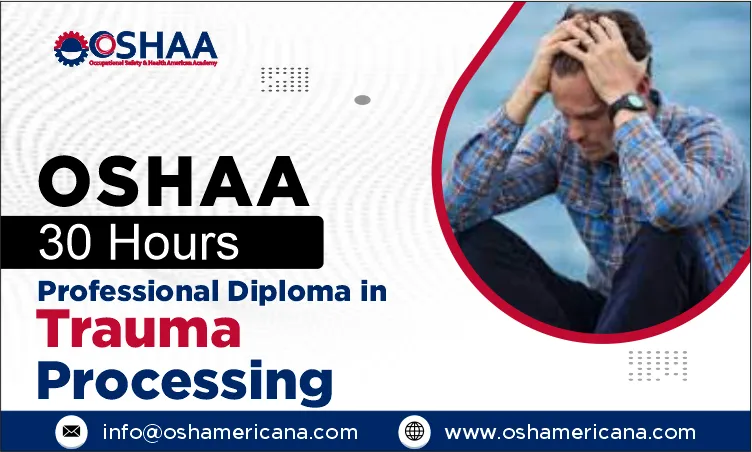
Ultimate 30-Hours Diploma in Trauma Processing
The OSHAA 30-Hours Professional Diploma in Trauma Processing is a specialized training program designed to provide learners with a foundational understanding of psychological trauma and effective approaches for its management and recovery support. This course focuses on equipping participants with practical knowledge to recognize trauma responses and apply safe, ethical, and supportive techniques in various care settings.
Throughout the program, learners will explore key concepts such as the impact of trauma on mental, emotional, and behavioral health, as well as the principles of trauma-informed care. The course also introduces evidence-based strategies for emotional regulation, stress management, and supportive communication, helping professionals respond appropriately to individuals experiencing trauma.
By completing this diploma, participants will be better prepared to work in healthcare, counseling, social care, education, and community support environments. It strengthens professional competence in providing empathetic care, promoting psychological safety, and supporting recovery-focused approaches for individuals affected by traumatic experiences.
OSHAA 30-Hours Professional Diploma in Trauma Processing
The OSHAA 30-Hours Professional Diploma in Trauma Processing is open to learners who are interested in mental health, emotional support, and trauma-informed care practices.
- Age Requirement: Applicants should be at least 16 years of age at the time of enrollment.
- Educational Background: A basic secondary school qualification is recommended. Backgrounds in Psychology, Social Work, Healthcare, Counseling, Education, or related fields are considered beneficial.
- Language Proficiency: Basic English reading and comprehension skills are required to understand course content and participate effectively.
- Work Experience: Prior experience in healthcare, social care, education, or support services is helpful but not mandatory.
This course is suitable for both beginners and professionals aiming to enhance their understanding of trauma and improve their supportive care skills.
Study Units
Learning Outcomes
Introduction to Trauma and Its Psychological Impact (3 Hours)
- Understand the definition and scope of trauma
- Recognise the psychological and emotional effects of trauma
- Identify common responses to traumatic experiences
- Develop awareness of trauma’s impact on different age groups and communities
Types of Trauma: Acute, Chronic, and Complex (4 Hours)
- Differentiate between acute, chronic, and complex trauma
- Recognise the causes and consequences of each trauma type
- Identify symptoms and behavioural patterns associated with different trauma types
- Learn appropriate intervention strategies for each trauma category
Neurobiology of Trauma and the Stress Response (4 Hours)
- Understand how trauma affects brain function and development
- Recognise the role of the nervous system in trauma responses
- Identify the physiological changes caused by traumatic stress
- Learn how neurobiological insights inform trauma recovery strategies
Trauma-Informed Care and Best Practices (5 Hours)
- Understand the principles of trauma-informed care
- Learn best practices for creating a safe and supportive environment
- Identify strategies for reducing retraumatisation in professional settings
- Develop skills for integrating trauma-informed approaches into practice
Psychological Theories and Models of Trauma Processing (4 Hours)
- Explore key psychological theories related to trauma recovery
- Understand the role of cognitive, behavioural, and psychodynamic models in trauma care
- Learn about post-traumatic growth and resilience-building frameworks
- Analyse case studies to apply theoretical models in real-world scenarios
Coping Mechanisms, Emotional Regulation, and Resilience (3 Hours)
- Identify effective coping strategies for trauma survivors
- Understand the importance of emotional regulation in trauma recovery
- Develop techniques to build resilience in individuals affected by trauma
- Learn how mindfulness, therapy, and self-care support trauma healing
Communication Strategies for Supporting Trauma Survivors (3 Hours)
- Develop active listening and empathetic communication skills
- Understand the importance of non-verbal communication in trauma care
- Learn best practices for handling disclosures of trauma sensitively
- Recognise communication barriers and how to overcome them
Ethical and Professional Considerations in Trauma Work (4 Hours)
- Understand ethical responsibilities in trauma intervention
- Recognise confidentiality and data protection obligations
- Learn how to manage professional boundaries in trauma work
- Identify the role of self-care and supervision in preventing burnout
This course provides essential knowledge and practical skills to understand, recognize, and support individuals experiencing trauma. It helps learners build a strong foundation in trauma-informed approaches used across care, education, and community settings.
- Comprehensive Understanding of Trauma
Provides in-depth knowledge of trauma types, neurobiological impacts, and psychological effects, enhancing professional expertise in trauma care. - Enhanced Trauma-Informed Care Skills
Equips participants with best practices for creating safe, supportive environments that minimise retraumatisation and promote healing. - Improved Communication and Intervention Techniques
Develops skills in active listening, empathetic communication, and crisis intervention to effectively support trauma survivors. - Practical Application of Psychological Theories
Applies evidence-based models and frameworks to real-world trauma cases, enhancing problem-solving and decision-making abilities. - Increased Professional Competence and Ethical Awareness
Provides a strong foundation in ethical considerations, confidentiality, and professional boundaries in trauma work. - Stronger Coping and Resilience-Building Strategies
Teaches effective methods for emotional regulation, stress management, and resilience development for both professionals and trauma survivors. - Career Advancement Opportunities
Enhances employability in social care, mental health, counselling, healthcare, education, law enforcement, and community support services. - Multi-Disciplinary Relevance
Suitable for professionals from various sectors, ensuring broader career applications and professional versatility. - Contribution to Community and Societal Well-Being
Empowers participants to make a meaningful impact by supporting individuals, families, and communities affected by trauma. - Internationally Recognised Qualification
Strengthens credentials for career progression, professional development, and specialized trauma-related roles in different fields.
This course is designed for individuals who want to develop a deeper understanding of trauma and learn effective, supportive approaches for helping affected individuals in professional and care-based environments.
- Mental Health and Counselling Professionals: Ideal for psychologists, therapists, and counsellors supporting individuals with trauma-related conditions.
- Social Workers and Support Workers: Essential for professionals working in community services, child protection, and victim support roles.
- Healthcare Professionals: Beneficial for doctors, nurses, paramedics, and rehabilitation specialists dealing with trauma patients.
- First Responders and Emergency Personnel: Relevant for police officers, firefighters, and crisis response teams who encounter trauma cases in their line of duty.
- Educators and School Staff: Useful for teachers, school counsellors, and administrators handling students affected by trauma.
- Human Resource and Workplace Well-being Officers: Recommended for HR professionals managing workplace mental health, crisis intervention, and employee support services.
- Legal and Law Enforcement Professionals: Important for solicitors, legal advisors, and law enforcement officers dealing with trauma victims in legal proceedings.
- Community and Charity Workers: Beneficial for individuals working in non-profits, NGOs, and humanitarian organisations providing trauma support.
- Foster Carers and Family Support Workers: Suitable for professionals assisting children and families who have experienced trauma.
- Anyone Seeking Personal or Professional Development: Valuable for individuals interested in learning trauma processing techniques for career growth or personal understanding.