
OSHAA 30-Hours Professional Diploma in Treatments for Childhood Traumas
Develop foundational knowledge of childhood trauma, its potential effects on children’s emotional, behavioral, social, and cognitive development, and the principles of trauma-informed support. This 30-hour diploma explores early indicators of trauma, supportive communication, safe environments, caregiver and educator roles, and collaboration with families and community services.
The course introduces specialist approaches such as Trauma-Focused Cognitive Behavioral Therapy (TF-CBT), play therapy, and Eye Movement Desensitization and Reprocessing (EMDR) for educational awareness. It does not qualify Learners to diagnose mental health conditions or independently provide psychotherapy or specialist trauma treatments.
About the Childhood Trauma Course
The OSHAA 30-Hours Professional Diploma in Treatments for Childhood Traumas provides structured learning about childhood trauma, its possible causes and effects, and the importance of safe, supportive responses. The course explores how traumatic experiences may affect a child’s development, emotional regulation, behavior, relationships, and sense of security.
Learners are introduced to trauma-informed support, early recognition, sensitive communication, and the roles of caregivers, educators, and relevant services. The curriculum also provides an overview of specialist therapeutic approaches, including TF-CBT, play therapy, and EMDR. These topics are covered for educational awareness and do not constitute training or authorization to independently deliver clinical treatment.
Who Should Take This Course?
Entry Requirements
- Age
- Applicants must be at least 18 years old.
- Education
- Minimum secondary education (Matric/SSC) is required. Candidates with backgrounds in psychology, counseling, social work, education, nursing, or related fields may find the subject especially relevant.
- Experience
- No prior work experience is required. Experience in mental health, education, childcare, or social services is an advantage.
- Language
- Basic English proficiency is required to follow course materials and assessment questions.
These are the entry requirements stated on the course page. Additional enrollment arrangements may be confirmed by the Approved Training Partner.
Course Study Units
The 30-hour diploma is organized into eight study units covering childhood trauma, developmental effects, early recognition, therapeutic approaches, supportive communication, safe environments, and collaborative support.
| # | Study Unit | Duration |
|---|---|---|
| 1 | Introduction to Childhood Trauma: Types and Impact | 3 hours |
| 2 | Biological and Psychological Effects of Trauma on Children | 4 hours |
| 3 | Recognizing Early Signs and Symptoms of Childhood Trauma | 3 hours |
| 4 | Evidence-Based Treatments for Trauma: TF-CBT, Play Therapy, and More | 4 hours |
| 5 | Building Trust and Communication with Traumatized Children | 5 hours |
| 6 | Creating Safe and Supportive Environments for Healing | 3 hours |
| 7 | The Role of Caregivers and Educators in Trauma Recovery | 5 hours |
| 8 | Collaborative Approaches: Working with Families, Schools, and Communities | 3 hours |
| Total course duration | 30 hours | |
Learning Outcomes
By completing the eight study units, Learners should develop knowledge of childhood trauma, its possible effects, early indicators, trauma-informed support, and appropriate collaboration and referral. The outcomes are knowledge-based and aligned with the published multiple-choice assessment.
1Introduction to Childhood Trauma: Types and Impact
Duration: 3 hours
- Explain different types of childhood trauma, including physical, emotional, and sexual abuse, neglect, and witnessing violence.
- Describe potential short- and long-term effects of childhood trauma on development and well-being.
- Identify risk factors and circumstances that may increase a child’s exposure to traumatic experiences.
- Explain how the effects of trauma may vary across different stages of childhood development.
2Biological and Psychological Effects of Trauma on Children
Duration: 4 hours
- Describe possible biological and physiological responses associated with childhood trauma.
- Explain psychological effects that may include anxiety, depression, and post-traumatic stress symptoms.
- Describe how trauma may affect emotional regulation, coping, and stress responses.
- Explain potential effects on attachment, relationships, and social development.
3Recognizing Early Signs and Symptoms of Childhood Trauma
Duration: 3 hours
- Identify possible indicators of childhood trauma across different age groups.
- Explain why behavioral changes should be considered in the context of a child’s development and circumstances.
- Recognize behavioral, emotional, and physical signs that may warrant appropriate support or referral.
- Describe appropriate initial responses, safeguarding procedures, and referral pathways when concerns arise.
4Evidence-Based Treatments for Trauma: TF-CBT, Play Therapy, and More
Duration: 4 hours
- Explain the purpose and key principles of Trauma-Focused Cognitive Behavioral Therapy (TF-CBT).
- Describe the role of play-based approaches in supporting children’s communication and emotional expression.
- Identify other specialist approaches, including Eye Movement Desensitization and Reprocessing (EMDR), at an introductory level.
- Explain the value of multidisciplinary collaboration in supporting children affected by trauma.
5Building Trust and Communication with Traumatized Children
Duration: 5 hours
- Identify approaches that can help establish trust and supportive relationships with children.
- Explain the importance of emotional and physical safety when communicating with a child.
- Describe age-appropriate, sensitive, and non-leading communication approaches.
- Explain how empathetic interactions and appropriate listening can support a child’s sense of safety and connection.
6Creating Safe and Supportive Environments for Healing
Duration: 3 hours
- Describe features of physical and emotional environments that can help children feel safe and supported.
- Explain the role of consistency, routine, and predictability in promoting a sense of security.
- Identify ways to make environments calm, supportive, and responsive to children’s needs.
- Explain the importance of positive and reliable adult-child relationships.
7The Role of Caregivers and Educators in Trauma Recovery
Duration: 5 hours
- Explain how caregivers, educators, and qualified mental health professionals may contribute to a child’s support network.
- Describe ways to coordinate appropriately with parents, teachers, and relevant professionals.
- Explain trauma-informed support principles and the importance of working within one’s role and competence.
- Identify approaches that may support resilience, emotional regulation, and well-being in children affected by trauma.
8Collaborative Approaches: Working with Families, Schools, and Communities
Duration: 3 hours
- Explain the importance of coordinated support involving families, schools, and community services.
- Describe appropriate communication and coordination with families and external support services.
- Identify elements of a community-based support network for children affected by trauma.
- Explain the role of advocacy and coordinated systems in supporting children’s longer-term well-being.
Assessment and Certification
How You Are Assessed
The published assessment consists of 100 multiple-choice questions (MCQs), administered through an OSHAA Approved Training Partner. Learners must achieve a minimum score of 70% to pass.
Your Certificate
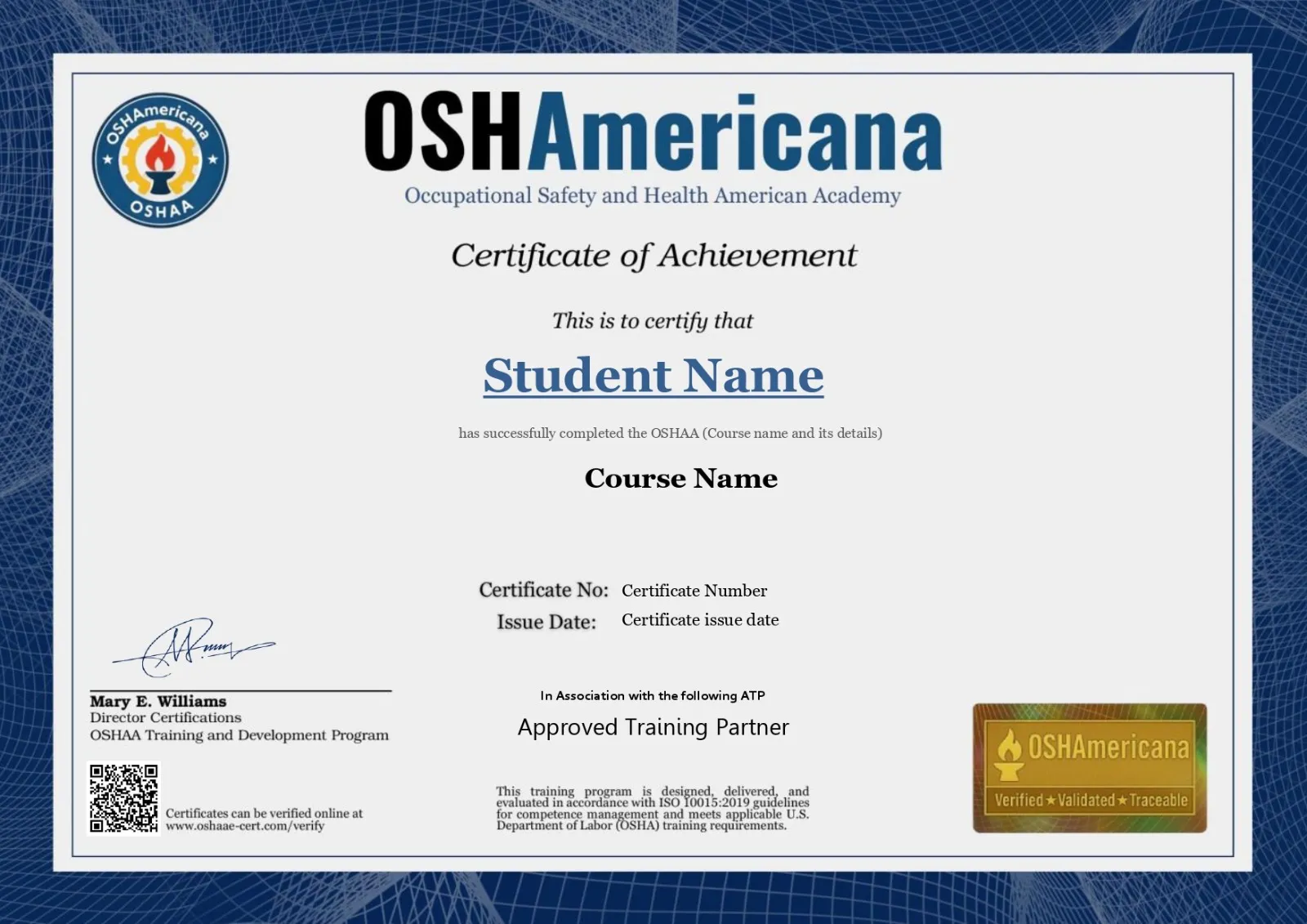
Learners who complete the course requirements and achieve the required assessment result receive the OSHAA 30-Hours Professional Diploma in Treatments for Childhood Traumas certificate.
This certificate records completion of the OSHAA course. It is not a state mental health license, psychology or counseling credential, or authorization to independently diagnose or treat mental health conditions or provide specialist therapies. Professional practice is subject to applicable state licensing laws, qualifications, employer requirements, and scope-of-practice rules.
Benefits of the Childhood Trauma Course
Understand Childhood Trauma
Develop foundational knowledge of different forms of childhood trauma and their possible effects on development and well-being.
Recognize Potential Indicators
Learn about behavioral, emotional, and physical signs that may indicate a child needs support or further assessment.
Explore Trauma-Informed Support
Understand principles that promote safety, trust, choice, collaboration, and sensitivity to a child’s experiences.
Understand Therapeutic Approaches
Gain introductory knowledge of TF-CBT, play-based approaches, and EMDR as specialist treatment approaches.
Strengthen Communication Awareness
Explore age-appropriate, empathetic, and non-leading communication when interacting with children.
Promote Safe Environments
Understand how predictable routines, supportive relationships, and safe settings can contribute to children’s well-being.
Understand Safeguarding Responsibilities
Develop awareness of child protection, reporting pathways, confidentiality, and appropriate referral.
Support Professional Development
Add structured learning about childhood trauma to relevant education, caregiving, healthcare, or social-service experience.
Related Career and Professional Development Opportunities
The course may support professional development for people working with children and families. It does not independently qualify a Learner for a regulated mental health profession, guarantee employment, or replace the education, supervised experience, licensure, and other credentials required for specific roles.
Educator or Teaching Assistant
May use the course knowledge to better understand trauma-related needs and supportive classroom approaches, within school policies and role requirements.
Child and Family Support Worker
May find the subject matter relevant to supporting families and coordinating appropriate services, subject to role-specific qualifications.
Social Services Support Personnel
May use the learning as supplementary knowledge when working under applicable professional and organizational requirements.
Foster or Adoptive Caregiver
May develop a stronger understanding of trauma-related behavior, emotional needs, and supportive caregiving approaches.
Healthcare Support Personnel
May find the course relevant to understanding trauma-informed interactions in child-focused healthcare settings.
Youth and Community Worker
May use the subject matter to inform supportive interactions and appropriate referrals within their role.
Frequently Asked Questions About Childhood Trauma
What does the OSHAA 30-Hours Professional Diploma in Treatments for Childhood Traumas cover?
The course covers types and effects of childhood trauma, early indicators, trauma-informed support, communication, safe environments, therapeutic approaches, caregiver roles, and collaboration with families, schools, and communities.
Who should take this childhood trauma course?
The course may be relevant to educators, teaching assistants, social service personnel, caregivers, healthcare support staff, youth workers, parents, and others seeking foundational knowledge of childhood trauma.
What are the entry requirements?
Applicants must be at least 18 years old. The published page specifies a minimum of secondary education (Matric/SSC), basic English proficiency, and no mandatory prior work experience. Experience in mental health, education, childcare, or social services is an advantage.
How long does the course take?
The course has a stated duration of 30 hours and is divided into eight study units.
Does the course cover trauma-informed care?
Yes. The curriculum addresses supportive environments, trust-building, communication, caregiver and educator roles, and collaborative support. Learners are introduced to trauma-informed principles for educational purposes.
What is Trauma-Focused Cognitive Behavioral Therapy (TF-CBT)?
TF-CBT is a structured, evidence-based treatment approach designed to help children and adolescents, and their caregivers where appropriate, address the effects of trauma. This diploma introduces its principles; it does not qualify Learners to provide TF-CBT.
Does the course teach play therapy and EMDR?
The curriculum introduces play therapy and Eye Movement Desensitization and Reprocessing (EMDR) as therapeutic approaches. Completing this course does not establish specialist credentials or authorize Learners to deliver these treatments.
Does completing this diploma qualify me as a child trauma therapist?
No. This OSHAA diploma provides educational knowledge and does not grant a state mental health license, qualify a Learner as a psychologist or therapist, or authorize independent diagnosis or psychotherapy. Professional practice is governed by applicable state licensing laws and role requirements.
Does the course cover U.S. child abuse reporting requirements?
The course content can introduce the Child Abuse Prevention and Treatment Act (CAPTA) and the importance of state-specific mandatory reporting laws. Reporting duties, timelines, and procedures vary by state and professional role. Learners should follow the law and safeguarding procedures applicable to their location and position.
How is the course assessed?
The published assessment consists of 100 multiple-choice questions (MCQs) administered through an OSHAA Approved Training Partner. Learners must achieve at least 70% to pass.
Can I study online or in person?
The published page describes online, in-person, and blended delivery options. The available format, schedule, and arrangements are confirmed by the selected Approved Training Partner.
How can I find an OSHAA Approved Training Partner?
Visit the OSHAA Approved Training Partner page to find a training partner and ask about enrollment, delivery options, schedules, and course arrangements.
How to Study the OSHAA Childhood Trauma Course
Learners enroll and study through an OSHAA Approved Training Partner, which provides course delivery and learner support. Available study formats, schedules, and fees are confirmed by the selected partner.
- 1
Find a Training Partner
Choose an OSHAA Approved Training Partner or contact OSHAA for assistance.
- 2
Confirm Enrollment
Check the entry requirements, course fees, study format, and schedule with the partner.
- 3
Complete the Eight Units
Study the 30-hour course covering childhood trauma, trauma-informed support, communication, therapeutic approaches, and collaborative care.
- 4
Complete the Assessment
Attempt the 100-question MCQ assessment and achieve at least 70% to pass.
- 5
Receive Your OSHAA Certificate
Successful Learners receive an OSHAA course certificate that can be checked through the verification service.