Enhance Your Industrial Career with Mobile Crane Diploma (MOB)
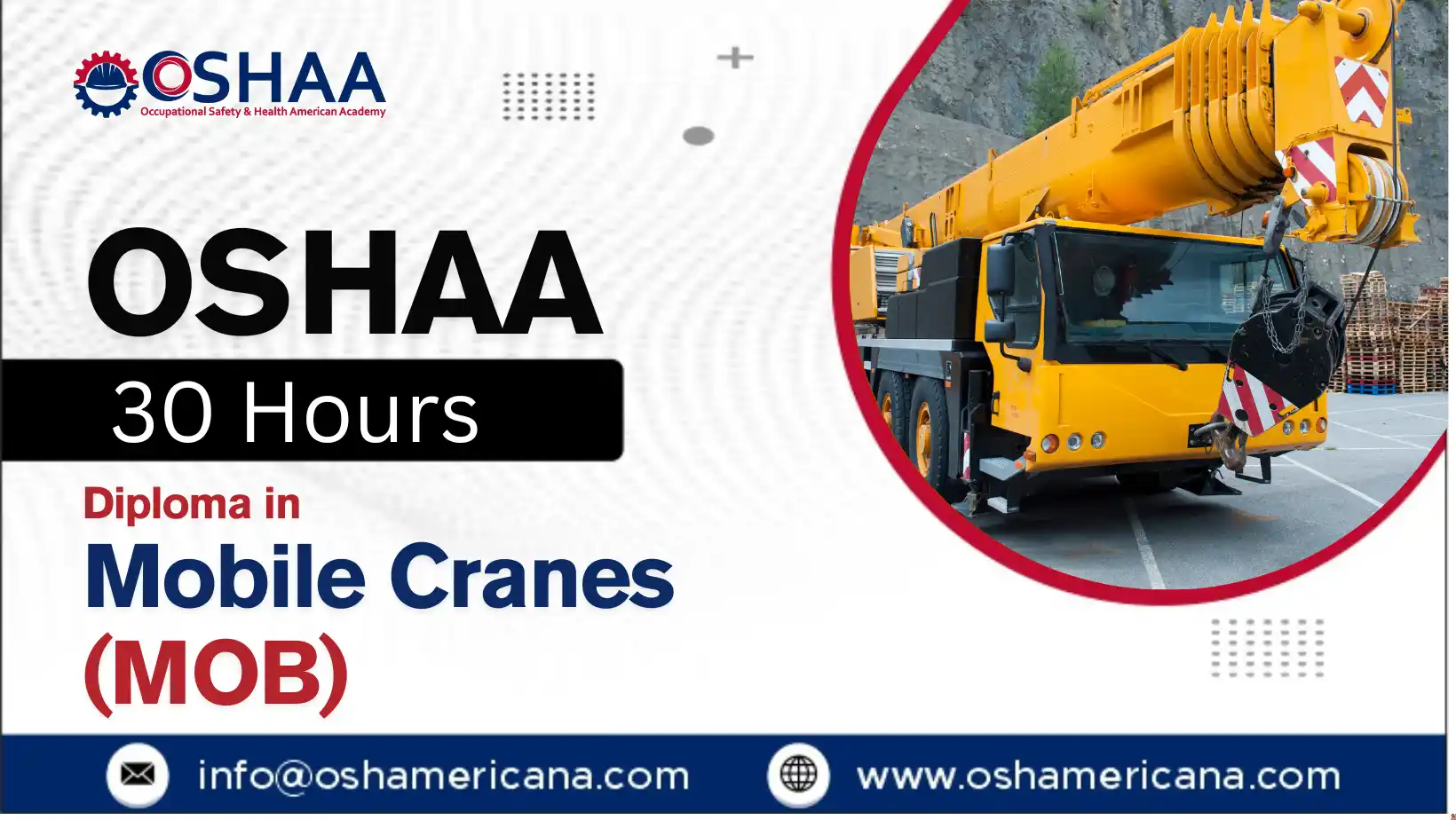
In the construction, oil & gas, and heavy logistics industries, mobile cranes are essential for lifting and transporting heavy loads safely and efficiently. However, improper operation can result in serious accidents, regulatory violations, and costly project delays. The OSHAA 30-Hours Diploma in Mobile Cranes (MOB) is a specialized training program designed to equip operators, supervisors, and safety professionals with the knowledge and hands-on skills required to operate mobile cranes safely while meeting international standards.
This 30-hour diploma is structured around globally recognized safety practices, including OSHA regulations, ASME standards, and industry best practices. Participants gain a deep understanding of crane types, load charts, lifting techniques, rigging, ground conditions, and hazard controls. The program emphasizes practical applications, teaching participants to identify risks before incidents occur and to foster a safety-first culture on every job site.
The course also covers critical operational and compliance aspects such as crane setup, pre-operational inspections, boom stability, overturning risks, communication signals, and emergency procedures. Upon completion, participants receive a recognized certification that enhances employability, demonstrates professionalism, and assures employers of their commitment to safety. The OSHAA Mobile Cranes diploma ensures teams operate efficiently, reduce downtime, and maintain compliance in high-risk environments.
OSHAA 30-Hours Diploma in Mobile Cranes (MOB)
- Age: 18+ years
- Education: High school or equivalent; diplomas or certificates in Mechanical, Industrial, or Construction-related fields are advantageous
- Language: Basic English comprehension
- Experience: No prior experience required, though basic knowledge of machinery or construction equipment is helpful
Study Units
Learning Outcomes
Introduction to Mobile Cranes and Safety Regulations (3 hours)
- Understand the purpose and operational scope of mobile cranes in various industries
- Identify key international and regional crane safety standards, including OSHA regulations
- Recognize the importance of compliance and legal responsibilities in crane operations
Types of Mobile Cranes and Their Applications (3 hours)
- Differentiate between major types of mobile cranes (e.g., truck-mounted, rough terrain, crawler)
- Match crane types to appropriate applications and environmental conditions
- Understand limitations and capabilities of each crane type
Crane Components and Mechanical Systems (5 hours)
- Identify main structural and mechanical components of mobile cranes
- Understand the function of hydraulic, hoisting, slewing, and braking systems
- Recognize signs of wear, malfunction, or failure in critical components
Load Charts and Lifting Capacities (3 hours)
- Interpret crane load charts accurately for safe lifting operations
- Calculate lifting capacity based on boom length, radius, and counterweight
- Understand how environmental conditions affect crane performance and load ratings
Rigging Principles and Sling Selection (3 hours)
- Understand the fundamentals of rigging and load balance
- Select appropriate slings, shackles, and hardware for different loads
- Apply safe rigging practices to prevent load shifts, failures, or accidents
Site Preparation and Crane Setup (3 hours)
- Assess ground conditions and select suitable crane positioning
- Understand the importance of outriggers, cribbing, and leveling
- Identify environmental and structural hazards during setup
Crane Operation Procedures and Controls (3 hours)
- Operate crane controls with precision and safety awareness
- Follow standard operating procedures (SOPs) for lifting, moving, and setting loads
- Identify and respond to abnormal crane behavior during operation
Hazard Identification and Risk Management (3 hours)
- Conduct hazard assessments related to crane operations and lifting zones
- Implement risk control measures and safety protocols
- Apply principles of proactive risk management to prevent incidents
Communication, Signaling, and Personnel Roles (2 hours)
- Understand the importance of clear communication in crane operations
- Identify standard hand signals and communication protocols
- Define roles and responsibilities of signalers, riggers, and operators
Emergency Response and Incident Prevention (2 hours)
- Recognize potential emergency scenarios involving mobile cranes
- Apply proper response procedures in case of equipment failure or accidents
- Develop site-specific emergency plans and reporting protocols
Course Benefits
- Comprehensive Understanding of Mobile Crane Operations
Gain in-depth knowledge of mobile crane types, components, lifting procedures, and industry-standard practices. - Improved On-Site Safety
Learn to identify and manage crane-related hazards, reducing the risk of accidents and enhancing overall site safety. - Regulatory Compliance
Understand and apply OSHA, ASME, and other relevant safety regulations to ensure legal compliance during crane operations. - Practical, Job-Ready Skills
Build hands-on skills in rigging, load chart interpretation, signaling, and safe operation of mobile cranes in real-world scenarios. - Enhanced Employability
Earn a recognized diploma that strengthens your resume and makes you a more competitive candidate for jobs in construction, oil & gas, shipping, and heavy industries. - Career Advancement Opportunities
Open doors to supervisory, inspection, and safety roles with improved qualifications and certified technical knowledge. - Reduced Equipment Downtime
Improve operational efficiency through better maintenance awareness, inspection practices, and early fault detection. - Increased Employer Confidence
Demonstrate a commitment to safe, skilled, and efficient crane operations, earning trust from employers and project stakeholders. - Adaptable Across Industries
Apply learned skills to a wide range of environments—from offshore rigs to urban construction sites—making the training highly versatile. - Preparedness for Emergencies
Be equipped to respond effectively to operational hazards and emergencies, minimizing damage and ensuring personnel safety.
The OSHAA 30-Hours Diploma in Mobile Cranes (MOB) is designed for professionals involved in the operation, supervision, and safety management of mobile crane activities across various industries. This course is ideal for:
- Mobile Crane Operators seeking to enhance their technical skills and safety knowledge.
- Rigging and Lifting Supervisors responsible for planning and overseeing crane operations.
- Health, Safety, and Environment (HSE) Officers aiming to improve their understanding of crane safety regulations and risk management.
- Maintenance Technicians working on crane mechanical systems and components.
- Construction and Offshore Industry Workers involved in lifting and material handling operations.
- Logistics Coordinators and Site Managers who oversee crane usage and compliance on project sites.
- New Entrants and Apprentices looking to build foundational knowledge for a career in crane operations.
- Safety Inspectors and Auditors responsible for evaluating crane safety and operational compliance.
This course is suitable for both experienced professionals looking to update their skills and newcomers seeking a structured, industry-recognized training program.