
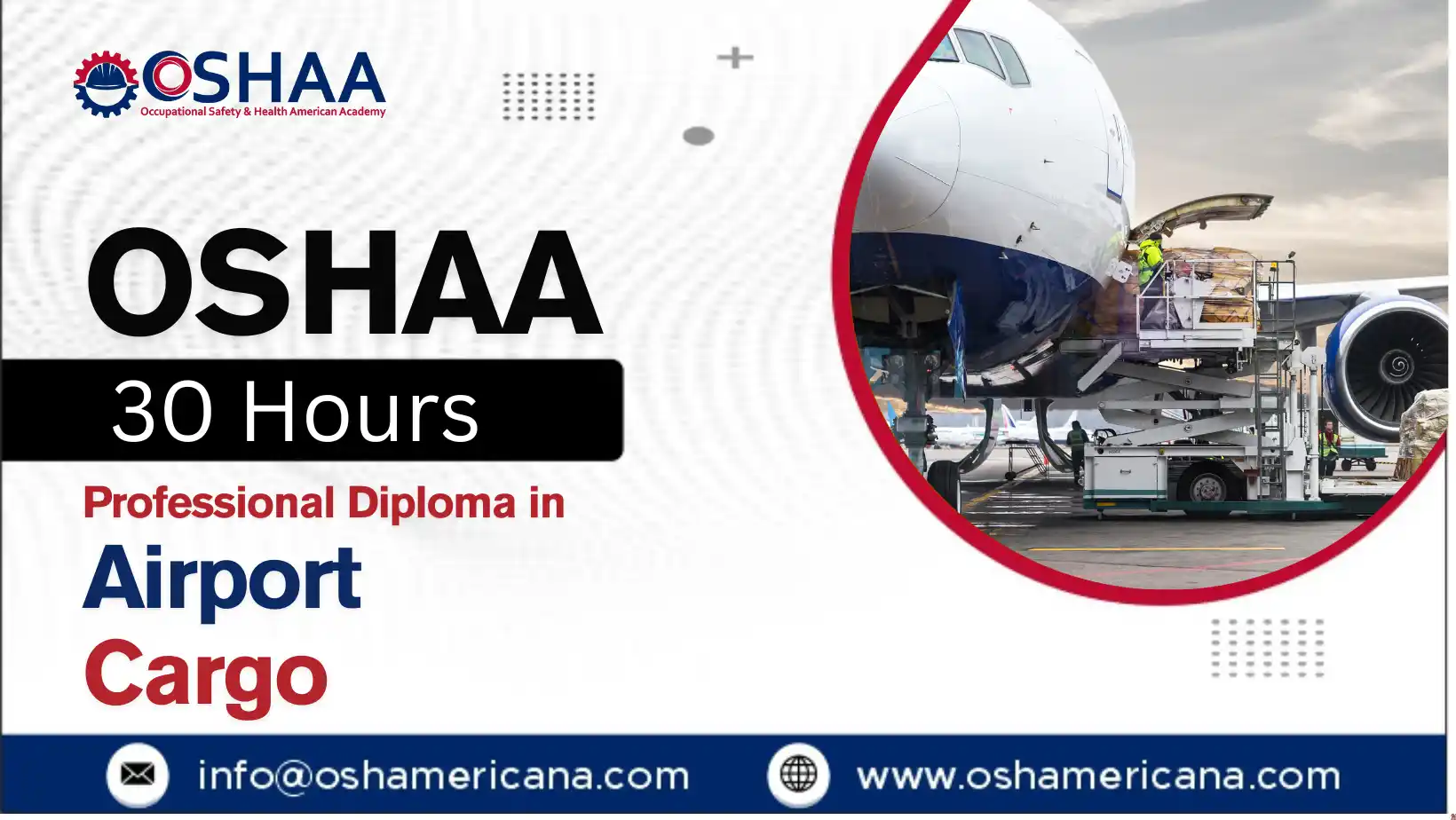
Advance Your Career with Professional Diploma in Airport Cargo
The OSHAA 30-Hours Professional Diploma in Airport Cargo is a specialized training program designed to provide professionals with advanced knowledge and practical skills in the field of air cargo management, safety compliance, and international logistics. This course equips learners with the expertise required to navigate the complexities of airport cargo operations while ensuring adherence to OSHA standards and global aviation regulations. By combining occupational safety principles with modern cargo handling practices, the program prepares participants to meet the demands of a fast-paced, compliance-driven, and globally interconnected industry.
The importance of the OSHAA 30-Hours Professional Diploma in Airport Cargo lies in its ability to bridge operational efficiency with regulatory compliance. Air cargo is a critical component of international trade and supply chain management, requiring strict adherence to safety protocols, cargo security measures, and environmental standards. This course emphasizes the integration of OSHA compliance, workplace safety, and international aviation frameworks, ensuring that learners understand how to manage cargo operations effectively while minimizing risks and maintaining global best practices. Participants gain insights into cargo documentation, customs procedures, hazardous materials handling, risk management, and emergency preparedness, enabling them to operate with confidence in a highly regulated environment.
Completing the OSHAA 30-Hours Professional Diploma in Airport Cargo provides participants with a globally recognized certification that demonstrates expertise in air cargo management, safety compliance, and international aviation regulations. This qualification enhances professional credibility, supports career advancement, and strengthens organizational performance by ensuring adherence to both safety and operational standards. Learners emerge from the program equipped to lead compliance initiatives, optimize cargo operations, and foster a strong culture of accountability within their organizations.
OSHAA 30-Hours Professional Diploma in Airport Cargo
- Age Requirement: Learners must be at least 18 years old to ensure maturity and readiness for airport cargo operations.
- Educational Background: A high school diploma or equivalent is recommended; higher education in aviation, logistics, or business is advantageous.
- Work Experience: Prior experience is not required, but exposure to cargo handling, airport operations, or logistics adds contextual understanding.
- English Proficiency: Learners must read, write, and communicate effectively in English to understand regulations, manuals, and operational procedures.
Study Units
Learning Outcomes
The OSHAA 30-Hours Professional Diploma in Airport Cargo is designed to provide learners with advanced skills, compliance knowledge, and safety leadership abilities essential for success in the global aviation and logistics industry. The learning outcomes of this program ensure that participants gain both theoretical understanding and practical expertise in airport cargo operations, international trade, regulatory compliance, and occupational safety standards.
Introduction to Airport Cargo Operations and OSHAA Standards (3 Hours)
Understand the role of airport cargo in global trade, learn OSHAA standards, integrate safety into operations, and connect compliance with efficiency.
Global Air Cargo Industry, Trade Principles, and Market Dynamics (3 Hours)
Learn global cargo principles, market trends, freight rates, trade flows, and apply economic concepts to manage risks and opportunities.
International Aviation Regulations, Compliance, and Legal Frameworks (4 Hours)
Gain knowledge of ICAO, IATA, aviation safety regulations, and ensure organizational adherence to global compliance and environmental standards.
Air Cargo Documentation, Contracts, and Financial Instruments (3 Hours)
Understand air waybills, manifests, trade finance, contract management, and use documentation to reduce risks and maintain compliance.
Cargo Handling Procedures, Warehousing, and Airport Logistics Integration (3 Hours)
Learn safe handling, efficient warehousing, airport logistics integration, and apply compliance for smooth cargo operations.
Risk Management, Aviation Insurance, and Liability in Cargo Operations (3 Hours)
Master risk identification, insurance policies, liability management, and implement strategies to minimize financial exposure.
Customs Procedures, Security Protocols, and Regulatory Compliance (3 Hours)
Understand customs procedures, security protocols, trade law compliance, and streamline processes to avoid operational delays.
Hazardous Materials Handling, Safety Protocols, and Emergency Preparedness (3 Hours)
Learn classification and handling of hazardous cargo, emergency response strategies, and OSHA-compliant safety measures.
Safety Management Systems, ISM/ISO Standards, and Compliance Auditing (3 Hours)
Develop and implement SMS, understand ISM/ISO standards, monitor compliance, and strengthen safety culture through audits.
Professional Development, Leadership, and Ethical Practices in Airport Cargo Management (2 Hours)
Build leadership skills, foster compliance culture, pursue professional development, and apply best practices for operational improvement.
Completion prepares participants to lead safety initiatives, ensure regulatory compliance, and foster responsibility, enhancing careers and organizational performance in global airport cargo operations.
The OSHAA 30-Hours Professional Diploma in Airport Cargo offers a wide range of benefits for professionals, organizations, and stakeholders engaged in aviation, logistics, and international trade. This program is designed to strengthen expertise in airport cargo operations, enhance compliance knowledge, and improve safety leadership while equipping learners with the skills to meet global aviation standards.
- Comprehensive Knowledge of Airport Cargo Operations
- Learners gain a strong foundation in airport cargo management, logistics coordination, and aviation operations.
- This knowledge enables professionals to manage complex cargo activities with confidence.
- The course ensures participants can apply both operational and compliance principles to real-world challenges.
- Regulatory Compliance and Legal Protection
- Participants develop expertise in OSHA standards and international aviation regulations.
- Understanding these frameworks reduces legal risks and ensures compliance with global cargo laws.
- Organizations benefit from stronger protection against disputes, penalties, and operational disruptions.
- Enhanced Workplace Safety in Cargo Operations
- The course trains learners to integrate occupational safety into airport cargo practices.
- This leads to fewer workplace accidents, protecting employees, cargo, and infrastructure.
- Improved safety performance strengthens organizational reputation and reliability.
- Professional Development and Career Advancement
- The diploma enhances professional credentials, making learners more competitive in the aviation and logistics job markets.
- Graduates are positioned for leadership roles in airlines, freight forwarding companies, and airport authorities.
- The certification demonstrates commitment to safety, compliance, and operational excellence.
- Operational Efficiency and Cost Savings
- By applying compliance-driven strategies, organizations minimize downtime and avoid costly disruptions.
- Improved efficiency translates into cost savings and stronger financial performance.
- Learners gain skills to optimize cargo operations while maintaining compliance.
- Leadership and Compliance Culture Development
- The course builds leadership skills that enable professionals to promote a culture of accountability.
- Strong leadership ensures that compliance practices are consistently applied across all levels of an organization.
- Graduates are prepared to influence positive change and compliance culture in airport cargo operations.
- Improved Communication and Management Skills
- Learners develop the ability to communicate safety and compliance protocols effectively.
- Clear communication enhances collaboration across logistics, finance, and operational teams.
- Strong management skills ensure compliance with safety and aviation standards while improving efficiency.
- Risk Assessment and Liability Management
- Participants gain expertise in identifying and managing risks in airport cargo operations.
- This ensures readiness to address risks related to cargo handling, aviation insurance, and contracts.
- Effective risk management minimizes potential losses and strengthens resilience in cargo operations.
- Aviation Insurance and Asset Protection
- Learners acquire knowledge of aviation insurance policies and their role in protecting cargo assets.
- This proactive approach safeguards aircraft, cargo, and financial investments.
- Organizations benefit from reduced exposure to financial and operational risks.
- Environmental Compliance and Sustainability
- The course emphasizes pollution prevention, sustainability, and green cargo practices.
- Learners gain insights into environmental compliance and its financial implications.
- Environmental responsibility enhances organizational reputation and global accountability.
- Global Recognition and Industry Credibility
- The OSHAA 30-Hours Professional Diploma in Airport Cargo is recognized internationally.
- This recognition enhances professional credibility and career mobility.
- Organizations benefit from employing certified professionals who meet global standards.
- Continuous Improvement and Innovation
- Learners are trained to apply continuous improvement strategies within cargo systems.
- Innovation in compliance practices ensures organizations remain competitive and compliant.
- Graduates are prepared to adapt to evolving industry challenges.
- Cargo Documentation and Financial Expertise
- Participants gain knowledge of air waybills, contracts, and financial instruments.
- This ensures better decision-making in cargo documentation and financial obligations.
- Organizations benefit from reduced risks and optimized financial outcomes.
- Supply Chain and Logistics Integration
- Learners understand the financial and operational aspects of airport logistics and supply chains.
- This knowledge supports efficiency in global trade and cargo management.
- Integration enhances both compliance and operational performance.
- Contribution to Global Aviation Standards
- Graduates of the OSHAA 30-Hours Professional Diploma in Airport Cargo actively contribute to raising safety and compliance standards worldwide.
- This strengthens the reputation of organizations and supports the sustainable growth of the aviation industry.
- The course empowers professionals to align with international best practices and global trade requirements.
Completing the OSHAA 30-Hours Professional Diploma in Airport Cargo prepares participants to lead compliance initiatives, ensure adherence to international aviation regulations, and foster a strong culture of responsibility within their organizations. This course empowers learners to advance their careers, improve organizational performance, and contribute to safer, more sustainable, and globally compliant airport cargo practices.
The OSHAA 30-Hours Professional Diploma in Airport Cargo is designed for professionals, organizations, and stakeholders who are directly or indirectly engaged in aviation, logistics, and international trade. This course is highly relevant for individuals seeking to strengthen their expertise in airport cargo operations, safety compliance, and supply chain efficiency.
- Safety Managers
- Oversee workplace safety and compliance across airport cargo operations.
- The course provides advanced tools to implement OSHA-based safety frameworks effectively.
- Gain expertise in hazard identification, risk management, and compliance auditing.
- Strengthen their ability to ensure compliance with workplace safety standards while improving organizational performance.
- Operations Supervisors
- Manage day-to-day airport cargo operations, warehousing, and logistics coordination.
- The diploma equips them with knowledge to integrate safety and compliance into operational workflows.
- Learn to balance efficiency with regulatory adherence, reducing risks in cargo operations.
- Enhance their ability to maintain OSHA compliance while improving productivity.
- HSE Officers
- Focus on health, safety, and environmental protection in aviation and cargo environments.
- The program deepens their understanding of OSHA standards and international compliance frameworks.
- Gain practical skills in incident reporting, accident investigation, and corrective actions.
- Promote a proactive safety culture across airport cargo and logistics organizations.
- Airport Cargo and Logistics Executives
- Responsible for managing supply chain strategies, cargo finance, and logistics planning.
- The diploma provides advanced knowledge of international trade, compliance, and operational frameworks.
- Gain skills in risk assessment, liability management, and sustainable logistics practices.
- Strengthen their ability to align business strategies with OSHA compliance and global standards.
- Aviation Insurance and Risk Professionals
- Handle risk management, liability coverage, and asset protection in airport cargo operations.
- The course enhances their ability to evaluate insurance policies and compliance obligations.
- Gain expertise in minimizing financial exposure while ensuring safety compliance.
- Support organizations in protecting assets while adhering to OSHA and international regulations.
- Port and Terminal Managers
- Supervise airport terminals, cargo handling, and logistics integration.
- The diploma equips them with knowledge of compliance requirements and operational efficiency.
- Gain expertise in improving terminal performance while reducing risks and ensuring safety.
- Strengthen their ability to integrate OSHA standards into airport cargo operations.
- Customs and Trade Compliance Officers
- Responsible for enforcing customs regulations, trade policies, and compliance standards.
- The course provides a deeper understanding of OSHA standards and international trade frameworks.
- Gain skills in auditing, monitoring, and evaluating compliance across airport cargo supply chains.
- Strengthen their ability to uphold global safety and trade standards.
- Emergency Response and Risk Management Teams
- Tasked with managing emergencies such as cargo incidents, hazardous spills, or aviation risks.
- The course provides advanced training in emergency preparedness and financial risk management.
- Gain expertise in incident response, liability control, and corrective actions.
- Ensure compliance with OSHA standards while minimizing risks during aviation emergencies.
- Supply Chain and Logistics Managers
- Oversee supply chain integration, cargo flow, and logistics efficiency.
- The diploma equips them with skills to design and implement safety and compliance protocols.
- Gain expertise in risk management and adherence to international logistics standards.
- Strengthen their ability to protect assets, cargo, and personnel while meeting OSHA requirements.
- Aspiring Aviation and Cargo Professionals
- Individuals seeking to build careers in airport cargo, aviation logistics, or supply chain management.
- The course provides foundational knowledge of OSHA standards and cargo practices.
- Gain industry-recognized certification that enhances employability and career prospects.
- Prepare to enter the workforce with strong compliance knowledge and professional skills.
The OSHAA 30-Hours Professional Diploma in Airport Cargo equips participants across all roles with advanced knowledge, professional skills, and globally recognized certification. By addressing the needs of safety managers, supervisors, executives, regulators, and aspiring professionals, the program ensures that learners are prepared to lead safety initiatives, maintain OSHA compliance, and drive operational excellence in airport cargo management.