Professional Diploma in Air Cargo, Freight Handling, and Logistics Optimization
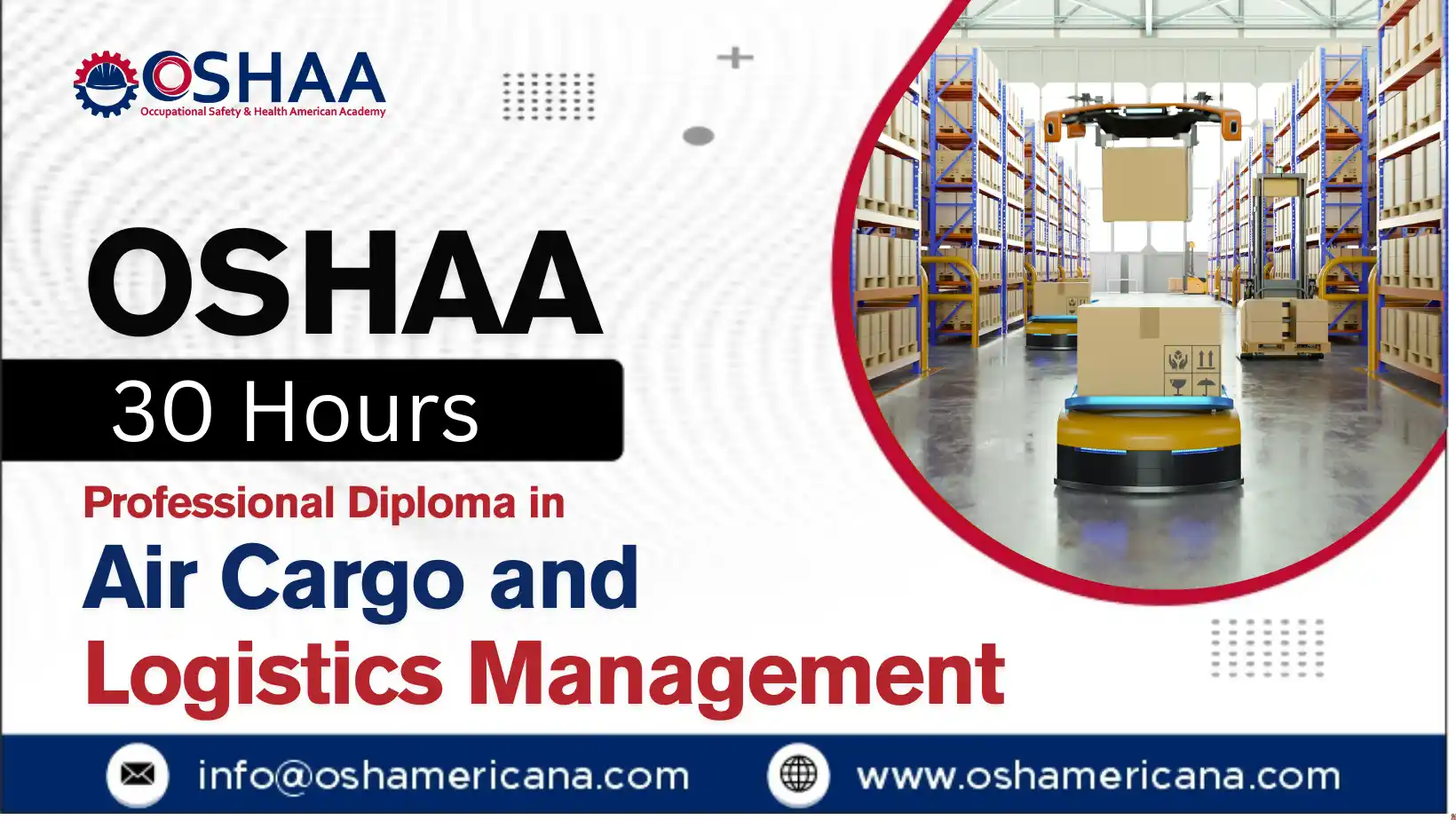
The OSHAA 30-Hours Professional Diploma in Air Cargo and Logistics Management is a focused training programme developed to prepare professionals for the operational, safety, and compliance demands of the aviation logistics sector. This course provides a balanced blend of regulatory knowledge and practical insight, enabling learners to manage air cargo operations efficiently while adhering to OSHA-aligned safety practices and international aviation regulations. It is designed to strengthen competence in high-pressure logistics environments where accuracy, safety, and compliance are critical.
Air cargo is a key driver of global trade and supply chain continuity, requiring professionals who can manage risks, ensure secure handling, and maintain operational efficiency. This diploma equips participants with a strong understanding of cargo documentation, handling procedures, storage requirements, and security controls. Learners also gain practical skills in hazard identification, risk assessment, emergency response planning, and compliance monitoring specific to air cargo operations.
The programme further explores human factors, workplace safety culture, and sustainable logistics practices, helping participants develop leadership and decision-making capabilities alongside technical expertise. Ideal for professionals in airport operations, freight forwarding, cargo handling, and supply chain management, the OSHAA 30-Hours Professional Diploma in Air Cargo and Logistics Management is a globally recognised credential. It demonstrates a clear commitment to safety, regulatory compliance, and operational excellence, supporting career advancement in the dynamic aviation logistics industry.
OSHAA 30-Hours Professional Diploma in Air Cargo and Logistics Management
- Age Requirement: Learners must be at least 18 years old to ensure maturity and readiness for aviation safety, cargo handling, and logistics management training.
- Education: A high school diploma or equivalent is recommended. Backgrounds in aviation, logistics, or supply chain management are advantageous.
- Work Experience: Prior experience is not required, but those with exposure to aviation, cargo, or airport operations may benefit from better contextual understanding.
- English Proficiency: Learners must be able to read, write, and communicate effectively in English to understand course materials, regulations, and assessments.
Study Units
Learning Outcomes
The Learning Outcomes of the OSHAA 30-Hours Professional Diploma in Air Cargo and Logistics Management are designed to provide participants with advanced skills, compliance knowledge, and safety leadership abilities that are essential for success in the aviation and logistics industry. This course equips learners with the expertise to manage air cargo operations, ensure adherence to OSHA and international safety standards, and implement effective strategies that enhance both workplace safety and operational efficiency.
Introduction to Air Cargo and Logistics Management (3 Hours)
- Understand the structure, functions, and global significance of air cargo and logistics operations.
- Identify the roles of key stakeholders in the aviation and supply chain sectors.
- Demonstrate knowledge of how air cargo integrates into international trade and logistics networks.
- Recognize the importance of compliance and safety in managing cargo operations.
Fundamentals of Occupational Safety and Health Standards (3 Hours)
- Gain a comprehensive understanding of OSHA standards and international safety frameworks.
- Apply occupational health and safety principles to air cargo and logistics environments.
- Recognize the importance of compliance in reducing workplace hazards and risks.
- Develop awareness of employee rights, employer responsibilities, and enforcement mechanisms.
Air Cargo Handling Procedures and Safety Protocols (3 Hours)
- Master essential procedures for safe and efficient air cargo handling.
- Apply safety protocols to minimize risks during cargo loading, unloading, and transfer.
- Understand the coordination required between ground staff, airlines, and regulatory authorities.
- Implement best practices for equipment handling and ramp safety.
Cargo Storage, Documentation, and Security Regulations (3 Hours)
- Learn the principles of safe cargo storage and secure warehousing.
- Apply international cargo security regulations to prevent unlawful interference.
- Understand documentation requirements for cargo movement and customs compliance.
- Identify hazardous materials and apply safe handling and storage procedures.
Hazard Identification, Risk Assessment, and Control Measures (3 Hours)
- Conduct systematic hazard identification in air cargo and logistics operations.
- Apply risk assessment methodologies to evaluate workplace threats.
- Develop control measures to mitigate risks and enhance operational safety.
- Integrate proactive safety management systems into daily operations.
Emergency Response Planning and Crisis Management in Logistics (3 Hours)
- Understand the fundamentals of emergency response planning in aviation logistics.
- Develop crisis management strategies for accidents, security threats, and natural disasters.
- Apply communication protocols during emergencies to ensure coordinated responses.
- Evaluate case studies of past incidents to strengthen preparedness and resilience.
Regulatory Compliance in Air Cargo and International Logistics (3 Hours)
- Interpret international aviation and cargo regulations, including ICAO and IATA standards.
- Apply compliance frameworks to ensure adherence to safety and operational requirements.
- Understand the role of audits, inspections, and certifications in maintaining compliance.
- Develop strategies for continuous improvement in regulatory adherence.
Workplace Safety Culture and Human Factors in Aviation Logistics (3 Hours)
- Recognize the role of human factors in aviation safety and operational performance.
- Promote a positive workplace safety culture within air cargo and logistics operations.
- Understand the impact of fatigue, stress, and communication on safety outcomes.
- Apply leadership strategies to encourage employee engagement in safety initiatives.
Environmental Sustainability in Air Cargo and Supply Chain Operations (3 Hours)
- Understand the environmental challenges associated with aviation and logistics.
- Apply sustainable practices to reduce carbon emissions and environmental impact.
- Recognize the importance of waste management and energy efficiency in operations.
- Integrate sustainability into compliance and safety frameworks.
Final Assessment, Case Studies, and Professional Applications (3 Hours)
- Demonstrate mastery of knowledge gained throughout the OSHAA 30-Hours Professional Diploma in Air Cargo and Logistics Management.
- Apply theoretical knowledge to real-world case studies and operational scenarios.
- Develop problem-solving skills for complex safety and compliance challenges.
- Showcase professional readiness to lead in air cargo and logistics management.
By completing the OSHAA 30-Hours Professional Diploma in Air Cargo and Logistics Management, participants will be fully prepared to lead safety initiatives, ensure compliance with international standards, and foster a strong safety culture within aviation and logistics environments.
The OSHAA 30-Hours Professional Diploma in Air Cargo and Logistics Management delivers a wide range of benefits that extend beyond technical knowledge, equipping professionals, organizations, and stakeholders with the expertise to thrive in the global aviation and logistics industry. This course is designed to strengthen compliance with OSHA standards and international regulations while enhancing operational efficiency, workplace safety, and professional development.
- Comprehensive Knowledge of Air Cargo and Logistics
- Learners develop a strong understanding of air cargo operations, logistics management, and supply chain integration. This knowledge ensures they can manage complex processes with confidence and precision.
- Regulatory Compliance and Legal Protection
- The course emphasizes OSHA standards and international aviation regulations, enabling participants to ensure compliance, reduce liability, and protect organizations from costly penalties.
- Enhanced Workplace Safety and Risk Reduction
- By mastering hazard identification, risk assessment, and control measures, learners contribute to safer work environments, reducing incidents and operational disruptions in air cargo facilities.
- Professional Development and Career Advancement
- Completing the OSHAA 30-Hours Professional Diploma in Air Cargo and Logistics Management strengthens professional credentials, opening pathways to leadership roles in aviation, logistics, and supply chain management.
- Operational Efficiency and Cost Savings
- Participants learn strategies to streamline cargo handling, storage, and documentation processes, leading to improved efficiency, reduced downtime, and significant cost savings for organizations.
- Leadership and Communication Skills
- The program develops essential leadership and communication abilities, preparing learners to manage teams, coordinate with stakeholders, and foster a culture of safety and accountability.
- Improved Worker Well-being and Productivity
- By applying occupational health and safety principles, participants help create healthier workplaces, boosting employee morale, reducing absenteeism, and increasing overall productivity.
- Emergency Preparedness and Crisis Management
- Learners acquire the ability to design and implement emergency response plans, ensuring readiness for accidents, security threats, or natural disasters, thereby safeguarding lives and assets.
- Global Industry Relevance
- The OSHAA 30-Hours Professional Diploma in Air Cargo and Logistics Management aligns with international aviation and cargo standards, making it valuable for professionals seeking opportunities in global markets.
- Continuous Improvement and Innovation
- Participants are trained to adopt proactive safety management systems and innovative practices, ensuring ongoing improvement in compliance, efficiency, and sustainability.
- Sustainability and Environmental Responsibility
- The program highlights eco-friendly practices in air cargo and logistics, equipping learners to integrate sustainability into daily operations and align with global environmental goals.
- Stronger Organizational Reputation
- Organizations benefit from employees who hold this diploma, as it demonstrates a commitment to safety, compliance, and operational excellence, enhancing credibility in the industry.
- Practical Application of Knowledge
- Through case studies and real-world scenarios, learners apply theoretical knowledge to practical challenges, ensuring they are workplace-ready and capable of immediate impact.
- Risk Management and Incident Prevention
- The course equips participants with advanced risk assessment skills, enabling them to anticipate potential hazards and implement preventive measures that protect both personnel and assets.
- Global Career Competitiveness
- With its focus on compliance, safety, and operational expertise, the OSHAA 30-Hours Professional Diploma in Air Cargo and Logistics Management enhances employability and competitiveness in the international aviation and logistics industry.
By completing the OSHAA 30-Hours Professional Diploma in Air Cargo and Logistics Management, participants gain advanced technical knowledge, leadership skills, and compliance expertise that prepare them to lead safety initiatives, ensure regulatory adherence, and foster a culture of excellence.
The OSHAA 30-Hours Professional Diploma in Air Cargo and Logistics Management is designed for professionals, organizations, and stakeholders who are directly engaged in aviation, cargo handling, and logistics operations. This course is highly relevant for individuals seeking to strengthen their expertise in workplace safety, regulatory compliance, and operational efficiency.
- Safety Managers
- Oversee workplace safety programs and ensure compliance with OSHA and international standards.
- This course equips them with advanced knowledge of air cargo safety protocols and logistics management.
- They gain the ability to implement hazard prevention strategies and reduce workplace incidents.
- Supports their role in maintaining compliance, protecting workers, and ensuring operational efficiency.
- Operations Supervisors
- Manage daily airport and cargo operations, ensuring smooth workflows and efficiency.
- The program provides tools to oversee ground handling, cargo storage, and documentation processes.
- They develop stronger leadership and communication skills to coordinate teams effectively.
- Enhances their ability to align operations with OSHA compliance and global safety standards.
- HSE Officers
- Focus on health, safety, and environmental compliance within aviation and logistics.
- The course strengthens their expertise in hazard identification, risk assessment, and emergency planning.
- They gain practical skills to enforce workplace safety standards and reduce risks.
- Ensures they can uphold OSHA compliance while promoting a culture of safety.
- Airport Ground Handling Staff
- Directly involved in aircraft servicing, cargo loading, and ramp operations.
- The course provides essential training in safety protocols and equipment handling.
- They learn to minimize risks and prevent accidents during high-pressure operations.
- Supports their role in maintaining compliance and operational safety.
- Cargo and Logistics Professionals
- Manage cargo movement, storage, and international freight forwarding.
- The program enhances their knowledge of cargo security regulations and documentation requirements.
- They gain skills to handle hazardous materials safely and efficiently.
- Ensures compliance with OSHA and international cargo handling standards.
- Aviation Administrators and Managers
- Responsible for policy-making, compliance oversight, and operational leadership.
- The course equips them with strategic insights into safety management systems.
- They develop the ability to integrate compliance frameworks into organizational policies.
- Strengthens their capacity to lead teams while ensuring OSHA compliance and global standards.
- Emergency Response and Crisis Management Teams
- Tasked with preparing for and responding to aviation-related emergencies.
- The program provides advanced training in crisis management and emergency planning.
- They gain the ability to coordinate responses and mitigate risks effectively.
- Supports their role in safeguarding lives, assets, and compliance with safety regulations.
- Freight Forwarders and Supply Chain Specialists
- Coordinate cargo movement across international supply chains.
- The course enhances their understanding of cargo security, customs compliance, and documentation.
- They gain skills to streamline logistics processes while ensuring safety.
- Ensures adherence to OSHA standards and international cargo regulations.
- Aviation Safety Inspectors and Auditors
- Monitor compliance and conduct safety audits in aviation and logistics operations.
- The program strengthens their ability to evaluate workplace safety and operational practices.
- They gain insights into OSHA standards and international aviation compliance frameworks.
- Supports their role in ensuring organizations meet regulatory and safety requirements.
- Aspiring Aviation and Logistics Professionals
- Individuals seeking to enter the aviation and cargo industry with strong credentials.
- The course provides foundational knowledge of air cargo operations, safety, and compliance.
- They gain a competitive advantage in securing roles within aviation and logistics.
- Equips them with OSHA-aligned training that enhances employability and career growth.
By completing the OSHAA 30-Hours Professional Diploma in Air Cargo and Logistics Management, participants across all professional levels gain advanced knowledge, practical skills, and globally recognized training that enhances safety, compliance, and operational excellence.