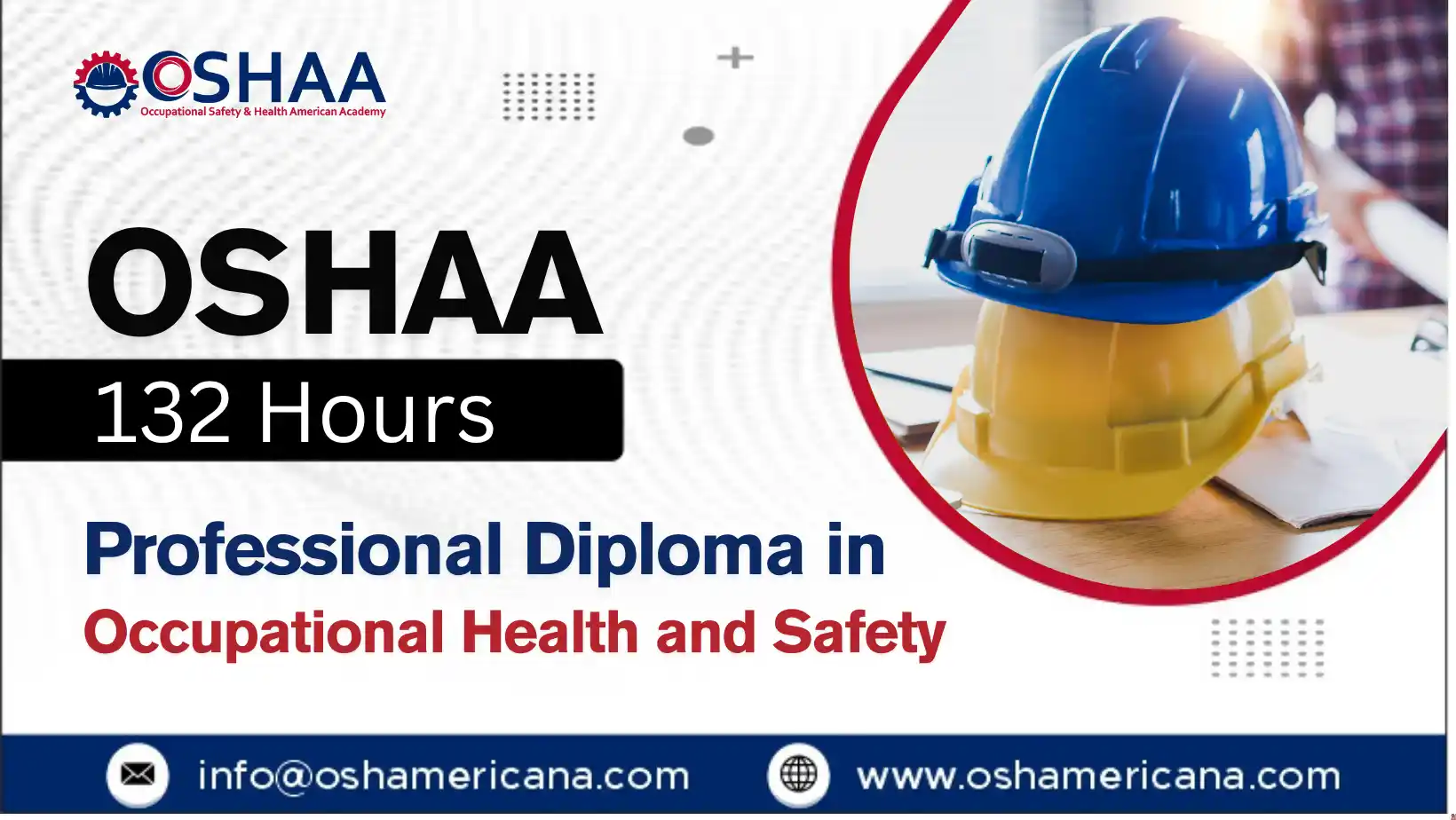
The OSHAA 132 Hours Professional Diploma in Occupational Health and Safety is a career-focused qualification designed for professionals and learners who want to develop practical knowledge of occupational health and safety (OHS) and workplace risk management. This comprehensive programme provides a structured understanding of how to identify workplace hazards, assess risks, implement effective safety controls, and promote healthier, safer working environments.
The course covers key areas of health and safety management, including hazard identification, risk assessment, accident prevention, workplace inspections, emergency preparedness, personal protective equipment (PPE), fire safety, occupational health, and safety procedures. Through its 132-hour learning structure, learners can build practical skills that can be applied across construction, manufacturing, engineering, logistics, facilities management, and other industries.
For learners searching for an Occupational Health and Safety diploma, OSHAA safety course, or professional health and safety training, this programme offers relevant knowledge for supporting workplace safety and compliance. It is suitable for aspiring safety professionals, supervisors, managers, team leaders, and individuals responsible for workplace health and safety.
The OSHAA 132 Hours Professional Diploma helps learners develop the confidence to contribute effectively to workplace safety, risk reduction, accident prevention, and OHS management practices.
OSHAA 132 Hours Professional Diploma in Occupational Health and Safety
To enroll in OSHAA 132, participants are expected to meet the following basic criteria to ensure they can fully benefit from the course:
- Minimum Age: 18 years or older to participate in professional safety training.
- Educational Background: A basic secondary education or equivalent qualification is recommended.
- Language Proficiency: English proficiency is required as course materials, regulations, and assessments are delivered in English.
- Work Experience: Previous experience in occupational health and safety is beneficial but not essential.
Study Units
- Safety Management Systems & Program Design — 24 Hours
- Advanced Safety Mathematics & Physics — 16 Hours
- Hazard Identification & Risk Assessment — 14 Hours
- Industrial Hygiene & Occupational Health — 16 Hours
- Fire Prevention & Protection Engineering — 14 Hours
- Ergonomics & Human Factors Engineering — 12 Hours
- Emergency Preparedness & Incident Response — 12 Hours
- Environmental Management & Compliance — 10 Hours
- EHS Training, Education & Communication — 8 Hours
- EHS Laws, Regulations, and Professional Ethics — 6 Hours
Learning Outcomes
Safety Management Systems & Program Design
Upon completion of this unit, Learners will be able to:
- Understand the principles and components of effective occupational health and safety management systems.
- Explain the role of leadership, policy and organisational responsibilities in safety management.
- Develop structured safety programmes to support workplace risk control and continual improvement.
- Identify appropriate methods for monitoring, reviewing and improving safety performance.
- Understand the importance of safety objectives, planning and performance measurement.
Advanced Safety Mathematics & Physics
Upon completion of this unit, Learners will be able to:
- Apply fundamental mathematical principles relevant to occupational health and safety.
- Understand basic physics concepts associated with workplace hazards and risk controls.
- Interpret measurements, calculations and technical data used in safety management.
- Apply principles relating to forces, motion, energy and pressure to workplace safety scenarios.
- Use quantitative information to support informed safety decisions.
Hazard Identification & Risk Assessment
Upon completion of this unit, Learners will be able to:
- Identify common workplace hazards across different occupational environments.
- Explain the principles and stages of the risk assessment process.
- Evaluate the likelihood and potential consequences of identified hazards.
- Apply suitable risk control measures using recognised control strategies.
- Review and communicate risk assessment findings effectively.
Industrial Hygiene & Occupational Health
Upon completion of this unit, Learners will be able to:
- Understand the principles of industrial hygiene and occupational health.
- Identify physical, chemical, biological and ergonomic workplace health hazards.
- Explain methods used to recognise, evaluate and control occupational exposures.
- Understand the importance of health surveillance and workplace monitoring.
- Recommend appropriate measures to protect worker health and wellbeing.
Fire Prevention & Protection Engineering
Upon completion of this unit, Learners will be able to:
- Understand the fundamental principles of fire science and combustion.
- Identify common causes and sources of workplace fires.
- Explain appropriate fire prevention and risk control strategies.
- Understand the purpose of fire detection, alarm and suppression systems.
- Contribute to the development of effective workplace fire safety arrangements.
Ergonomics & Human Factors Engineering
Upon completion of this unit, Learners will be able to:
- Understand the principles of ergonomics and human factors in workplace safety.
- Identify ergonomic risks associated with workstations, equipment and manual tasks.
- Evaluate the relationship between human capabilities, limitations and workplace design.
- Recommend appropriate ergonomic controls to reduce the risk of injury.
- Understand the role of human behaviour and performance in accident prevention.
Emergency Preparedness & Incident Response
Upon completion of this unit, Learners will be able to:
- Understand the principles of workplace emergency preparedness and planning.
- Identify potential emergency situations and associated response requirements.
- Explain the key components of emergency response and evacuation procedures.
- Understand the roles and responsibilities of personnel during workplace emergencies.
- Evaluate the importance of emergency drills, communication and post-incident review.
Environmental Management & Compliance
Upon completion of this unit, Learners will be able to:
- Understand the relationship between occupational safety and environmental management.
- Identify common environmental aspects and impacts associated with workplace activities.
- Explain the principles of environmental compliance and responsible resource management.
- Understand strategies for pollution prevention, waste management and environmental protection.
- Contribute to the implementation and improvement of workplace environmental management practices.
EHS Training, Education & Communication
Upon completion of this unit, Learners will be able to:
- Understand the importance of education and training in EHS management.
- Identify workplace training needs related to health, safety and environmental risks.
- Explain effective methods for communicating EHS information to different audiences.
- Understand the principles of developing effective safety awareness programmes.
- Evaluate the role of communication and employee engagement in improving safety performance.
EHS Laws, Regulations, and Professional Ethics
Upon completion of this unit, Learners will be able to:
- Understand the importance of legal and regulatory compliance in occupational health and safety.
- Recognise the responsibilities of employers, employees and other relevant duty holders.
- Explain the role of professional ethics in health and safety practice.
- Understand the importance of maintaining accurate records and demonstrating compliance.
- Apply ethical principles when making occupational health and safety decisions.
The OSHAA 132 Hours Professional Diploma in Occupational Health and Safety offers Learners a comprehensive opportunity to strengthen their knowledge and professional competence in workplace health and safety management.
Key Benefits Include:
- Develop Comprehensive Safety Knowledge
Gain a broad understanding of occupational health, workplace safety, risk management and environmental protection. - Strengthen Risk Assessment Skills
Learn the principles of identifying workplace hazards, evaluating risks and selecting appropriate control measures. - Understand Safety Management Systems
Develop knowledge of how effective safety policies, programmes and management systems support safer organisations. - Enhance Occupational Health Awareness
Understand workplace exposures, industrial hygiene principles and measures used to protect worker health. - Build Emergency Preparedness Knowledge
Develop an understanding of emergency planning, incident response, evacuation procedures and post-incident review. - Improve Fire and Workplace Safety Knowledge
Explore fire prevention, protection principles and strategies for reducing workplace safety risks. - Understand Human Factors and Ergonomics
Learn how workplace design, human behaviour and ergonomic considerations can influence safety performance. - Develop EHS Communication Competence
Understand the importance of effective health, safety and environmental training, education and communication. - Increase Knowledge of Environmental Responsibilities
Explore environmental management, compliance, pollution prevention and responsible workplace practices. - Support Professional Career Development
Strengthen your professional profile for roles and responsibilities related to occupational health, safety and EHS management. - Applicable Across Multiple Industries
The knowledge gained can support professional development in construction, engineering, manufacturing, oil and gas, healthcare and other workplace sectors. - Promote a Stronger Safety Culture
Develop the knowledge needed to contribute towards safer working environments and continual improvement in organisational safety performance.
The OSHAA 132 Hours Professional Diploma in Occupational Health and Safety is suitable for individuals who want to develop comprehensive knowledge of workplace health, safety and environmental management.
This course is particularly suitable for:
- Aspiring Health and Safety Professionals seeking to begin or develop a career in occupational health and safety.
- Health and Safety Officers and Supervisors who want to strengthen their professional knowledge and competence.
- EHS and HSE Professionals seeking broader knowledge of environmental, health and safety management principles.
- Construction and Engineering Professionals involved in managing workplace hazards and safety risks.
- Manufacturing and Industrial Workers with responsibilities related to workplace safety and risk control.
- Oil and Gas Professionals seeking to improve their understanding of occupational health and safety practices.
- Managers and Team Leaders responsible for promoting safe working environments and managing workplace risks.
- Fire and Emergency Response Personnel who wish to strengthen their understanding of emergency preparedness and incident response.
- Environmental and Sustainability Professionals interested in understanding the relationship between environmental management and workplace safety.
- Individuals Seeking Career Development in occupational health, workplace safety, risk assessment or EHS management.
The programme is suitable for both individuals who are new to the occupational health and safety field and experienced professionals seeking to expand their theoretical knowledge and professional competence.