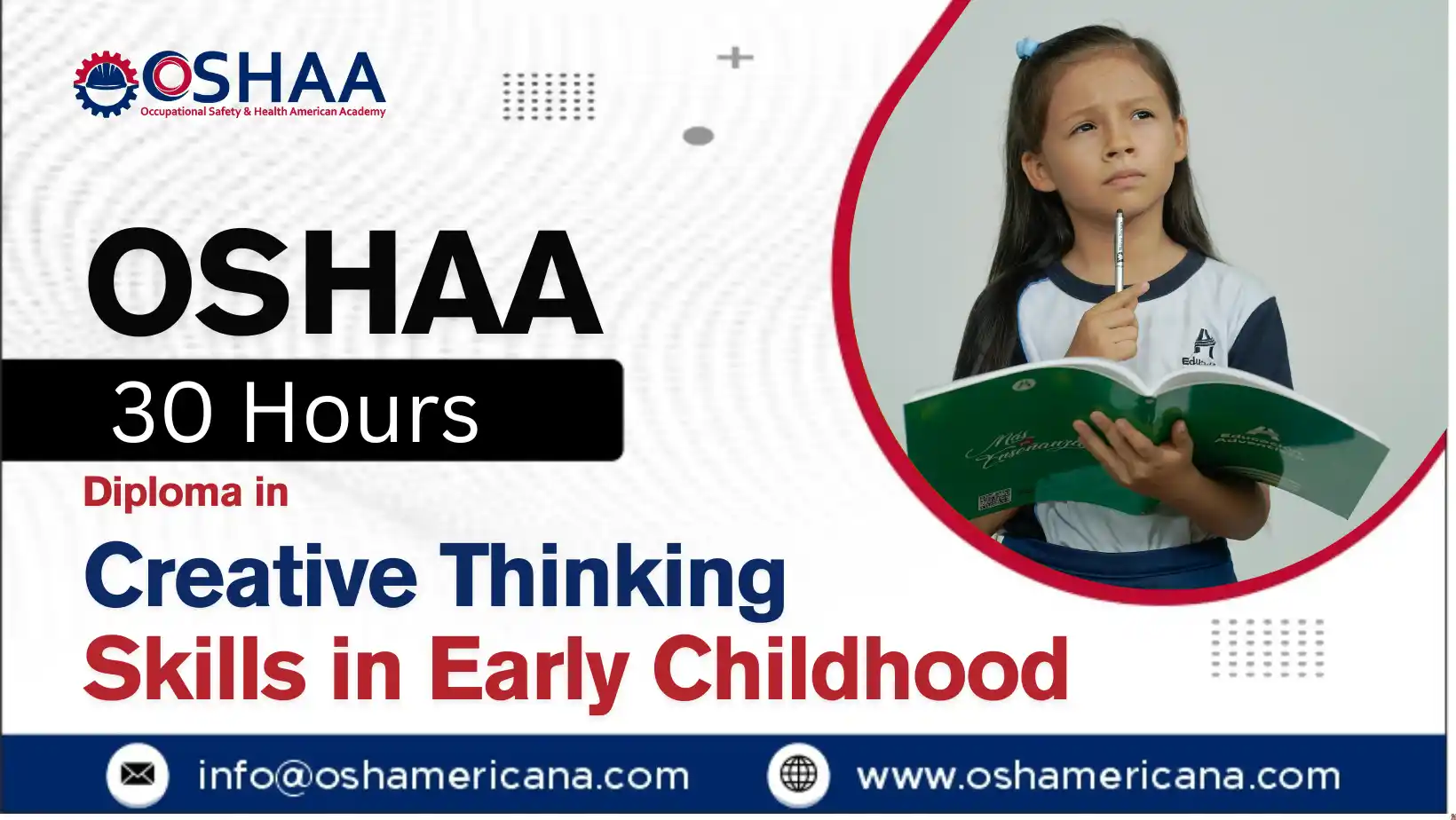
Diploma in Creative Thinking Skills in Early Childhood Development
Creative thinking is a vital aspect of a child’s cognitive, emotional, and social development. Fostering creativity from an early age encourages problem-solving, emotional expression, and adaptability—skills essential for lifelong learning. The OSHAA 30-Hours Diploma in Creative Thinking Skills in Early Childhood is a specialised training programme designed to equip participants with practical techniques and theoretical insights to inspire and support creative thinking in young children.
This diploma offers a focused and practical exploration of how creativity can be nurtured and enhanced during the formative years of childhood. Participants will explore a wide range of approaches that stimulate imagination, critical thinking, and exploration across various early years settings.
The course draws upon current educational theory, child development frameworks, and evidence-based practices to empower participants to create stimulating environments that encourage original thought and creative expression.
Spanning 30 guided hours, this diploma provides an interactive and engaging experience. Participants will learn how to design and implement activities that promote curiosity and independent thinking. The programme also covers the psychological and developmental foundations of creativity, offering a well-rounded understanding of how to support young children’s creative growth in a meaningful and responsive way.
The OSHAA 30-Hours Diploma in Creative Thinking Skills in Early Childhood has been designed with professional standards in mind. Participants benefit from a well-structured curriculum, informed by current research and practical needs within early years education.
OSHAA 30-Hours Diploma in Creative Thinking Skills in Early Childhood
- Age: 18 years or older
- Education: High school diploma or equivalent (Diplomas/certificates in Early Childhood Education, Teaching, Child Development, Psychology, or Montessori Studies preferred)
- Language: Proficient in English for reading and understanding course materials
- Computer Skills: Basic knowledge of MS Office and internet
- Work Experience: Not required, but teaching or childcare experience is an advantage
Study Units
Learning Outcomes
Understanding Creativity in Early Childhood Development (3 Hours)
- Define creativity within the context of early childhood education
- Identify the developmental stages where creative thinking typically emerges
- Explain the importance of nurturing creativity during the early years
Psychological Foundations of Creative Thinking (5 Hours)
- Understand key psychological theories related to creativity and cognition
- Analyse how brain development influences imaginative processes
- Recognise individual differences in creative expression among young children
- Explore the impact of motivation, emotion, and environment on creativity
Planning and Structuring Creative Learning Experiences (4 Hours)
- Design age-appropriate, play-based activities that foster creative thinking
- Structure learning opportunities that encourage problem-solving and innovation
- Integrate creative goals into daily routines and early years curricula
Role of Play in Enhancing Imagination and Innovation (5 Hours)
- Explain how various forms of play support creativity and learning
- Facilitate open-ended play experiences that stimulate imagination
- Encourage child-led exploration through guided and spontaneous play
Integrating Visual Arts, Music, and Movement (3 Hours)
- Incorporate artistic media into learning environments to support self-expression
- Use music and movement to develop sensory awareness and creativity
- Plan activities that combine art, rhythm, and physical expression in meaningful ways
Storytelling, Role-Play, and Language for Creative Expression (4 Hours)
- Use storytelling and narrative-based techniques to inspire creative language use
- Facilitate role-play activities that build empathy, communication, and imagination
- Support language development through imaginative dialogue and storytelling
Encouraging Exploration Through Nature and Science (3 Hours)
- Create opportunities for discovery-based learning using natural and scientific concepts
- Encourage curiosity through hands-on experiments and outdoor experiences
- Connect exploration activities to children’s interests and questions
Designing Creative and Inclusive Learning Environments (3 Hours)
- Develop physical spaces that stimulate creativity and independence
- Ensure learning environments are inclusive and culturally responsive
- Select materials and resources that promote imaginative and open-ended play
This diploma is designed to equip educators, childcare professionals, and anyone working with young children with the knowledge, skills, and strategies to foster creativity, critical thinking, and problem-solving abilities in early childhood. It combines theoretical understanding with practical application to enhance teaching effectiveness and promote holistic child development. Key benefits include:
- Develop creative teaching methods: Learn innovative approaches to stimulate imagination, curiosity, and exploration in young children. Discover how to design learning activities that encourage open-ended thinking and creativity.
- Enhance problem-solving and critical thinking skills: Equip children with strategies to think logically, make decisions, and approach challenges independently. Learn techniques to guide children in analyzing situations and finding solutions.
- Improve classroom engagement: Apply interactive and playful activities that make learning enjoyable, meaningful, and memorable for children. Foster an environment where children are motivated to participate and express themselves.
- Support holistic child development: Understand the cognitive, emotional, social, and behavioral aspects of development. Learn how creative thinking exercises can enhance overall growth, self-confidence, and social interaction in children.
- Practical strategies for educators: Gain hands-on methods to integrate creativity into daily classroom routines, lesson plans, and learning environments. Learn to adapt techniques for children with different learning needs.
- Promote lifelong learning habits: Encourage curiosity, exploration, and a love for learning from an early age. Help children develop independent thinking skills that benefit them throughout life.
- Prepare for advanced certifications: Build a strong foundation for further training and professional qualifications in early childhood education, child development, Montessori teaching, or educational leadership.
- Enhance professional credibility: By completing this diploma, educators demonstrate their commitment to modern teaching practices, making them more employable in schools, childcare centers, and educational programs.
- Support collaborative learning: Learn to create group activities that foster teamwork, communication, and collaboration among children, enhancing their social and interpersonal skills.
This course is designed for educators, childcare professionals, and anyone working with young children who wants to enhance creativity and critical thinking in early learning environments. Suitable for:
- Educational coordinators and trainers aiming to design programs that promote holistic child development
- Early childhood teachers aiming to improve classroom engagement and learning outcomes
- Childcare professionals and caregivers seeking practical strategies for fostering creativity in children
- Students and graduates in Early Childhood Education, Teaching, or Child Development programs
- Montessori or preschool instructors looking to incorporate innovative teaching methods
- Parents or guardians interested in supporting their children’s creative thinking and problem-solving skills at home