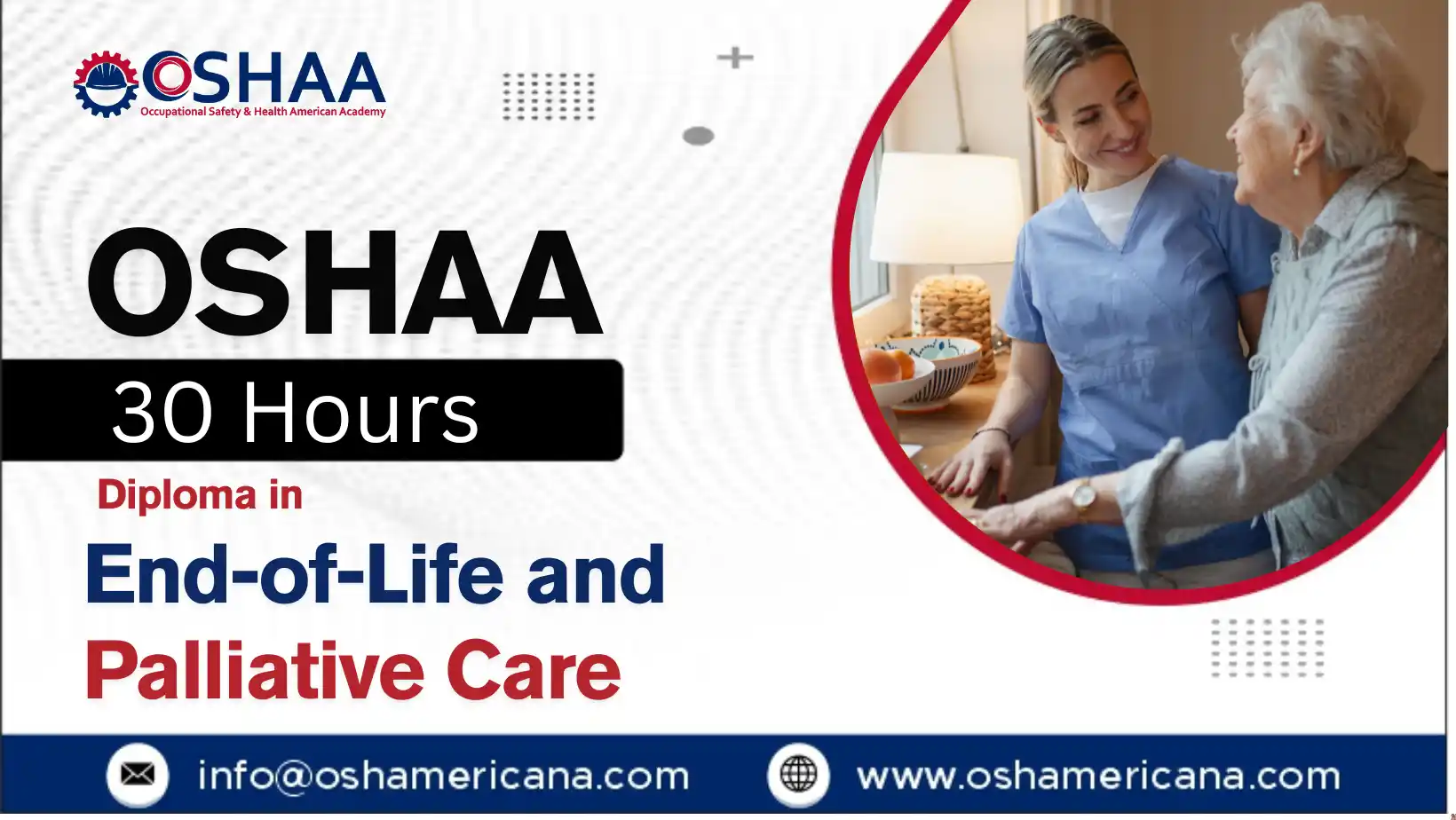
Diploma in End-of-Life and Palliative Care – Build Expertise in Compassionate Healthcare
End-of-life and palliative care are critical components of healthcare that focus on providing comfort, dignity, and holistic support to individuals facing terminal illness or advanced stages of chronic conditions. The OSHAA 30-Hours Diploma in End-of-Life and Palliative Care is designed to equip healthcare professionals and carers with the essential knowledge and practical skills required to deliver compassionate, person-centred care during this sensitive phase.
Palliative care aims to improve the quality of life for patients and their families by addressing physical symptoms, emotional wellbeing, spiritual needs, and social support. End-of-life care, a key part of palliative care, focuses specifically on comfort and dignity in the final days or weeks of life.
The OSHAA 30-Hours Diploma in End-of-Life and Palliative Care offers a comprehensive curriculum covering the principles, practices, and challenges of caring for patients at the end of life. The course content is designed to enhance understanding of symptom management, communication with patients and families, ethical considerations, and interdisciplinary teamwork.
The OSHAA 30-Hours Diploma in End-of-Life and Palliative Care is an invaluable resource for professionals committed to delivering compassionate, dignified care at life’s most critical moments. By combining clinical knowledge with empathetic practice, this course empowers participants to support patients and families with respect, kindness, and professionalism. Enrol today to make a meaningful difference in end-of-life care.
OSHAA 30-Hours Diploma in End-of-Life and Palliative Care
- • Age Requirement: Learners should be 16 years or above.
- • Educational Requirement: Minimum Matric or equivalent qualification (background in healthcare, nursing, social care, or psychology is helpful).
- • Language Requirement: Basic understanding of English is required for study materials and assessments.
- • Experience: No prior experience is required, but experience in caregiving, healthcare, or support work is an advantage.
- • Personal Skills: Compassion, empathy, and willingness to work in sensitive care environments are highly recommended.
Study Units
Learning Outcomes
Introduction to End-of-Life and Palliative Care Principles (3 Hours)
- Understand the core philosophy and objectives of palliative and end-of-life care
- Recognise the difference between curative and palliative approaches
- Appreciate the importance of holistic, person-centred care at the end of life
Understanding Terminal Illness and Disease Progression (4 Hours)
- Identify common terminal illnesses and their typical progression
- Understand the physical, emotional, and social changes experienced by patients
- Recognise signs indicating the transition to end-of-life stage
Symptom Management and Pain Relief Strategies (5 Hours)
- Understand common symptoms associated with terminal illness and their impact
- Learn evidence-based techniques for pain management and symptom control
- Apply pharmacological and non-pharmacological approaches to improve patient comfort
Communication Skills with Patients and Families (4 Hours)
- Develop effective and compassionate communication techniques
- Learn how to discuss prognosis, treatment options, and patient wishes
- Manage difficult conversations with sensitivity and respect
Psychological and Emotional Support in Palliative Care (3 Hours)
- Recognise psychological challenges faced by patients and families
- Apply supportive strategies to address anxiety, depression, and fear
- Promote emotional resilience and wellbeing during end-of-life care
Spiritual Care and Cultural Sensitivity (5 Hours)
- Understand the role of spirituality in coping with terminal illness
- Recognise diverse cultural and religious beliefs influencing end-of-life care
- Provide culturally sensitive care that respects individual values and traditions
Legal and Ethical Considerations in End-of-Life Care (3 Hours)
- Understand key legal frameworks governing end-of-life decisions
- Explore ethical issues such as consent, autonomy, and refusal of treatment
- Apply best practices to uphold patients’ rights and dignity
Care Planning, Advance Directives, and Decision Making (3 Hours)
- Learn how to develop personalised care plans with patients and families
- Understand the purpose and use of advance directives and living wills
- Support shared decision-making processes respecting patient autonomy
- • Gain comprehensive understanding of end-of-life and palliative care principles to support patients with dignity and compassion
- • Develop effective pain and symptom management knowledge to improve patient comfort and quality of life
- • Learn emotional and psychological support techniques for patients and their families during difficult times
- • Enhance communication skills for sensitive conversations in palliative and hospice care settings
- • Understand ethical and legal aspects of end-of-life care to ensure professional responsibility
- • Improve holistic care approaches focusing on physical, emotional, social, and spiritual needs
- • Build confidence in providing compassionate care in hospitals, hospices, and home-care environments
- • Strengthen teamwork skills for working with multidisciplinary healthcare professionals
- • Increase career opportunities in nursing, healthcare, hospice care, and support services
- • Create a strong foundation for advanced studies in nursing, palliative care, and healthcare management
The OSHAA 30-Hours Diploma in End-of-Life and Palliative Care is designed for professionals and carers dedicated to providing compassionate support to individuals facing terminal illness. This course is ideal for:
- • Nurses and healthcare professionals seeking to enhance their knowledge of end-of-life and palliative care practices
- • Caregivers and support workers involved in providing comfort and daily care to terminally ill patients
- • Doctors and medical staff working in hospitals, hospices, and palliative care units
- • Healthcare assistants supporting patients with chronic, life-limiting, or terminal conditions
- • Social workers and counselors providing emotional and psychological support to patients and families
- • Medical and nursing students aiming to specialize in palliative or hospice care fields
- • Home care providers and family caregivers caring for elderly or seriously ill individuals
- • Community health workers involved in patient support and end-of-life care services
- • Volunteers working in hospice care settings and patient support organizations
Whether you are directly involved in patient care or supporting families and multidisciplinary teams, this diploma equips you with essential skills to deliver dignified and effective end-of-life care.