OSHAA 30-Hours Professional Diploma in Asbestos Awareness for Construction Workers
Build essential awareness of asbestos hazards in construction, renovation, demolition and maintenance environments. This 30-hour OSHAA course introduces learners to asbestos-containing materials, associated health risks, hazard recognition, exposure prevention, incident reporting and relevant U.S. workplace requirements.
Designed for construction workers and related personnel, the course explains why suspected asbestos-containing materials must not be disturbed and why assessment and regulated work must be handled through appropriate qualified personnel and procedures.
About the Asbestos Awareness Course
Asbestos is a group of naturally occurring minerals that were historically used in many construction products because of their heat resistance, strength and insulating properties. Older buildings may still contain asbestos-containing materials (ACM), which can release hazardous fibers if disturbed.
In the United States, construction workers may encounter suspected asbestos-containing materials during renovation, demolition, repair and maintenance work. Inhaling airborne asbestos fibers can cause serious diseases, including asbestosis, lung cancer and mesothelioma. Because these diseases may take many years to develop, preventing exposure is essential.
The OSHAA 30-Hours Professional Diploma in Asbestos Awareness for Construction Workers introduces learners to asbestos types and uses, health effects, hazard recognition, applicable U.S. requirements, exposure prevention, incident response, health surveillance awareness and asbestos waste-management principles. The course emphasizes recognizing suspected hazards, stopping work that could disturb them, and reporting concerns through established site procedures.
Who Should Take This Course?
This course is intended for people who may encounter asbestos-containing materials while working in construction and related environments.
Entry Requirements
- Age
- Learners should be at least 18 years old.
- Education
- A high school diploma or equivalent is recommended.
- Experience
- Previous construction experience is helpful but not mandatory.
- Language
- English reading and comprehension skills sufficient to understand course materials and assessment questions.
- Preparation
- Previous health and safety training may be beneficial but is not required by the published course information.
Course Study Units
The 30-hour OSHAA asbestos awareness diploma is organized into seven units covering asbestos hazards, health risks, U.S. regulatory requirements, exposure prevention, incident response and awareness of controlled asbestos work.
| # | Study Unit | Duration |
|---|---|---|
| 1 | Introduction to Asbestos and Health Risks | 4 hours |
| 2 | Legal and Regulatory Requirements for Asbestos | 5 hours |
| 3 | Identifying and Assessing Asbestos Risks in the Workplace | 4 hours |
| 4 | Asbestos Control Measures and Safe Work Practices | 5 hours |
| 5 | Emergency Response and Asbestos Incident Management | 4 hours |
| 6 | Health Surveillance and Monitoring for Construction Workers | 4 hours |
| 7 | Asbestos Removal and Waste Management | 4 hours |
| Total course duration | 30 hours | |
Learning Outcomes
By completing the seven units, learners should develop an understanding of asbestos hazards, related health risks, relevant U.S. requirements and the procedures for recognizing and reporting suspected asbestos hazards in construction environments.
1Introduction to Asbestos and Health Risks
- Explain what asbestos is and identify its common forms.
- Describe historical uses of asbestos in construction materials and building systems.
- Recognize examples of materials that may contain asbestos.
- Explain the health effects associated with inhaling asbestos fibers, including asbestosis, lung cancer and mesothelioma.
- Describe why preventing disturbance of suspected asbestos-containing materials is important.
2Legal and Regulatory Requirements for Asbestos
- Identify the purpose and general scope of OSHA 29 CFR 1926.1101 for construction work.
- Describe relevant employer and employee responsibilities under applicable asbestos requirements.
- Recognize the role of EPA asbestos rules, including the NESHAP requirements for covered demolition and renovation activities.
- Explain the purpose of asbestos-containing material identification, employee information and required training.
- Recognize that state and local requirements may add to applicable federal requirements.
3Identifying and Assessing Asbestos Risks in the Workplace
- Recognize building materials and work activities that may involve asbestos hazards.
- Explain the terms asbestos-containing material (ACM) and presumed asbestos-containing material (PACM).
- Identify renovation, demolition, drilling, cutting and repair activities that may disturb suspected materials.
- Explain why visual inspection alone cannot reliably confirm whether a material contains asbestos.
- Describe the importance of reporting suspected materials and referring assessment or sampling to qualified personnel.
4Asbestos Control Measures and Safe Work Practices
- Explain how asbestos fibers may become airborne when asbestos-containing materials are disturbed.
- Recognize the purpose of restricted areas, warning signs and access controls.
- Describe the role of engineering controls, work practices and respiratory protection in regulated asbestos work.
- Explain why workers must follow site-specific instructions and avoid disturbing suspected materials.
- Identify basic exposure-prevention and communication practices relevant to construction sites.
5Emergency Response and Asbestos Incident Management
- Recognize situations involving accidental disturbance of suspected asbestos-containing materials.
- Explain why work should stop when suspected asbestos-containing materials are unexpectedly disturbed.
- Identify the importance of preventing access to the affected area and avoiding activities that could spread dust.
- Describe reporting and escalation through the employer or site safety representative.
- Explain why cleanup and re-entry decisions must be handled by appropriately qualified personnel under applicable procedures.
6Health Surveillance and Monitoring for Construction Workers
- Explain the long-term health risks associated with asbestos exposure.
- Describe the purpose of occupational exposure monitoring under applicable OSHA requirements.
- Identify the general purpose of medical surveillance for employees covered by the construction asbestos standard.
- Explain the importance of communicating potential exposure and following employer medical procedures.
- Recognize the role of accurate exposure and medical records in occupational health programs.
7Asbestos Removal and Waste Management
- Explain why asbestos removal and abatement activities require applicable regulatory controls and appropriately trained personnel.
- Recognize the purpose of containment, controlled work areas and decontamination procedures.
- Describe general requirements for handling, packaging, labeling and disposal of asbestos-containing waste.
- Identify the importance of applicable EPA NESHAP requirements for covered asbestos demolition and renovation work.
- Explain why awareness training does not, by itself, establish qualification to perform asbestos removal, inspection or abatement work.
Assessment and Certification
How You Are Assessed
- The assessment is administered through an OSHAA Approved Training Partner (ATP).
- The examination consists of 100 multiple-choice questions (MCQs) covering the course units and key asbestos awareness concepts.
- Learners must achieve a minimum score of 70% to pass the assessment.
Your Certificate
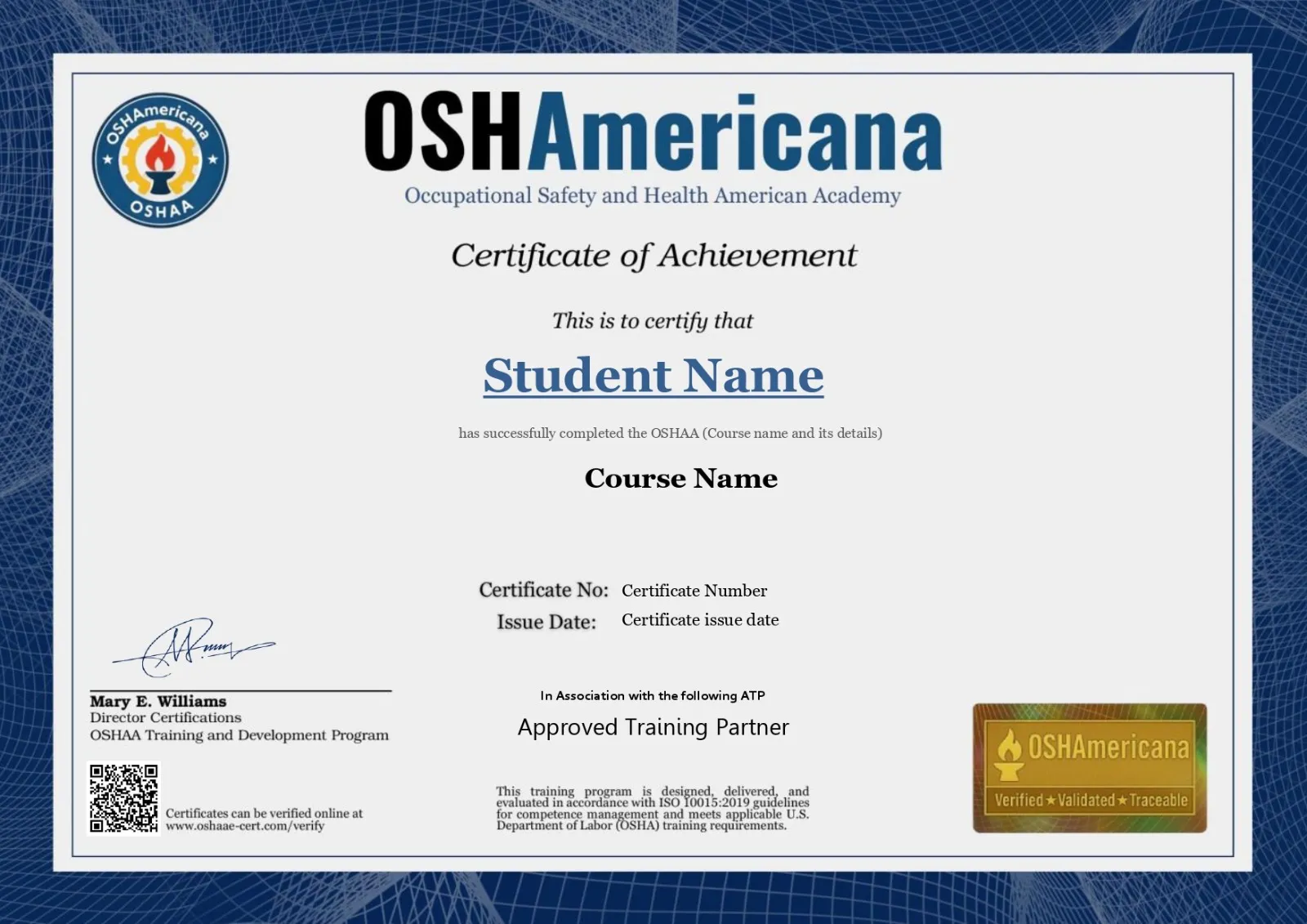
After completing the course requirements and achieving the required assessment result, successful learners receive the OSHAA 30-Hours Professional Diploma in Asbestos Awareness for Construction Workers. Certificate details can be checked through the OSHAA verification service.
Benefits of the Asbestos Awareness Course
Understand Asbestos Hazards
Build awareness of asbestos types, historical construction uses and materials that may contain asbestos.
Recognize Health Risks
Understand the serious and long-term health effects associated with inhaling asbestos fibers.
Understand U.S. Requirements
Develop introductory knowledge of OSHA construction asbestos requirements and relevant EPA rules.
Improve Hazard Recognition
Recognize activities that may disturb suspected asbestos-containing materials and create exposure risks.
Support Exposure Prevention
Understand the purpose of restricted areas, safe work practices, protective measures and site procedures.
Respond to Suspected Incidents
Know why work should stop, access should be controlled and concerns should be reported through established channels.
Understand Controlled Asbestos Work
Learn about the roles of qualified personnel, regulated removal activities and asbestos waste-management principles.
Strengthen Professional Awareness
Add structured asbestos awareness learning to construction and workplace safety professional development.
Related Career and Professional Development Opportunities
The course provides asbestos awareness knowledge that may be relevant to construction and building-maintenance work. Job eligibility depends on an individual’s experience, education, employer requirements and any additional training, licenses or credentials required for a position.
Construction Worker
Uses asbestos hazard awareness when carrying out construction tasks in older buildings.
Demolition and Renovation Worker
Recognizes the importance of identifying and reporting suspected asbestos-containing materials before work proceeds.
Maintenance Technician
Applies awareness when maintaining or repairing older building systems and components.
Building Facilities Assistant
Supports safe facilities operations by following site asbestos information and reporting procedures.
Construction Site Support Staff
Contributes to site communication and awareness of potential asbestos hazards.
Construction Safety Assistant
Supports safety communication, hazard reporting and awareness activities under appropriate supervision.
Frequently Asked Questions About Asbestos Awareness
What is the OSHAA 30-Hours Professional Diploma in Asbestos Awareness for Construction Workers?
It is a 30-hour OSHAA course that introduces construction workers to asbestos hazards, health effects, hazard recognition, exposure prevention, incident reporting and relevant U.S. workplace requirements.
Who should take this asbestos awareness course?
The course is relevant to construction workers, demolition and renovation workers, tradespeople, maintenance staff, site supervisors and people developing construction safety knowledge.
Where may asbestos be found in construction buildings?
Asbestos may be present in older insulation, ceiling and floor products, roofing materials, cement products, pipe insulation and other building components. Appearance alone cannot confirm whether a material contains asbestos.
What is OSHA 29 CFR 1926.1101?
OSHA 29 CFR 1926.1101 is the construction industry standard for occupational exposure to asbestos. It addresses matters such as exposure limits, regulated areas, work practices, protective measures, employee information and training.
What should a construction worker do if suspected asbestos is discovered?
Workers should stop activities that could disturb the material, avoid creating dust, keep others away from the affected area and report the concern to their supervisor or designated safety representative. Assessment and further action should be arranged through appropriate qualified personnel and site procedures.
Does this awareness course qualify learners to remove asbestos?
No. General asbestos awareness and specialist asbestos removal, inspection or abatement training are different. Certain asbestos activities require additional training, accreditation or licensing under applicable federal, state and local requirements.
What are the entry requirements?
Learners should be at least 18 years old. A high school diploma or equivalent is recommended. Previous construction experience is helpful but is not mandatory, and learners should have sufficient English skills to understand the course and assessment.
How long does the course take to complete?
The course is structured as 30 hours across seven study units.
How is the course assessed?
The assessment consists of 100 multiple-choice questions (MCQs). Learners must achieve a minimum score of 70% to pass.
Is the course available online or in person?
Study formats depend on the OSHAA Approved Training Partner. Contact the selected partner to confirm available online, classroom or blended arrangements.
Who issues the course certificate?
Successful learners receive the OSHAA 30-Hours Professional Diploma in Asbestos Awareness for Construction Workers, subject to completion of the course requirements and the required assessment result.
How can I find an OSHAA Approved Training Partner?
Visit the OSHAA Approved Training Partner directory or contact support@oshamericana.com for assistance.
How to Study the OSHAA Asbestos Awareness Course
Learners enroll and study through an OSHAA Approved Training Partner, which provides course delivery and learner support. Available study formats, schedules and fees are confirmed by the selected partner.
- 1
Find a Training Partner
Choose an OSHAA Approved Training Partner or contact OSHAA for assistance.
- 2
Confirm Enrollment
Check the entry requirements, course fees, study format and schedule with the partner.
- 3
Complete the Seven Units
Study the 30-hour course covering asbestos awareness and construction workplace hazards.
- 4
Complete the Assessment
Attempt the 100-question MCQ assessment and achieve at least 70% to pass.
- 5
Receive Your OSHAA Certificate
Successful learners receive an OSHAA course certificate that can be checked through the verification service.