Unlock Professional Opportunities with OSHAA Food and Nutrition Diploma
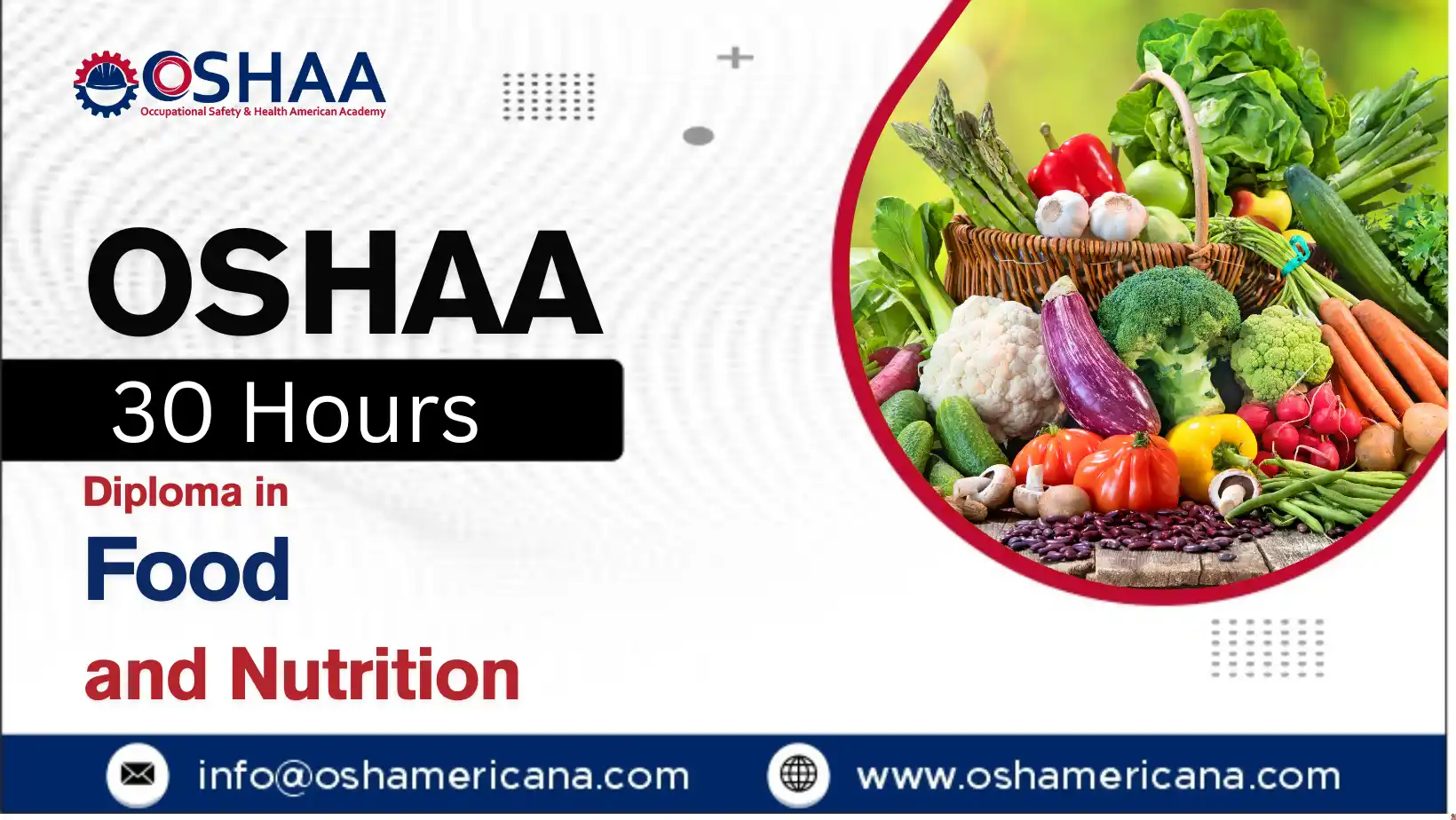
The OSHAA 30-Hours Professional Diploma in Food and Nutrition is a comprehensive programme designed to provide participants with a solid foundation in the science of nutrition, dietary planning, and the role of food in maintaining health and preventing disease. This diploma is ideal for individuals seeking to deepen their understanding of nutritional principles and apply evidence-based dietary practices in both personal and professional settings.
This professionally structured diploma explores key topics in human nutrition, including macro and micronutrients, food groups, digestion and metabolism, and the impact of dietary habits on long-term health. The programme also examines the relationship between nutrition and lifestyle-related conditions such as obesity, diabetes, cardiovascular disease, and digestive disorders.
Delivered over 30 hours, the diploma integrates scientific theory with practical application, enabling participants to assess nutritional needs, make informed dietary choices, and implement nutritional strategies to support wellness across various populations.
The OSHAA 30-Hours Professional Diploma in Food and Nutrition empowers participants with the knowledge and skills to make informed dietary decisions and promote healthier living. With a practical approach grounded in scientific research, this course offers a valuable opportunity for personal growth and professional enhancement in the evolving field of nutrition.
OSHAA 30-Hours Professional Diploma in Food and Nutrition
- Age: 18 years or older.
- Education: High school diploma or equivalent. Related diplomas in Nutrition, Health & Safety, or Food Safety are a plus.
- Language: Good English reading, writing, and speaking skills.
- Work Experience: Not required but beneficial.
Study Units
Learning Outcomes
Introduction to Food and Nutrition Science (3 Hours)
- Understand the fundamental concepts and scope of food and nutrition science
- Recognise the role of nutrition in promoting health and preventing disease
- Identify essential nutrients and the importance of a balanced diet
- Explore historical, cultural, and social influences on dietary habits
- Appreciate the impact of nutrition on overall wellbeing and lifestyle choices
Macronutrients: Carbohydrates, Proteins, and Fats (4 Hours)
- Distinguish between carbohydrates, proteins, and fats and their biological roles
- Analyse major dietary sources and recommended intake levels
- Evaluate the health effects of macronutrient imbalance
- Understand energy metabolism and caloric contributions of each macronutrient
- Recognise the role of macronutrients in physical performance and body function
Micronutrients: Vitamins and Minerals (3 Hours)
- Identify essential vitamins and minerals and their physiological functions
- Understand signs, symptoms, and consequences of deficiencies and toxicities
- Assess food sources rich in key micronutrients
- Interpret the role of micronutrients in immunity and metabolic health
- Recognise the importance of adequate intake for disease prevention
Digestive System and Nutrient Absorption (6 Hours)
- Describe the structure and function of the human digestive system
- Understand the stages of digestion and nutrient absorption
- Examine factors influencing nutrient bioavailability and absorption efficiency
- Identify common digestive disorders and their nutritional implications
- Recognise the link between gut health and overall nutrition status
Nutrition Through the Life Cycle (3 Hours)
- Understand nutritional requirements across different life stages
- Recognise dietary needs during pregnancy, infancy, childhood, adolescence, and ageing
- Explore nutrition’s role in growth, development, and healthy ageing
- Adapt meal planning strategies to support each stage of life
- Promote lifelong healthy eating habits
Dietary Guidelines and Meal Planning Principles (5 Hours)
- Interpret national and international dietary guidelines and food models
- Apply principles of portion control and balanced meal composition
- Develop nutritionally appropriate meal plans for individuals and families
- Evaluate dietary patterns against health and nutrition recommendations
- Support informed food choices through evidence-based planning
Nutrition and Chronic Disease Management (4 Hours)
- Understand the role of nutrition in preventing and managing chronic diseases
- Identify dietary and lifestyle risk factors affecting long-term health
- Explore therapeutic diets and evidence-based nutritional interventions
- Recognise the importance of lifestyle modification in disease prevention
- Support health outcomes through sustainable nutrition strategies
Evaluating Food Labels and Nutritional Claims (2 Hours)
- Interpret nutritional labels, ingredient lists, and portion information
- Assess the accuracy and credibility of health and nutrition claims
- Understand food labelling regulations and consumer rights
- Make informed decisions when selecting packaged and processed foods
- Promote responsible and health-conscious purchasing choices
The OSHAA 30-Hours Professional Diploma in Food and Nutrition offers a wide range of practical and professional benefits for participants seeking to enhance their nutritional knowledge and apply it effectively in real-world contexts.
- Gain in-depth knowledge: Learn the fundamentals of food science, nutrition, and dietary planning.
- Enhance practical skills: Apply nutrition principles to real-life scenarios and meal planning.
- Promote healthy living: Understand dietary requirements for different age groups and conditions.
- Improve workplace competence: Implement safe food handling and hygiene practices.
- Earn recognized certification: Receive an OSHAA 30-Hours Professional Diploma to boost your professional profile.
- Boost career opportunities: Qualify for roles in healthcare, dietetics, wellness, and food industries.
- Combine with related programs: Pair with Food Safety, Health & Safety, or Fitness diplomas for a versatile skill set.
- Stay updated with industry trends: Learn current nutrition guidelines and best practices.
- Support clients and communities: Help individuals make informed dietary choices and improve overall wellness.
- Prepare for advanced training: Build a foundation for higher-level certifications in nutrition or health care.
This diploma is designed for participants from a variety of backgrounds who wish to deepen their understanding of food and nutrition for personal, academic, or professional purposes. It is particularly suitable for:
- Aspiring nutritionists: Learners aiming to start a career in nutrition, dietetics, or wellness.
- Healthcare professionals: Nurses, caregivers, and allied health staff wanting to improve dietary knowledge.
- Food industry workers: Chefs, caterers, and food service staff looking to enhance nutrition expertise.
- Wellness and fitness experts: Personal trainers, fitness coaches, and lifestyle consultants seeking nutrition insights.
- Educators and trainers: Individuals delivering nutrition or health-related workshops or programs.
- Career changers: Professionals aiming to shift into food, nutrition, or health-related roles.
- Health-conscious individuals: Learners wanting to gain practical knowledge to promote healthy lifestyles.