Professional National Water Safety Management – OSHAA 30-Hours
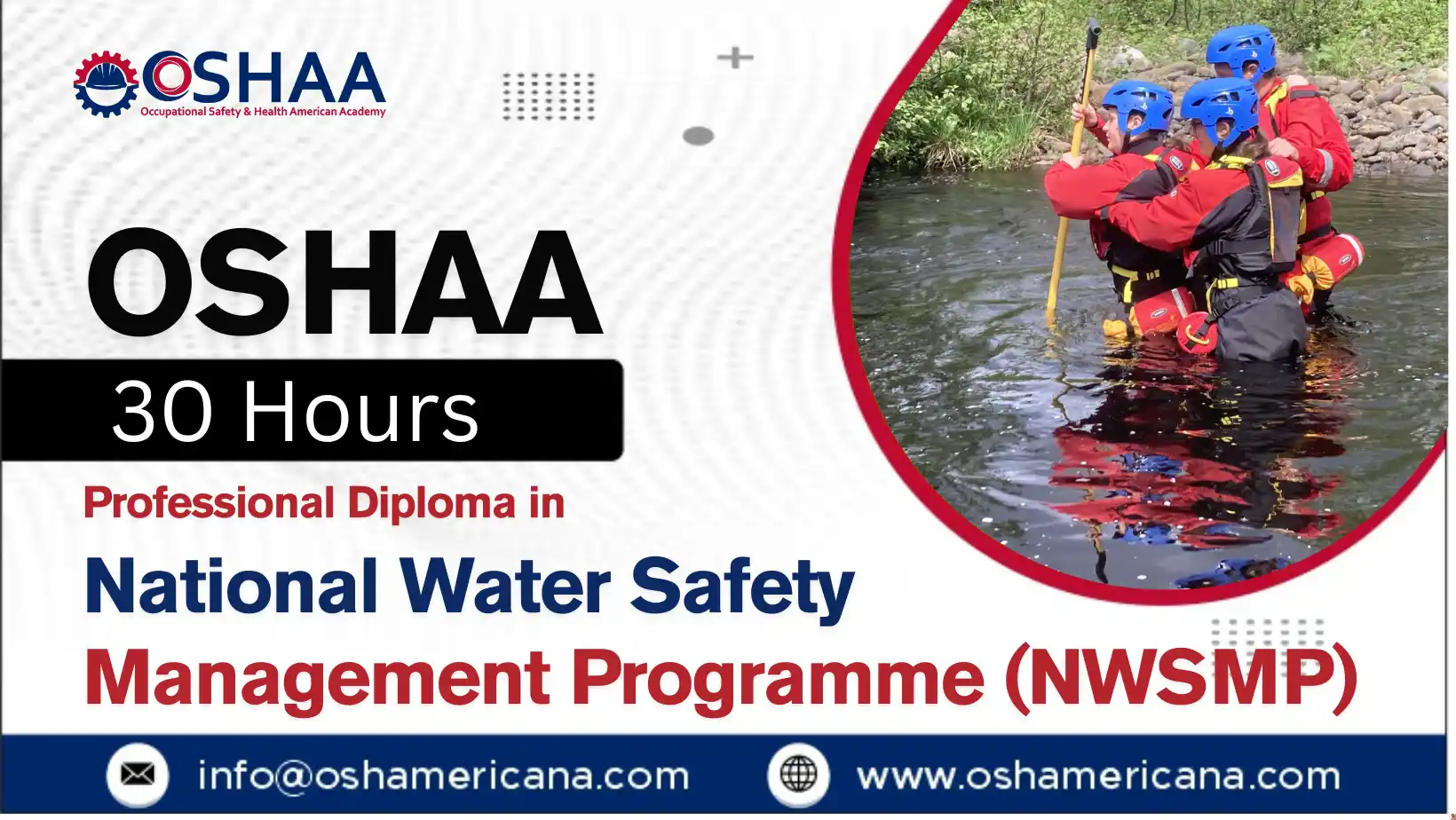
The OSHAA 30-Hours Professional Diploma in National Water Safety Management Programme (NWSMP) is an advanced qualification designed to equip participants with the knowledge and practical expertise needed to manage water safety across a wide range of aquatic environments. Awarded by OSHAA, this programme meets high professional standards and delivers essential skills for effective water safety governance and operational excellence.
Participants explore a comprehensive curriculum covering key water safety principles, including hazard identification, risk assessment, and the development of effective safety management systems. The course blends theoretical learning with practical application, enabling learners to design, implement, and evaluate water safety procedures for swimming pools, open water sites, leisure facilities, and community aquatic programmes.
Strong emphasis is placed on regulatory compliance, legal responsibilities, and industry best practices, ensuring participants understand legislative requirements and ethical duties in water safety management. The programme also covers emergency preparedness, incident response planning, and staff training strategies to build a proactive safety culture.
Throughout the training, participants develop advanced skills in safety auditing, risk control implementation, and stakeholder engagement to improve overall safety performance. Continuous improvement is encouraged through reporting, data analysis, and adaptive management approaches.
OSHAA 30-Hours Professional Diploma in National Water Safety Management Programme (NWSMP)
- Age: 18 years or older
- Education: High school diploma or equivalent
- Language: Basic English proficiency
- Work Experience: Not required but helpful.
- Related Background: Diplomas or certificates in Lifesaving, Water Safety, Emergency Response, First Aid, or Occupational Safety are advantageous.
Study Units
Learning Outcomes
Introduction to Water Safety Management and Roles (3 Hours)
- Understand the key roles and responsibilities in water safety management
- Recognise the importance of effective water safety governance
- Identify the scope and objectives of water safety programmes
Legal and Regulatory Frameworks in Water Safety (3 Hours)
- Describe relevant laws and regulations governing water safety
- Apply legal requirements to ensure compliance in aquatic environments
- Understand the consequences of non-compliance for organisations and individuals
Principles of Risk Assessment and Hazard Identification (4 Hours)
- Conduct thorough risk assessments specific to water safety contexts
- Identify potential hazards in diverse aquatic environments
- Develop strategies to mitigate identified risks effectively
Developing and Implementing Water Safety Policies and Procedures (4 Hours)
- Design comprehensive water safety policies aligned with best practices
- Implement procedures to enhance safety and reduce incidents
- Monitor and review policies for ongoing effectiveness
Emergency Preparedness and Incident Response Planning (4 Hours)
- Develop robust emergency preparedness plans for aquatic settings
- Coordinate incident response activities efficiently during emergencies
- Ensure readiness through training and resource allocation
Safety Audits and Compliance Monitoring (3 Hours)
- Perform detailed safety audits to evaluate water safety measures
- Monitor compliance with established safety standards and policies
- Recommend improvements based on audit findings
Training and Development for Water Safety Staff (3 Hours)
- Plan and deliver effective training programmes for safety personnel
- Enhance staff competence and awareness in water safety practices
- Evaluate training outcomes to ensure continuous professional development
Communication Strategies and Stakeholder Engagement (3 Hours)
- Develop clear communication plans to promote water safety awareness
- Engage stakeholders including staff, users, and regulatory bodies
- Foster a collaborative culture supportive of safety initiatives
Data Collection, Reporting, and Continuous Improvement (3 Hours)
- Collect and analyse data related to water safety performance
- Prepare accurate reports to inform decision-making processes
- Implement continuous improvement cycles to enhance safety outcomes
This course equips participants with essential skills to manage water safety operations professionally. It prepares learners to handle emergencies effectively while ensuring compliance with safety standards.
- Develop water safety management skills for pools, beaches, and open water
- Learn risk assessment and emergency planning for safe operations
- Gain practical knowledge in rescue protocols and safety procedures
- Improve leadership and team coordination for managing rescue personnel
- Understand legal, ethical, and environmental responsibilities in water safety
- Enhance operational efficiency in aquatic safety management
- Receive a recognised professional diploma for career advancement
- Boost confidence and professionalism in emergency response and water safety roles
This course is designed for anyone responsible for water safety or interested in gaining professional skills in managing aquatic environments. It is suitable for both beginners and professionals seeking recognized certification.
- Lifeguards and rescue personnel aiming to enhance their qualifications
- Water safety officers and emergency responders managing aquatic operations
- Pool, beach, and open water supervisors responsible for safety
- Swimming instructors and aquatic coaches wanting advanced safety knowledge
- Volunteers or staff in rescue and emergency services
- Organizations aiming to train teams in water safety and emergency management
- Their professional qualifications and leadership in water safety management