
OSHAA 30-Hours Professional Diploma in Wellbeing
Build a practical understanding of personal and workplace wellbeing through this 30-hour professional diploma. Explore emotional intelligence, stress management, resilience, physical wellness, mindfulness, positive relationships, healthy habits, and work-life balance.
The course is suitable for beginners and professionals who want to strengthen their wellbeing knowledge and apply supportive strategies in everyday and workplace settings. It focuses on awareness and personal development, not clinical diagnosis, counseling, or treatment.
About the Wellbeing Course
The OSHAA 30-Hours Professional Diploma in Wellbeing introduces the interconnected dimensions of physical, mental, emotional, and social wellbeing. Learners explore how daily routines, relationships, personal values, work demands, and the surrounding environment can influence overall wellness.
Across eight study units, the course examines emotional intelligence, self-awareness, stress management, resilience, movement, sleep, nutrition, mindfulness, communication, goal setting, and burnout prevention. It encourages practical reflection and the development of sustainable habits that can support a healthier and more balanced lifestyle.
Workplace topics are considered in a U.S. context. OSHA provides guidance for employers on identifying and addressing workplace stressors; the Americans with Disabilities Act (ADA) may require reasonable accommodations for qualified employees with disabilities; and eligible employees of covered employers may qualify for leave under the Family and Medical Leave Act (FMLA) for certain serious health conditions. The application of these laws depends on their specific coverage and eligibility requirements. This course does not certify legal compliance or replace professional advice.
Who Should Take This Course?
Entry Requirements
- Age
- Learners should be at least 18 years old.
- Education
- A high school diploma or equivalent is recommended; no specific prior qualification is required.
- Experience
- No prior experience in wellbeing or wellness coaching is required.
- Language
- Basic English reading and writing skills are recommended to understand course materials and assessment questions.
- Preparation
- An interest in personal wellbeing, health promotion, or workplace wellness may be helpful.
Course Study Units
The 30-hour OSHAA Wellbeing diploma is organized into eight study units covering the core dimensions of wellbeing, emotional intelligence, stress management, physical health, mindfulness, social connection, personal motivation, and burnout prevention.
| # | Study Unit | Duration |
|---|---|---|
| 1 | Foundations of Wellbeing: Concepts and Core Principles | 3 hours |
| 2 | Emotional Intelligence and Self-Awareness | 4 hours |
| 3 | Stress Management and Resilience Techniques | 4 hours |
| 4 | Physical Wellbeing: Movement, Sleep, and Nutrition | 3 hours |
| 5 | Mindfulness, Relaxation, and Mental Clarity | 5 hours |
| 6 | Building Positive Relationships and Social Connection | 5 hours |
| 7 | Motivation, Goal Setting, and Habit Formation | 3 hours |
| 8 | Work-Life Balance and Burnout Prevention | 3 hours |
| Total course duration | 30 hours | |
Learning Outcomes
By completing the eight study units, Learners should develop foundational knowledge of wellbeing and practical strategies that can support personal development, healthy routines, positive relationships, and wellbeing awareness in workplace and community settings.
1Foundations of Wellbeing: Concepts and Core Principles
- Understand the key dimensions of wellbeing and how they interconnect
- Identify factors that influence individual and collective wellbeing
- Recognize the importance of a balanced approach to physical, mental, emotional, and social health
2Emotional Intelligence and Self-Awareness
- Define emotional intelligence and its role in personal wellbeing
- Develop greater self-awareness of thoughts, emotions, and behaviors
- Apply techniques to regulate emotions and improve interpersonal understanding
3Stress Management and Resilience Techniques
- Identify common sources and signs of stress
- Explore resilience-building strategies for coping with pressure and setbacks
- Use practical tools such as breathing techniques, time management, and cognitive reframing
4Physical Wellbeing: Movement, Sleep, and Nutrition
- Understand the impact of physical activity, rest, and diet on overall wellbeing
- Apply practical strategies for improving sleep hygiene and daily movement
- Recognize the role of balanced nutrition in supporting mental and physical health
5Mindfulness, Relaxation, and Mental Clarity
- Explore the principles of mindfulness and its effects on focus and calmness
- Practice relaxation techniques such as meditation and body scanning
- Enhance mental clarity and presence through mindful routines
6Building Positive Relationships and Social Connection
- Understand the role of social connection in mental and emotional wellbeing
- Identify characteristics of healthy, supportive relationships
- Strengthen communication, empathy, and active listening skills
7Motivation, Goal Setting, and Habit Formation
- Define personal values and align them with meaningful goals
- Use goal-setting models to create realistic and achievable objectives
- Build sustainable habits that support long-term wellbeing
8Work-Life Balance and Burnout Prevention
- Recognize signs of imbalance and burnout in personal and professional life
- Implement strategies to protect wellbeing while managing responsibilities
- Establish clear boundaries to maintain a healthy work-life rhythm
Assessment and Certification
How You Are Assessed
The assessment consists of 100 multiple-choice questions (MCQs) administered through an OSHAA Approved Training Partner. Learners must achieve a minimum score of 70% to pass. Questions assess understanding of wellbeing principles, emotional intelligence, stress management, resilience, healthy routines, mindfulness, social connection, and work-life balance.
Your Certificate
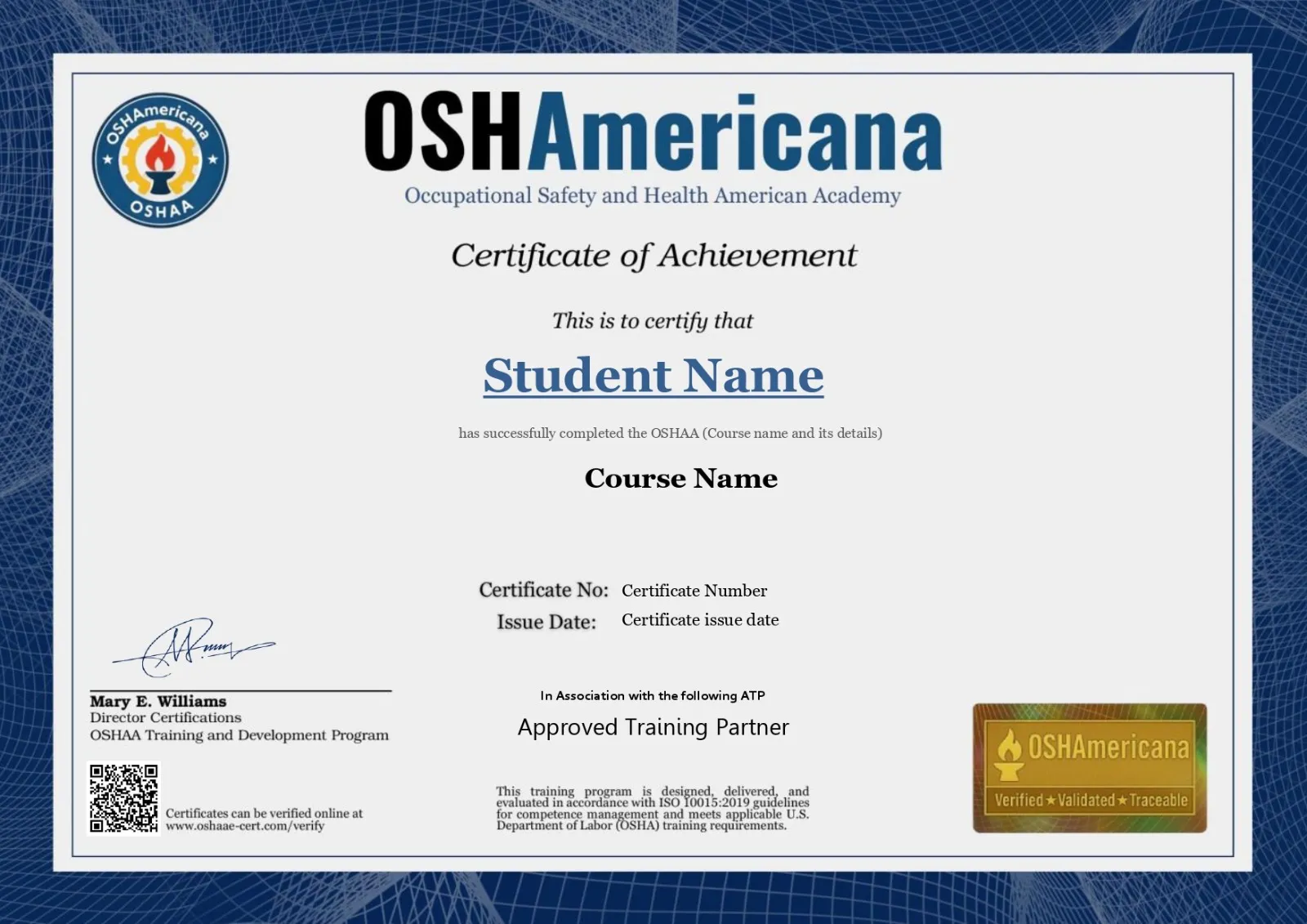
Learners who complete the course requirements and achieve the required assessment result receive the OSHAA 30-Hours Professional Diploma in Wellbeing certificate.
The diploma provides wellbeing education and professional development. It does not qualify a Learner to diagnose or treat mental health conditions, provide psychotherapy or licensed counseling, or perform any activity that requires a separate professional license.
Benefits of the Wellbeing Course
The course supports personal and professional development by building a structured understanding of wellbeing and practical approaches to everyday challenges.
Understand Holistic Wellbeing
Explore how physical, emotional, mental, and social factors interact and contribute to overall wellness.
Strengthen Stress Management
Learn practical approaches to recognize common stressors and respond to pressure more constructively.
Develop Emotional Intelligence
Build self-awareness, emotional regulation, empathy, and interpersonal understanding.
Support Healthy Daily Habits
Understand the role of movement, sleep, nutrition, and consistent routines in everyday wellbeing.
Improve Mindfulness and Focus
Explore relaxation and mindfulness practices that may support attention, calmness, and mental clarity.
Promote Positive Connections
Strengthen communication, active listening, boundaries, and awareness of work-life balance.
Related Career and Professional Development Opportunities
The diploma can complement existing experience in people-focused and workplace roles by adding foundational wellbeing knowledge. It does not provide a professional license or guarantee employment. Job eligibility depends on an individual’s education, experience, employer requirements, and any credentials required for the position.
Workplace Wellbeing Support
Build awareness relevant to employee wellbeing initiatives and supportive workplace practices.
Human Resources
Complement HR experience with knowledge of stress awareness, communication, and workplace wellbeing.
Healthcare and Care Support
Enhance general wellbeing awareness alongside the qualifications and scope required for a care role.
Education and Training
Apply wellbeing concepts to personal development and supportive learning environments.
Community Wellbeing Activities
Contribute to non-clinical community wellness and health-promotion activities within an appropriate role.
Further Learning
Use the course as a foundation for additional study in health promotion, workplace wellness, or related subjects.
Frequently Asked Questions About the Wellbeing Diploma
What is the OSHAA 30-Hours Professional Diploma in Wellbeing?
It is a 30-hour professional development course that introduces the dimensions of wellbeing, emotional intelligence, stress management, resilience, healthy routines, mindfulness, social connection, and work-life balance.
Who can enroll in this course?
The course is suitable for Learners aged 18 or older, including beginners and professionals interested in personal wellbeing, workplace wellness, or related people-focused roles. A high school diploma or equivalent is recommended, but no specific prior qualification or experience is required.
How long does the course take?
The course contains 30 learning hours across eight study units. The timetable and pace depend on the selected Approved Training Partner.
How is the course assessed?
The assessment consists of 100 multiple-choice questions (MCQs). Learners must achieve a minimum score of 70% to pass.
Will I receive a certificate?
Learners who complete the course requirements and pass the assessment receive the OSHAA 30-Hours Professional Diploma in Wellbeing certificate.
Does this diploma qualify me to provide counseling or mental health treatment?
No. The course provides general wellbeing education and does not qualify Learners to diagnose or treat mental health conditions, provide psychotherapy, or offer licensed counseling services.
Does the course cover U.S. workplace wellbeing?
Yes. The course discusses wellbeing in personal and workplace settings. Relevant U.S. topics may include OSHA workplace stress guidance, ADA reasonable accommodation principles, and FMLA leave eligibility for certain serious health conditions. The laws apply according to their own coverage and eligibility requirements.
Is the course available online or in person?
Available study formats depend on the OSHAA Approved Training Partner. Contact the selected partner to confirm online, classroom, or blended options.
What career areas can this course support?
The course may complement experience in human resources, workplace wellbeing, healthcare support, education, community wellness, and related areas. It does not guarantee employment or replace role-specific qualifications.
How can I find an OSHAA Approved Training Partner?
Visit the OSHAA Approved Training Partner page or contact support@oshamericana.com for assistance.
How to Study the OSHAA Wellbeing Course
Learners enroll and study through an OSHAA Approved Training Partner, which provides course delivery and learner support. Available study formats, schedules, and fees are confirmed by the selected partner.
- 1
Find a Training Partner
Choose an OSHAA Approved Training Partner or contact OSHAA for assistance.
- 2
Confirm Enrollment
Check the entry requirements, course fees, study format, and schedule with the partner.
- 3
Complete the Eight Study Units
Work through the 30-hour curriculum covering wellbeing, resilience, healthy habits, and workplace wellness.
- 4
Complete the Assessment
Attempt the 100-question MCQ assessment and achieve at least 70% to pass.
- 5
Receive Your OSHAA Certificate
Successful Learners receive an OSHAA course certificate that can be checked through the verification service.