
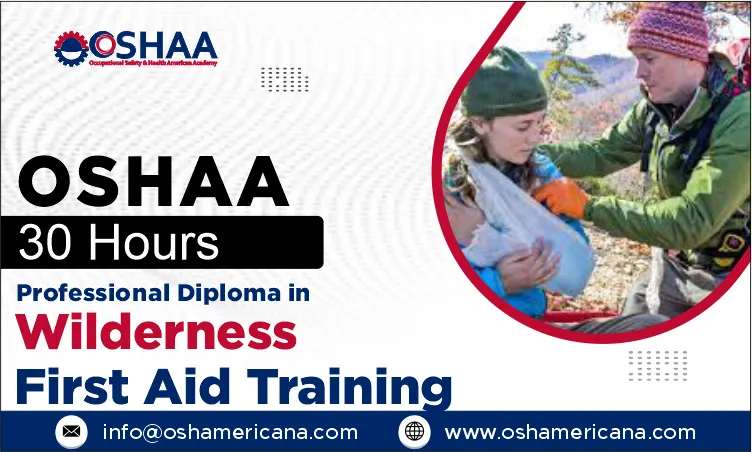
Expert OSHAA 30-Hours Wilderness First Aid Skills Course
The OSHAA 30-Hours Professional Diploma in Wilderness First Aid Training is designed to equip learners with essential knowledge and practical skills to respond effectively to medical emergencies in remote and outdoor environments where immediate professional medical help may not be available. It focuses on building confidence in managing injuries and illnesses under challenging and isolated conditions.
This course covers key areas such as patient assessment in wilderness settings, trauma management, fracture and wound care, hypothermia and heat-related illnesses, environmental emergencies, CPR, and emergency evacuation procedures. Learners will also gain an understanding of how to use limited resources effectively while ensuring patient safety until advanced medical support is reached.
By completing this training, participants will be prepared to handle emergencies in outdoor, remote, and survival situations. It is ideal for hikers, outdoor guides, adventure leaders, rescue workers, and anyone involved in outdoor activities or remote work environments who needs to develop strong first aid and emergency response skills in wilderness conditions.
OSHAA 30-Hours Professional Diploma in Wilderness First Aid Training
To enroll in the OSHAA 30-Hours Professional Diploma in Wilderness First Aid Training, learners should meet the following prerequisites:
- Age Requirement: Applicants should be at least 16 years of age at the time of registration.
- Educational Background: A minimum of secondary school education (or equivalent) is recommended. Prior qualifications such as certificates or training in First Aid, Basic Life Support (BLS), Emergency Care, Outdoor Safety, or Healthcare Assistance can be beneficial but are not mandatory.
- Language Proficiency: Basic understanding of English is required to comprehend emergency instructions, safety protocols, and training materials effectively.
- Physical Fitness: Basic physical fitness is recommended, as wilderness environments may require walking, carrying equipment, or responding in challenging outdoor conditions.
- Work/Interest Area: No prior experience is required. However, individuals involved in outdoor activities, adventure tourism, trekking, rescue operations, or remote work environments will benefit the most from this course.
This course is suitable for both beginners and professionals who want to develop or strengthen their ability to manage medical emergencies in wilderness and remote settings.
Study Units
Learning Outcomes
Introduction to Wilderness First Aid (2 Hours)
- Understand the key principles of wilderness first aid and its importance in remote settings.
- Learn the differences between standard first aid and wilderness first aid.
- Gain an overview of the types of medical emergencies commonly encountered in the wilderness.
Basic Principles of First Aid in Remote Environments (3 Hours)
- Learn the core principles of providing first aid in isolated environments with limited resources.
- Understand how to assess the safety of the scene and ensure personal and patient safety.
- Develop skills to prioritise treatment based on the severity of injuries and the availability of help.
CPR and Advanced Life Support in Wilderness Settings (4 Hours)
- Gain practical knowledge of how to perform CPR effectively in remote environments.
- Learn advanced life support techniques, including airway management and ventilation, in a wilderness context.
- Understand how to modify CPR protocols based on environmental conditions and available resources.
Managing Common Outdoor Injuries (4 Hours)
- Learn how to assess and treat common injuries such as cuts, sprains, strains, fractures, and burns in outdoor settings.
- Gain practical skills in wound care, bandaging, and splinting with limited resources.
- Understand how to prevent and manage infection in the wilderness.
Wilderness Trauma Management (5 Hours)
- Learn how to handle severe trauma, including head, neck, and spinal injuries, in remote environments.
- Understand the best techniques for stabilising injured individuals before evacuation or professional help arrives.
- Develop skills for assessing and managing internal injuries, bleeding, and shock in wilderness settings.
Environmental Illnesses and Medical Conditions (5 Hours)
- Gain knowledge of common environmental illnesses such as hypothermia, heat exhaustion, and dehydration.
- Learn how to recognise symptoms, provide treatment, and prevent environmental illnesses.
- Understand altitude sickness, frostbite, and other climate-related health conditions, and how to manage them effectively.
First Aid Kits for the Wilderness and Improvised Solutions (3 Hours)
- Learn how to pack and maintain an effective wilderness first aid kit with essential items for remote emergencies.
- Understand how to improvise first aid tools and solutions when standard supplies are unavailable.
- Gain practical knowledge of adapting your kit to specific environments and activities.
Recognizing and Responding to Medical Emergencies (4 Hours)
- Learn how to quickly assess and recognise signs of medical emergencies in the wilderness.
- Develop skills in responding effectively to emergencies while maintaining calm and prioritising treatment.
- Understand when and how to request outside assistance, including when to initiate evacuation procedures.
This course provides essential knowledge and practical skills to manage medical emergencies in remote and outdoor environments where immediate professional help is limited or unavailable. It helps learners respond confidently and effectively in wilderness situations.
- Career & Adventure Support: Enhance skills for outdoor guides, rescuers, and adventure professionals
- Emergency Response Skills: Learn how to assess and manage injuries in remote settings
- Survival First Aid: Gain knowledge of providing care with limited medical resources
- Trauma Management: Handle fractures, wounds, bleeding, and shock in the field
- Environmental Awareness: Understand and respond to hypothermia, heatstroke, and altitude sickness
- Patient Assessment: Develop skills for rapid and accurate condition evaluation outdoors
- Improvised Care Techniques: Learn how to use available materials for emergency treatment
- Evacuation Planning: Understand safe patient transport and rescue coordination
- Risk Management: Identify hazards in wilderness and outdoor environments
- Confidence Building: Improve decision-making under pressure in survival situations
This course is designed for individuals who operate, travel, or work in remote, outdoor, or high-risk environments where immediate medical assistance may not be readily available.
- Students of Outdoor Safety Programs: Learners preparing for careers in outdoor and rescue services
- Outdoor Adventure Guides: Trekking, hiking, camping, and expedition leaders
- Search & Rescue Personnel: Emergency responders working in remote and wilderness areas
- Mountaineers & Climbers: Individuals involved in high-altitude and extreme environment activities
- Tourism & Safari Staff: Guides and operators in adventure tourism and wildlife settings
- Military & Defense Personnel: Soldiers and field operatives working in isolated locations
- Disaster Response Teams: Workers involved in emergency relief and remote rescue operations
- Park Rangers & Wildlife Staff: Personnel working in national parks and forest areas
- Outdoor Educators: Trainers and instructors conducting outdoor survival or adventure programs
- Healthcare & First Aid Responders: Individuals providing emergency care in remote settings
- Expedition & Field Researchers: Scientists and researchers working in isolated environments
- Extreme Sports Participants: Individuals involved in rafting, climbing, skiing, and similar activities
- Volunteers in Remote Areas: NGO and humanitarian workers operating in hard-to-reach regions
- Adventure Enthusiasts: Individuals who frequently engage in wilderness travel and activities