Gain Expertise in Maritime Firefighting and Shipboard Safety with the Diploma
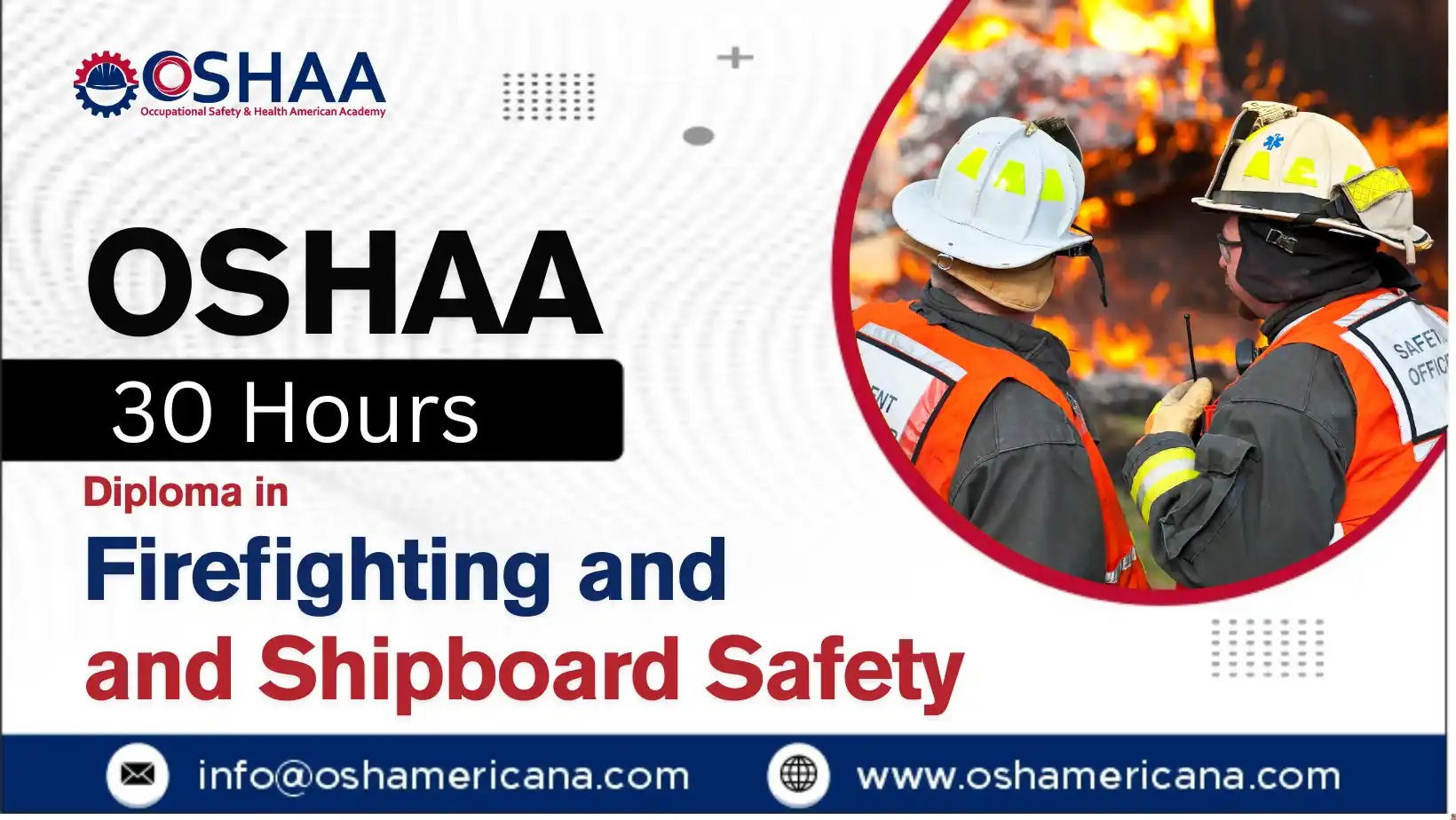
The OSHAA 30-Hours Diploma in Firefighting and Shipboard Safety is a specialist professional development course designed to equip participants with the skills and knowledge necessary to handle fire-related emergencies and safety procedures in maritime environments. This diploma offers an in-depth understanding of the hazards associated with shipboard operations and provides essential training in firefighting, prevention, emergency planning, and personal survival techniques.
Maritime safety requires a unique blend of technical knowledge and situational awareness. Whether working onboard vessels or supporting operations from the shore, professionals must be prepared to respond confidently to life-threatening incidents. This course is structured to reflect UK professional and safety standards, while also aligning with international best practices.
Participants who complete the OSHAA 30-Hours Diploma in Firefighting and Shipboard Safety will hold a continuing professional development (CPD) accredited qualification. This enhances both career progression and compliance with regulatory requirements in marine and offshore sectors.
Professionals involved in ship operations, marine engineering, offshore rig support, or port facility management will benefit from a clear understanding of how to manage emergencies and reduce risk to life and property at sea.
Shipboard fires and maritime emergencies can escalate rapidly due to confined spaces, fuel hazards, and remote locations. Effective safety training is essential not only for firefighting but for creating a culture of preparedness. This diploma reinforces that ethos through structured study, scenario-based learning, and industry-standard safety protocols.
OSHAA 30-Hours Diploma in Firefighting and Shipboard Safety
- Age: Participants must be 18 years or older.
- Education: High school diploma or equivalent; prior certifications in safety, maritime, or firefighting are advantageous but not mandatory.
- Language: Basic English proficiency to understand course materials and instructions.
- Work Experience: Experience in maritime, shipping, or safety roles is helpful but not required.
Study Units
Learning Outcomes
Introduction to Shipboard Safety and Emergency Protocols (3 hours)
- Understand the structure and importance of shipboard safety systems and emergency plans
- Identify roles and responsibilities during emergency scenarios at sea
- Recognise the procedures for raising alarms and initiating emergency response
Fundamentals of Marine Firefighting and Fire Science (4 hours)
- Explain the fire triangle and its relevance to marine environments
- Identify types of fires common to vessels and their causes
- Apply principles of fire behaviour and combustion in shipboard scenarios
Shipboard Fire Detection, Suppression Systems and Equipment Handling (4 hours)
- Understand different types of shipboard fire detection and alarm systems
- Operate fixed and portable fire suppression systems safely
- Demonstrate correct handling and maintenance of firefighting equipment
Personal Protective Equipment (PPE) and Breathing Apparatus Use (3 hours)
- Select and use appropriate PPE for firefighting and emergency response
- Operate self-contained breathing apparatus (SCBA) effectively
- Maintain and inspect PPE and breathing apparatus for operational readiness
Firefighting Strategies in Confined and Enclosed Spaces (4 hours)
- Apply tactical approaches to fire suppression in enclosed ship compartments
- Navigate and coordinate safely in low-visibility and restricted-access areas
- Manage ventilation and prevent backdrafts during firefighting efforts
Emergency Escape, Evacuation, and Muster Station Procedures (3 hours)
- Execute safe evacuation and escape procedures under simulated conditions
- Identify muster points and follow ship-specific evacuation protocols
- Understand crew accountability and passenger safety during emergencies
Enclosed Space Entry and Rescue Operations (4 hours)
- Conduct pre-entry checks and risk assessments for enclosed spaces
- Implement rescue procedures using approved safety techniques
- Coordinate with team members to perform safe and efficient recoveries
Personal Survival Techniques and Life-Saving Appliances (3 hours)
- Demonstrate survival strategies in cold water and open sea environments
- Operate life-saving appliances such as life jackets, life rafts, and EPIRBs
- Understand procedures for abandoning ship and surviving until rescue
Course Benefits: OSHAA 30-Hours Diploma in Firefighting and Shipboard Safety
- Understand fire hazards and safety protocols specific to maritime and shipboard environments.
- Learn firefighting techniques including prevention, control, and emergency response strategies.
- Develop skills in safety equipment usage such as fire extinguishers, alarms, and protective gear.
- Gain knowledge of shipboard emergency procedures and evacuation protocols.
- Enhance preparedness for maritime emergencies like fire outbreaks, smoke hazards, and chemical spills.
- Strengthen teamwork and communication skills during high-pressure safety situations.
- Apply international safety regulations and maritime safety standards effectively.
- Improve risk assessment and incident management for onboard fire and safety scenarios.
- Boost professional credentials for careers in maritime safety, shipping, and emergency response.
- Build a foundation for advanced safety and firefighting certifications for maritime professionals.
The OSHAA 30-Hours Diploma in Firefighting and Shipboard Safety is designed for participants involved in or preparing for roles in maritime safety, offshore operations, and emergency response. It is particularly suited to:
- Maritime professionals, including crew members and officers on cargo, passenger, and offshore vessels
- Port and dock workers responsible for vessel support and safety operations
- Emergency response and firefighting personnel working in marine or industrial environments
- Safety officers and health & safety practitioners within the shipping and oil & gas sectors
- Individuals pursuing careers in marine transport, defence, or commercial shipping requiring specialist fire and safety training
- Participants seeking CPD certification to meet regulatory or employer-mandated safety training requirements
This course is ideal for those committed to enhancing their competence in shipboard emergency response, firefighting techniques, and survival strategies in alignment with international maritime safety standards.