OSHAA 30-Hours Professional Diploma in Sports First Aid Practices
The OSHAA 30-Hours Professional Diploma in Sports First Aid Practices introduces the knowledge and first-response principles used when an athlete is injured or becomes unwell during practice, competition, or other physical activity. The course explores common sports injuries, emergency assessment, concussion awareness, cardiac emergencies, bleeding control, and heat-related illness.
Learners examine how to recognise urgent warning signs, take appropriate initial action within the limits of their training, and arrange professional medical assistance. The content also introduces relevant U.S. public-health guidance and the importance of following applicable state laws, school policies, sports-governing-body rules, and organizational emergency action plans.
About the Sports First Aid Practices Course
The OSHAA 30-Hours Professional Diploma in Sports First Aid Practices is designed for individuals who want to develop foundational knowledge of first aid in athletic and physical activity environments. It covers the initial response to common sports injuries and medical emergencies, with emphasis on recognising warning signs, protecting the injured person, and seeking appropriate professional help.
Learners explore soft-tissue injuries, possible fractures and dislocations, concussion, cardiac emergencies, CPR and AED response, bleeding, wounds, shock, and heat-related illness. The course also considers emergency action planning, prevention awareness, and the responsibilities and limitations of a first aider in sports settings.
For U.S. context, the course introduces concussion response principles reflected in CDC HEADS UP guidance and the importance of following applicable state concussion laws, school policies, league rules, and medical-provider instructions. CPR/AED learning should be distinguished from a separate CPR/AED certification issued by a recognized training provider.
Who Should Take This Course?
Entry Requirements
- Age
- Applicants must be 16 years or older.
- Education
- A high school diploma or equivalent is recommended. Related certificates in First Aid, Sports Science, Coaching, or Health and Safety are helpful.
- Experience
- No previous work experience is required.
- Language
- Basic English reading and comprehension are required.
- Preparation
- An interest in sports, fitness, athlete safety, or emergency response is beneficial.
Course Study Units
The course comprises eight study units with a combined duration of 30 learning hours.
| # | Study Unit | Duration |
|---|---|---|
| 1 | Introduction to Sports First Aid and the Role of the First Aider | 3 hours |
| 2 | Primary Survey and Emergency Scene Management | 3 hours |
| 3 | Musculoskeletal Injuries: Sprains, Strains, Fractures, and Dislocations | 4 hours |
| 4 | Head, Neck, and Spinal Injuries in Sport | 6 hours |
| 5 | Concussion Recognition and Return-to-Play Protocols | 3 hours |
| 6 | Cardiopulmonary Resuscitation (CPR) and AED Use in Sports Settings | 6 hours |
| 7 | Soft Tissue Injuries, Bleeding Control, and Wound Management | 3 hours |
| 8 | Environmental Factors: Heat Illness, Hypothermia, and Dehydration | 2 hours |
| Total course duration | 30 hours | |
Learning Outcomes
On completion of the study units, Learners should understand key sports first aid principles, recognise common injury and emergency warning signs, and explain appropriate first-response actions within the limits of their training.
1Introduction to Sports First Aid and the Role of the First Aider (3 Hours)
- Define the responsibilities and limitations of a sports first aider.
- Understand the importance of preparation and emergency planning.
- Identify essential items in a sports first aid kit.
- Recognize legal and ethical considerations in delivering first aid.
- Promote safety and confidence in athletic environments.
2Primary Survey and Emergency Scene Management (3 Hours)
- Conduct a primary assessment using the DRABC approach.
- Prioritize actions for multiple injuries or casualties.
- Ensure safety for self, casualty, and bystanders.
- Communicate effectively with emergency services and team personnel.
- Coordinate the initial response in high-pressure sports situations.
3Musculoskeletal Injuries: Sprains, Strains, Fractures, and Dislocations (4 Hours)
- Differentiate between sprains, strains, fractures, and dislocations.
- Apply appropriate first aid techniques for immobilization and support.
- Identify signs and symptoms that require urgent medical referral.
- Understand and implement the RICE method for initial care.
- Support safe recovery and prevent further injury during sport.
4Head, Neck, and Spinal Injuries in Sport (6 Hours)
- Recognize symptoms of serious head and spinal injuries.
- Implement safe management techniques to prevent further harm.
- Support airway and breathing in suspected spinal trauma.
- Stabilize the head and neck appropriately.
- Coordinate the emergency response until professional help arrives.
- Record and report injuries in line with safeguarding practices.
5Concussion Recognition and Return-to-Play Protocols (3 Hours)
- Identify early and delayed signs of concussion.
- Understand the importance of immediate removal from play.
- Follow evidence-based return-to-play guidelines.
- Educate athletes and staff on the risks of premature return.
- Promote safe recovery and long-term neurological health.
6Cardiopulmonary Resuscitation (CPR) and AED Use in Sports Settings (6 Hours)
- Perform adult and child CPR in accordance with current recognized U.S. resuscitation standards.
- Safely and effectively use an automated external defibrillator (AED).
- Recognize the signs of cardiac arrest during sporting activity.
- Understand the chain of survival and the importance of early defibrillation.
- Adapt CPR procedures to sports-related environments and equipment.
- Maintain composure and efficiency in high-pressure emergencies.
7Soft Tissue Injuries, Bleeding Control, and Wound Management (3 Hours)
- Control external bleeding using pressure and dressings.
- Manage common sports-related wounds and abrasions.
- Apply bandages, wraps, and supports appropriately.
- Identify when further medical attention is needed.
- Promote proper healing and reduce the risk of infection.
8Environmental Factors: Heat Illness, Hypothermia, and Dehydration (2 Hours)
- Recognize signs of heat exhaustion, heatstroke, and hypothermia.
- Provide immediate care to stabilize body temperature.
- Advise on hydration strategies and fluid monitoring.
- Implement preventive measures through planning and risk assessment.
- Ensure athlete safety in extreme environmental conditions.
Assessment and Certification
How You Are Assessed
The course assessment consists of 100 multiple-choice questions (MCQs), administered through the OSHAA Approved Training Partner. The questions assess Learners’ understanding of the course study units and their knowledge of sports first aid practices.
Learners must achieve a minimum score of 70% to pass. The Approved Training Partner confirms the assessment arrangements and provides information about the assessment process.
Your Certificate
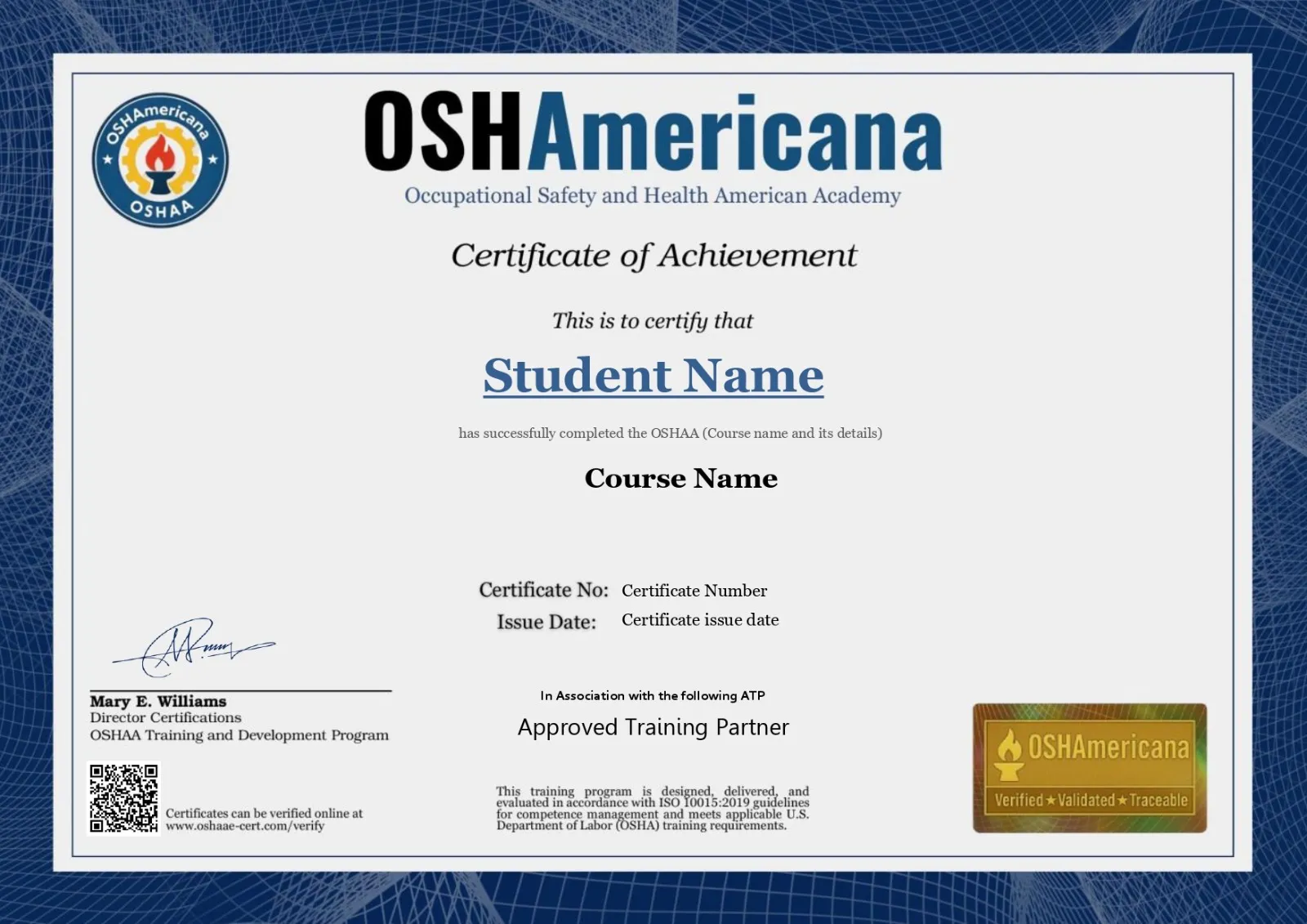
Learners who complete the course requirements and achieve the required assessment result receive the OSHAA 30-Hours Professional Diploma in Sports First Aid Practices course certificate, subject to the applicable completion and certificate issuance process.
- Course duration: 30 learning hours across eight study units.
- Assessment: 100 multiple-choice questions.
- Minimum passing score: 70%.
- Delivery and learner support: through an OSHAA Approved Training Partner.
Benefits of the Sports First Aid Practices Course
This course develops foundational knowledge relevant to sports first aid, emergency preparedness, and safer athletic environments.
Understand Sports First Aid Principles
Build knowledge of the first aider’s role, responsibilities, limitations, and initial response priorities.
Recognize Common Sports Injuries
Explore signs and symptoms associated with sprains, strains, bruises, fractures, dislocations, and joint injuries.
Develop Concussion Awareness
Understand the importance of removing an athlete from play and arranging appropriate medical evaluation.
Understand CPR and AED Response
Learn the purpose of CPR and AED response in suspected cardiac emergencies and the importance of appropriate practical training.
Recognize Heat-Related Emergencies
Build awareness of heat exhaustion, exertional heatstroke, hydration, and prevention considerations.
Improve Emergency Preparedness
Understand the value of emergency action plans, prompt communication, and access to professional medical assistance.
Career Relevance and Further Learning
The course may support foundational knowledge for people involved in sports, fitness, physical education, and recreation. It does not replace professional education, state licensure, supervised clinical experience, or credentials required for regulated healthcare and athletic training roles.
Sports Coaching Support
Build awareness of first aid priorities and emergency response considerations during training and competition.
Physical Education Settings
Develop foundational understanding of common sports injuries and athlete safety considerations in educational environments.
Fitness and Recreation
Explore first aid principles relevant to gyms, fitness facilities, and recreation programs.
Sports Event Support
Understand the importance of emergency action plans and coordination with qualified responders at events.
Personal and Community Awareness
Strengthen awareness of how to recognize potential emergencies and seek timely professional help.
Further Professional Training
Learners may consider separate CPR/AED, first aid, athletic training, or healthcare education pathways relevant to their goals and applicable state requirements.
Frequently Asked Questions
What is sports first aid?
Sports first aid is the initial response provided when an athlete becomes injured or unwell during sports, exercise, training, or competition. It focuses on scene safety, recognizing urgent conditions, providing appropriate immediate care within one’s training, and arranging professional medical assistance when needed.
What will Learners learn in this course?
Learners study sports first aid principles, injury assessment, soft-tissue injuries, fractures and dislocations, concussion awareness, cardiac emergencies, CPR and AED response, bleeding control, shock, and heat-related illness.
Who should take this sports first aid course?
The course is suitable for sports coaches, physical education teachers, sports officials, event organizers, gym instructors, personal trainers, athletes, parents of young athletes, recreation staff, and others interested in sports safety and first aid.
What types of sports injuries are covered?
The course covers sprains, strains, bruises, possible fractures, dislocations, joint injuries, head injuries, concussion, bleeding, wounds, and heat-related illness.
How is the course assessed?
The course is assessed through 100 multiple-choice questions (MCQs) administered through the Approved Training Partner. The assessment measures understanding of sports first aid, injury recognition, emergency response, concussion awareness, cardiac emergencies, bleeding control, and heat-related illness.
Will Learners receive an OSHAA certificate?
Learners who complete the course requirements and achieve the required assessment result receive the OSHAA course certificate, subject to the applicable completion and certificate issuance process.
Does this course qualify me to work as an athletic trainer or healthcare professional?
No. This course provides foundational sports first aid education and does not replace the education, supervised clinical experience, licensure, or professional credentials required for athletic training, healthcare, or other regulated clinical roles. Requirements vary by state and profession.
How can Learners find an OSHAA Approved Training Partner?
Learners can find course delivery and enrollment information through the OSHAA Approved Training Partner directory. They can also contact OSHAA for further information.
How to Study the OSHAA 30-Hours Professional Diploma in Sports First Aid Practices
Learners enroll and study through an OSHAA Approved Training Partner, which confirms the available delivery format, schedule, fees, assessment arrangements, and learner support.
- 1
Find a Training Partner
Choose an OSHAA Approved Training Partner to discuss enrollment and course availability.
- 2
Confirm Enrollment
Check the entry requirements, fees, study format, schedule, and assessment arrangements with the selected partner.
- 3
Complete the Eight Study Units
Work through all 30 learning hours covering sports injuries, concussion awareness, cardiac emergencies, and heat-related illness.
- 4
Complete the Assessment
Take the 100-question multiple-choice assessment and achieve at least 70% to pass.
- 5
Receive Your OSHAA Certificate
Successful Learners receive the OSHAA course certificate in accordance with the course completion requirements.