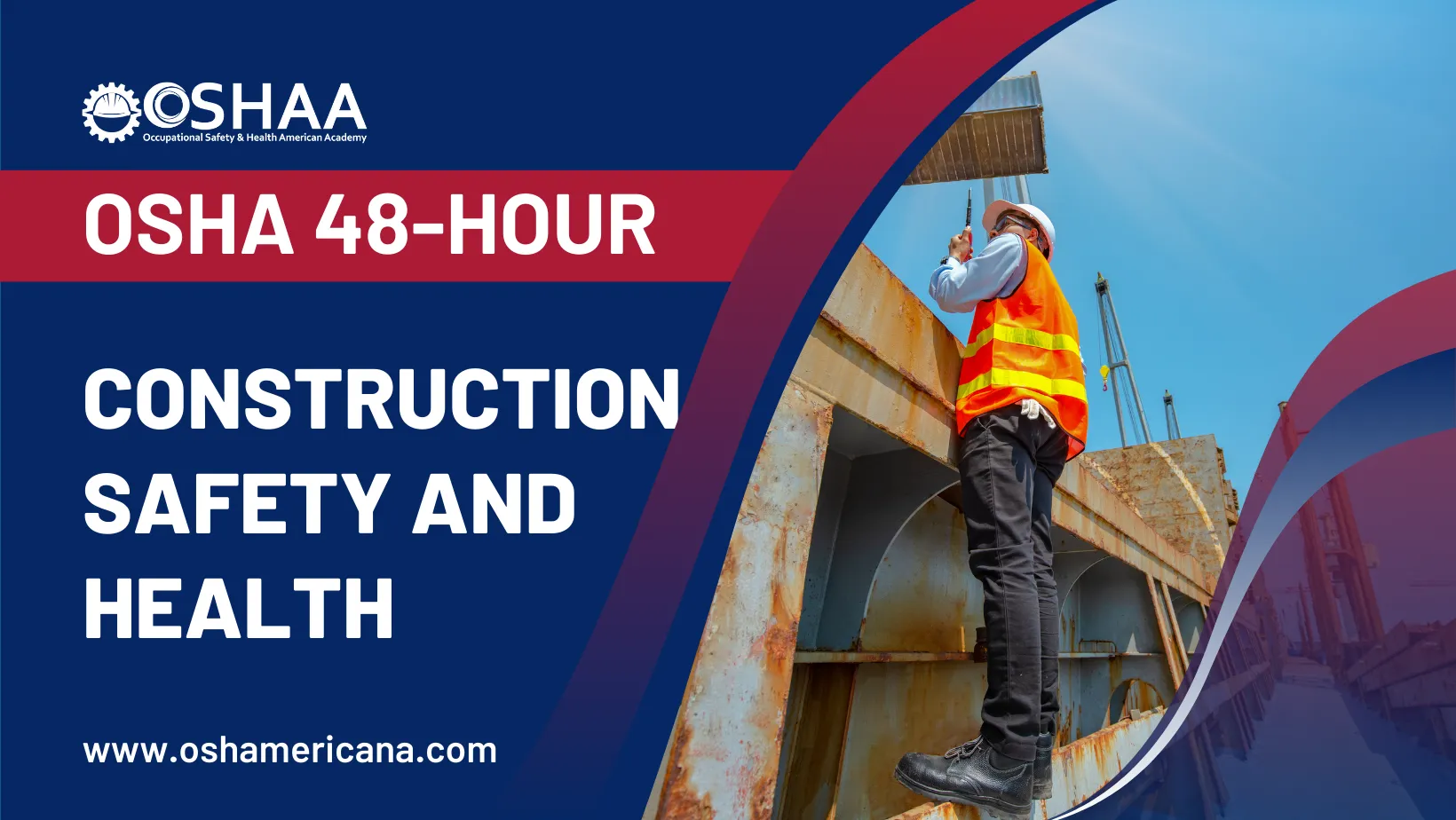
OSHA 510 – Occupational Safety and Health Standards for the Construction Industry
Build knowledge of occupational safety and health practices for construction workplaces with the OSHAA OSHA 510 – Occupational Safety and Health Standards for the Construction Industry course. The programme covers construction safety topics including hazard recognition, fall protection, scaffolding, excavation, electrical safety, personal protective equipment, cranes, material handling and emergency preparedness.
Designed for construction professionals, supervisors, safety coordinators, engineers and contractors, this course helps learners develop practical knowledge for recognising site hazards, understanding construction safety requirements and supporting safer work activities.
Who Should Take This Course?
The OSHAA OSHA 510 course is intended for people who work in, supervise, support or are preparing for safety-related responsibilities in construction environments.
Entry Requirements
- Age
- Applicants should be at least 18 years old.
- Education
- A high school diploma or equivalent is recommended.
- Language
- English proficiency sufficient to understand course materials and assessment questions.
- Experience
- Previous construction, site operations or workplace safety experience is helpful but is not mandatory according to the published course information.
- Preparation
- Previous safety training may be beneficial. Confirm any additional enrollment conditions with the selected ATP.
Course Units
The OSHAA OSHA 510 course is organised into 12 units covering construction safety topics, common job-site hazards, protective practices and workplace safety activities.
| # | Course Unit | Course Coverage |
|---|---|---|
| 1 | Introduction to OSHA and Construction Safety Regulations | |
| 2 | OSHA Construction Standards (29 CFR 1926) Overview | |
| 3 | Construction Focus Four Hazards (Falls, Struck-by, Caught-in/between, Electrical) | |
| 4 | Fall Protection Systems and Requirements | |
| 5 | Scaffolding, Ladders, and Elevated Work Safety | |
| 6 | Excavation, Trenching, and Confined Spaces | |
| 7 | Personal Protective Equipment (PPE) and Health Hazards | |
| 8 | Cranes, Hoists, Rigging, and Heavy Equipment Safety | |
| 9 | Materials Handling, Tools, and Machinery Safety | |
| 10 | Fire Protection, Emergency Response, and Safety Signage | |
| 11 | Safety and Health Programs, Hazard Recognition, and Incident Investigation | |
| 12 | OSHA Inspections, Recordkeeping, and Compliance Practices |
What You Will Learn
Through the 12 course units, learners develop knowledge and skills relevant to construction workplace safety and day-to-day site activities.
1Introduction to OSHA and Construction Safety Regulations
- Describe the purpose and general role of OSHA in workplace safety.
- Recognise common construction safety responsibilities across site teams.
- Identify the importance of safe work planning and hazard awareness.
2OSHA Construction Standards (29 CFR 1926) Overview
- Recognise the main subject areas addressed in construction safety standards.
- Identify construction activities that require specific safety attention.
- Use course knowledge to support informed construction safety discussions.
3Construction Focus Four Hazards (Falls, Struck-by, Caught-in/between, Electrical)
- Identify the four major categories of construction hazards.
- Recognise site conditions and work activities associated with these hazards.
- Describe practical measures that can help reduce exposure to construction risks.
4Fall Protection Systems and Requirements
- Identify common fall hazards on construction sites.
- Recognise the purpose of guardrails, safety nets and personal fall protection systems.
- Describe safe work practices for tasks performed at elevated locations.
5Scaffolding, Ladders, and Elevated Work Safety
- Identify common hazards associated with scaffolds and ladders.
- Recognise the importance of suitable access, inspection and safe use.
- Describe practices that support safer elevated work activities.
6Excavation, Trenching, and Confined Spaces
- Recognise hazards associated with excavation and trenching activities.
- Identify the purpose of protective systems and safe access arrangements.
- Describe key safety considerations for confined-space work in construction settings.
7Personal Protective Equipment (PPE) and Health Hazards
- Identify common PPE used for construction tasks.
- Recognise physical, chemical and other occupational health hazards on construction sites.
- Describe appropriate selection, use, inspection and care of PPE.
8Cranes, Hoists, Rigging, and Heavy Equipment Safety
- Recognise hazards associated with lifting operations and heavy equipment.
- Identify the importance of equipment checks, load awareness and communication.
- Describe safe practices for coordinating lifting and material movement activities.
9Materials Handling, Tools, and Machinery Safety
- Identify hazards related to manual handling, material storage and movement.
- Recognise common risks associated with construction tools and machinery.
- Describe safe handling, housekeeping and equipment-use practices.
10Fire Protection, Emergency Response, and Safety Signage
- Identify common fire hazards and basic prevention practices on construction sites.
- Recognise the purpose of emergency arrangements, alarms and evacuation procedures.
- Explain how safety signs and communication support awareness on site.
11Safety and Health Programs, Hazard Recognition, and Incident Investigation
- Describe the key elements of an effective construction safety programme.
- Identify workplace hazards and contribute to suitable preventive actions.
- Explain the purpose of incident reporting, investigation and corrective action.
12OSHA Inspections, Recordkeeping, and Compliance Practices
- Recognise the purpose of workplace safety inspections and documentation.
- Identify common types of safety records maintained on construction projects.
- Describe how inspection findings and corrective actions can support ongoing safety improvements.
Assessment and Certification
How You Are Assessed
- Assessment is conducted through quiz-based evaluation administered by an OSHAA Approved Training Partner (ATP).
- The examination consists of 100 multiple-choice questions (MCQs) covering the course content and construction safety topics.
- A minimum score of 70% is required to successfully pass.
Your Certificate
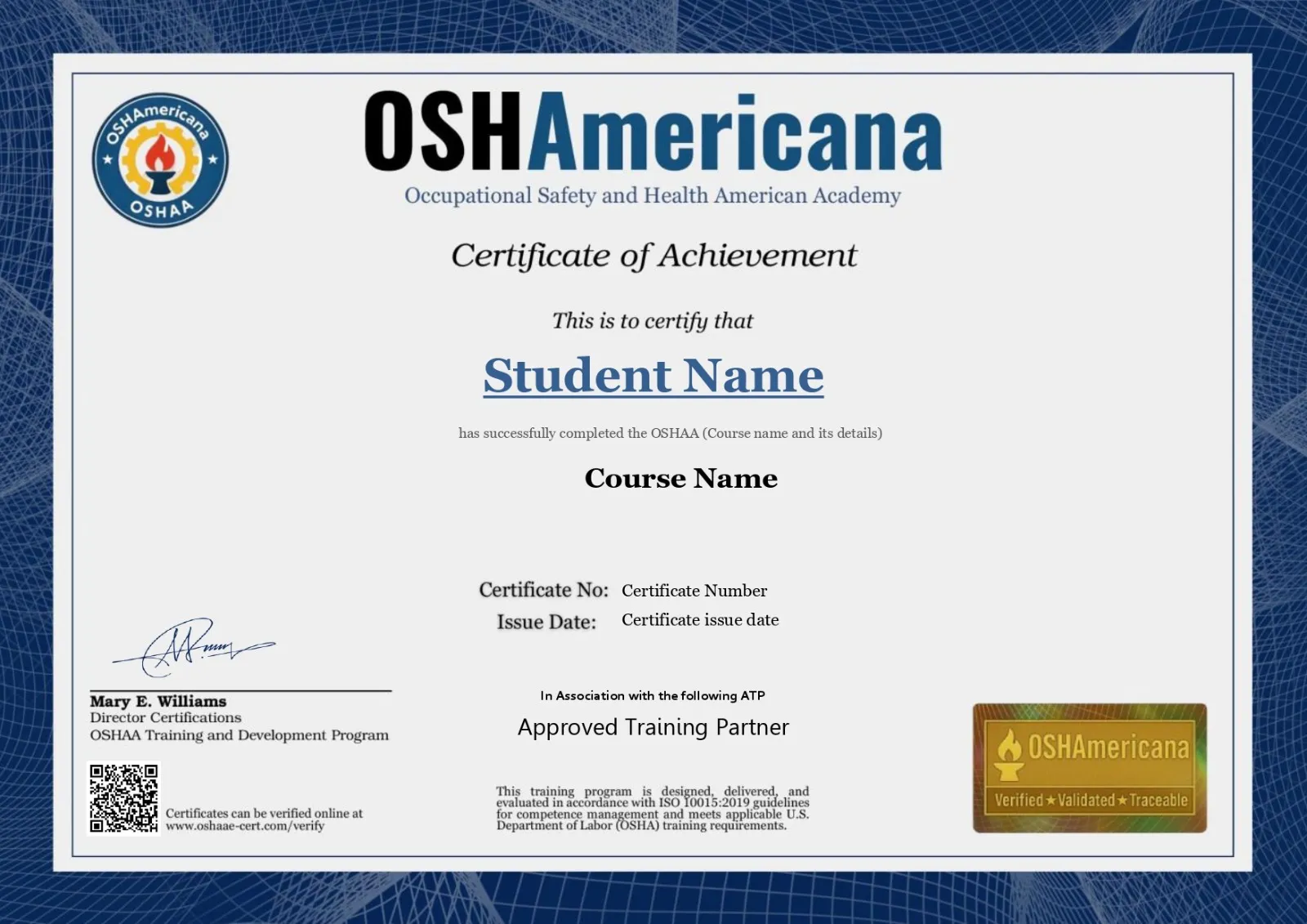
After completing the course requirements and achieving the required pass mark, successful learners receive an OSHAA OSHA 510 course certificate issued by the Occupational Safety and Health American Academy (OSHAA). Certificate details can be checked through the OSHAA verification service.
Benefits of the OSHAA OSHA 510 Course
Build Construction Safety Knowledge
Develop structured knowledge of safety topics encountered across construction projects and job sites.
Strengthen Hazard Recognition
Improve awareness of falls, struck-by incidents, caught-in/between hazards and electrical risks.
Understand Fall Protection Practices
Explore fall prevention, scaffolding, ladders and safe work practices for elevated tasks.
Improve Equipment Safety Awareness
Build knowledge of cranes, rigging, hoists, tools, machinery and material handling activities.
Support Emergency Preparedness
Develop awareness of fire prevention, emergency response, safety signage and site communication.
Contribute to Safer Site Operations
Strengthen knowledge relevant to inspections, hazard reporting, incident investigation and safety programmes.
Career Opportunities and Relevant U.S. Job Roles
The course content may be relevant to construction and workplace safety responsibilities. Job requirements vary by employer, experience, education and the responsibilities of each position.
Construction Safety Assistant
Supports site inspections, hazard reporting, safety documentation and routine safety activities.
Construction Safety Coordinator
Helps coordinate safety communication, training records, inspections and corrective-action follow-up.
Site Safety Supervisor
Supports site teams with safety monitoring, work coordination and hazard awareness.
Construction Site Supervisor
Coordinates daily construction activities, work teams and safe working practices.
EHS Technician
Assists with workplace monitoring, safety records, hazard identification and EHS procedures.
Construction Project Coordinator
Supports project planning, contractor communication, site documentation and operational coordination.
Safety Inspection Assistant
Assists with site observations, inspection records and follow-up of identified safety concerns.
Construction Safety Support
Helps organise safety briefings, maintain training records and communicate safety information.
Frequently Asked Questions About OSHA 510 – Occupational Safety and Health Standards for the Construction Industry
What is the OSHAA OSHA 510 course?
It is an OSHAA course focused on occupational safety and health topics relevant to the construction industry, including hazard recognition, fall protection, scaffolding, excavation, equipment safety and emergency preparedness.
Who should take the OSHA 510 construction safety course?
The course may be suitable for construction supervisors, site managers, safety officers, safety coordinators, engineers, contractors, EHS personnel and workers seeking to develop their construction safety knowledge.
What topics are covered in the course?
The 12 units cover construction safety, the Construction Focus Four hazards, fall protection, scaffolding, ladders, excavation, confined spaces, PPE, cranes, rigging, tools, machinery, fire protection, emergency response and safety programme activities.
What are the entry requirements?
Applicants should be at least 18 years old. A high school diploma or equivalent and English proficiency are recommended. Previous construction or workplace safety experience can be helpful. Confirm any additional enrollment conditions with the selected ATP.
How is the course assessed?
The published course information specifies a quiz-based assessment consisting of 100 multiple-choice questions. Learners must achieve at least 70% to pass.
Is the course available online?
Study formats depend on the OSHAA Approved Training Partner. Available options, schedules and learning arrangements should be confirmed directly with the selected partner.
Who issues the course certificate?
Successful learners who complete the course requirements and achieve the required assessment result receive a course certificate issued by the Occupational Safety and Health American Academy (OSHAA).
How can I verify an OSHAA certificate?
Use the OSHAA certificate verification service and follow the instructions provided to check certificate details.
How do I find an OSHAA Approved Training Partner?
Visit the OSHAA Approved Training Partner directory or email support@oshamericana.com for assistance with available training options.
How to Study the OSHAA OSHA 510 Course
Learners enrol through an OSHAA Approved Training Partner, which provides course delivery and learner support. Available study formats, schedules and fees are confirmed by the selected partner.
- 1
Find a Training Partner
Explore the OSHAA Approved Training Partner directory or contact OSHAA for assistance.
- 2
Confirm Enrollment
Check entry requirements, course fees, available study format and schedule with the partner.
- 3
Study the 12 Units
Work through the course topics and learning materials provided by your training partner.
- 4
Complete the Assessment
Attempt the 100-question MCQ assessment and achieve at least 70% to pass.
- 5
Receive Your OSHAA Certificate
Successful learners receive an OSHAA course certificate after meeting the course requirements.