OSHAA 30-Hours Diploma in Employee Well-Being and Emotional Resilience in the Workplace
Develop practical knowledge of employee well-being, emotional resilience, workplace stress, mental health awareness, and supportive workplace practices.
This 30-hour professional diploma is designed for employees, HR professionals, supervisors, and managers who want to understand workplace well-being and contribute to a healthier, more supportive work environment. It covers awareness, communication, resilience, and organizational support—not clinical diagnosis, counseling, or mental health treatment.
About the Employee Well-Being and Emotional Resilience Diploma
Employee well-being is an important part of a healthy and supportive workplace. Workload pressures, organizational change, workplace conflict, unclear responsibilities, and limited work-life boundaries can affect employees’ emotional well-being and their ability to respond to challenges.
The OSHAA 30-Hours Diploma in Employee Well-Being and Emotional Resilience in the Workplace introduces learners to the principles of workplace well-being, stress awareness, emotional resilience, mental health awareness, and practical approaches to creating supportive working environments. Learners explore individual coping strategies alongside the role of employers, managers, and workplace policies in addressing organizational stressors.
For U.S. workplace relevance, the course considers applicable principles under the Americans with Disabilities Act (ADA), the Family and Medical Leave Act (FMLA), and the Occupational Safety and Health Act. Coverage and eligibility depend on the applicable law, employer, employee, and circumstances. The course does not provide legal advice or replace employer-specific HR procedures.
This is workplace awareness and professional development training. It does not qualify learners to diagnose or treat mental health conditions, provide psychotherapy, or practice as licensed counselors or mental health professionals.
Who Should Take This Course?
The course is suitable for people who want to develop their understanding of employee well-being and emotional resilience in professional settings.
Entry Requirements
- Age
- Applicants must be at least 18 years old.
- Education
- A minimum of secondary school education is recommended.
- Experience
- No prior professional experience is required. Experience in HR, office environments, healthcare, or team leadership can be beneficial.
- Language
- A basic understanding of English is required to follow course materials, instructions, and assessments.
Course Study Units
The diploma is structured into eight study units totaling 30 hours. The original unit titles and allocated study hours are retained.
| # | Study Unit | Duration |
|---|---|---|
| 1 | Introduction to Employee Well-Being and Emotional Resilience | 3 hours |
| 2 | Understanding Stress: Causes, Symptoms, and Impact on the Workplace | 4 hours |
| 3 | Building Emotional Resilience: Techniques and Strategies | 4 hours |
| 4 | Identifying and Managing Workplace Stressors | 4 hours |
| 5 | Promoting Mental Health Awareness in the Workplace | 3 hours |
| 6 | Work-Life Balance: Strategies for Well-Being | 5 hours |
| 7 | Leadership and the Role of Managers in Fostering Employee Well-Being | 4 hours |
| 8 | Creating a Supportive Work Environment for Emotional Growth | 3 hours |
| Total course duration | 30 hours | |
Learning Outcomes
The following learning outcomes are reproduced from the original course page. All eight unit titles, durations, and learning outcomes have been retained without changes.
1Introduction to Employee Well-Being and Emotional Resilience (3 Hours)
- Understand the key concepts of employee well-being and emotional resilience
- Recognise the impact of well-being on individual and organisational performance
- Identify the importance of emotional resilience in managing workplace challenges
- Explore the relationship between employee well-being and productivity
2Understanding Stress: Causes, Symptoms, and Impact on the Workplace (4 Hours)
- Identify the main causes and triggers of stress in the workplace
- Recognise common symptoms of stress in employees
- Understand the long-term impact of stress on employee health and organisational effectiveness
- Learn how to assess stress levels and create strategies to address them
3Building Emotional Resilience: Techniques and Strategies (4 Hours)
- Learn practical techniques for building emotional resilience
- Understand how to cope effectively with stress and setbacks
- Develop strategies to maintain a positive outlook and manage challenges
- Apply emotional resilience techniques to enhance workplace performance and well-being
4Identifying and Managing Workplace Stressors (4 Hours)
- Recognise different types of stressors within the workplace
- Learn methods to identify workplace stressors early on
- Understand how to manage and mitigate workplace stressors to create a healthier environment
- Develop a personalised approach to handling stress in professional settings
5Promoting Mental Health Awareness in the Workplace (3 Hours)
- Understand the importance of mental health awareness in the workplace
- Identify common mental health challenges employees may face
- Learn how to promote a mentally healthy work environment
- Understand the role of employers and colleagues in supporting mental health
6Work-Life Balance: Strategies for Well-Being (5 Hours)
- Understand the concept of work-life balance and its significance for employee well-being
- Develop practical strategies to achieve and maintain a healthy work-life balance
- Learn to set boundaries to prevent burnout and promote personal well-being
- Implement work-life balance practices to improve both personal and professional productivity
7Leadership and the Role of Managers in Fostering Employee Well-Being (4 Hours)
- Understand the critical role of leadership in supporting employee well-being
- Learn how managers can promote emotional resilience and well-being in their teams
- Develop skills to lead by example and create a supportive, positive work environment
- Identify strategies for improving team morale and fostering a culture of well-being
8Creating a Supportive Work Environment for Emotional Growth (3 Hours)
- Learn how to create a work environment that encourages emotional growth and resilience
- Understand the importance of fostering trust, open communication, and psychological safety in the workplace
- Develop strategies to support employees in their personal and professional development
- Promote inclusivity and support emotional well-being across diverse teams
Assessment and Certification
How You Are Assessed
The course assessment consists of 100 multiple-choice questions (MCQs) administered through the OSHAA Approved Training Partner. Learners must achieve a minimum score of 70% to pass.
- Assessment format: 100 multiple-choice questions
- Minimum passing score: 70%
- Assessment administration: OSHAA Approved Training Partner
- Course duration: 30 hours across eight study units
Your Certificate
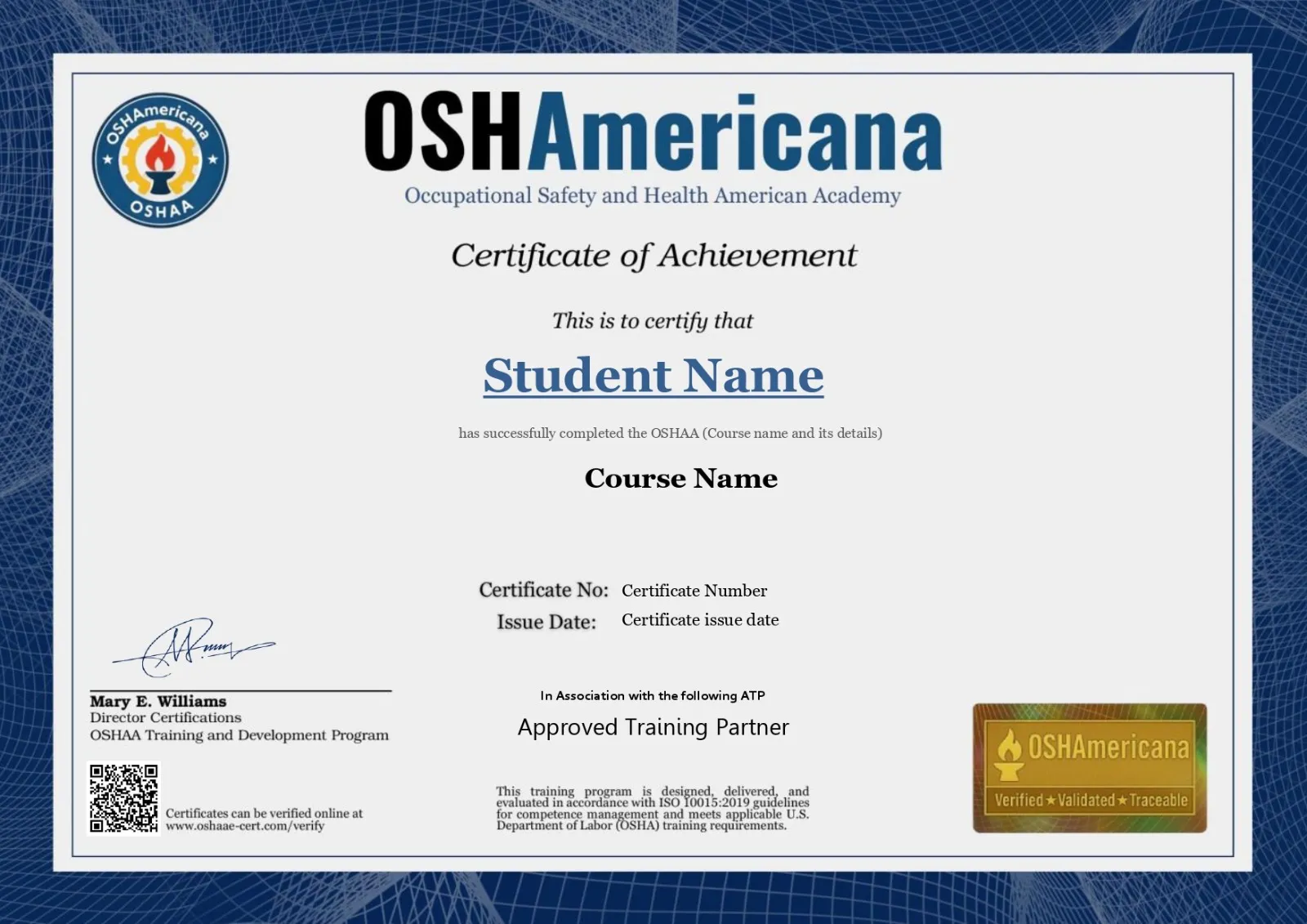
Learners who complete the course requirements and achieve the required assessment result receive the OSHAA 30-Hours Professional Diploma in Employee Well-Being and Emotional Resilience in the Workplace.
This course certificate records completion of OSHAA training. It is not a clinical license, counseling credential, or authorization to diagnose or treat mental health conditions.
Benefits of the Employee Well-Being and Emotional Resilience Diploma
This course develops knowledge that can support personal resilience, employee support, and positive workplace practices.
Understand Employee Well-Being
Explore the factors that influence emotional well-being and workplace experience.
Recognize Workplace Stressors
Understand common work-related pressures and their potential effects on employees.
Build Emotional Resilience
Explore practical ways to respond constructively to setbacks and workplace challenges.
Promote Mental Health Awareness
Develop awareness of workplace mental health concerns and appropriate support pathways.
Support Work-Life Balance
Learn about boundaries, time management, and practices that support well-being.
Strengthen Supportive Leadership
Understand how managers can encourage communication, trust, and team well-being.
Understand U.S. Workplace Protections
Become familiar with relevant ADA, FMLA, and workplace safety principles.
Contribute to a Positive Culture
Explore inclusive practices and psychological safety in professional environments.
Related Career and Professional Development Opportunities
This diploma may support professional development in people management, HR, employee engagement, and workplace well-being. Job eligibility and responsibilities depend on experience, employer requirements, and any additional credentials required for a specific role.
Human Resources Assistant or Coordinator
Supports employee communication, HR administration, and workplace support processes.
Employee Engagement Coordinator
Contributes to employee engagement activities and workplace feedback initiatives.
Workplace Well-Being Coordinator
Assists with the coordination of employee well-being information and initiatives.
Team Leader or Supervisor
Applies supportive communication and team practices in day-to-day supervision.
Learning and Development Coordinator
Supports workplace learning and professional development activities.
Organizational Development Assistant
Contributes to workplace culture, employee experience, and organizational improvement projects.
Frequently Asked Questions About Employee Well-Being and Emotional Resilience
What is employee well-being in the workplace?
Employee well-being refers to the physical, emotional, and work-related factors that influence how people experience and function in their workplace. It can be affected by workload, relationships, work design, leadership, and access to appropriate support.
What is emotional resilience at work?
Emotional resilience is the ability to respond and adapt constructively to challenges, change, pressure, and setbacks. It can be supported through self-awareness, healthy coping strategies, communication, and appropriate workplace support.
What causes workplace stress?
Common contributors include excessive workload, unclear responsibilities, poor communication, conflict, limited control over work, organizational change, and inadequate work-life boundaries. Causes can be individual and organizational.
How can managers support employee well-being?
Managers can encourage respectful communication, clarify expectations, listen to concerns, address work-related issues within their authority, and direct employees to appropriate HR, employee assistance, or professional resources. Managers should not diagnose or treat mental health conditions.
What is an Employee Assistance Program (EAP)?
An EAP is an employer-sponsored resource that may provide confidential assessment, short-term support, counseling referrals, or other assistance. Services and confidentiality arrangements vary by program and provider.
Does the Americans with Disabilities Act (ADA) cover mental health conditions?
Some mental health conditions may qualify as disabilities under the ADA. Title I can protect qualified individuals from employment discrimination and may require reasonable accommodation, subject to the law’s definitions, limitations, and applicable circumstances. Employers should consult their HR or legal resources for specific cases.
Can an employee take FMLA leave for a mental health condition?
An eligible employee may be entitled to FMLA leave for a qualifying serious mental health condition when the employee and employer meet applicable eligibility and coverage requirements. The specific circumstances and certification requirements matter.
Does OSHA have a specific federal workplace stress standard?
OSHA does not have a single general federal standard specifically titled as a workplace stress standard. Employers must still comply with applicable occupational safety and health requirements, including the OSH Act and relevant standards.
Is this course a mental health counseling qualification?
No. This is workplace well-being and emotional resilience training. It does not qualify learners to diagnose or treat mental health conditions, provide psychotherapy, or practice as licensed counselors or mental health professionals.
Who should enroll in this course?
The course is suitable for HR professionals, managers, supervisors, employee well-being coordinators, occupational safety professionals, organizational development personnel, and employees interested in workplace well-being.
What are the entry requirements and course duration?
Applicants must be at least 18 years old. Secondary school education is recommended. Basic English proficiency is required, and prior work experience is not mandatory. The course consists of eight study units totaling 30 hours.
How is the course assessed?
The assessment consists of 100 multiple-choice questions. Learners must achieve at least 70% to pass.
Is the course available online or in person?
Available delivery formats depend on the OSHAA Approved Training Partner. Contact the selected partner to confirm online, classroom, or blended options, schedules, and fees.
How can I find an OSHAA Approved Training Partner?
Visit the OSHAA Approved Training Partner directory or contact support@oshamericana.com for assistance.
How to Study the OSHAA Employee Well-Being and Emotional Resilience Diploma
Learners enroll through an OSHAA Approved Training Partner, which confirms delivery arrangements, schedules, fees, and learner support.
- 1
Find a Training Partner
Choose an OSHAA Approved Training Partner or contact OSHAA for assistance.
- 2
Confirm Enrollment
Check the entry requirements, course fees, study format, and schedule with the partner.
- 3
Complete the Eight Units
Study the 30-hour course covering employee well-being, emotional resilience, and U.S. workplace practices.
- 4
Complete the Assessment
Attempt the 100-question MCQ assessment and achieve at least 70% to pass.
- 5
Receive Your OSHAA Certificate
Successful learners receive the OSHAA course certificate after meeting the course requirements.