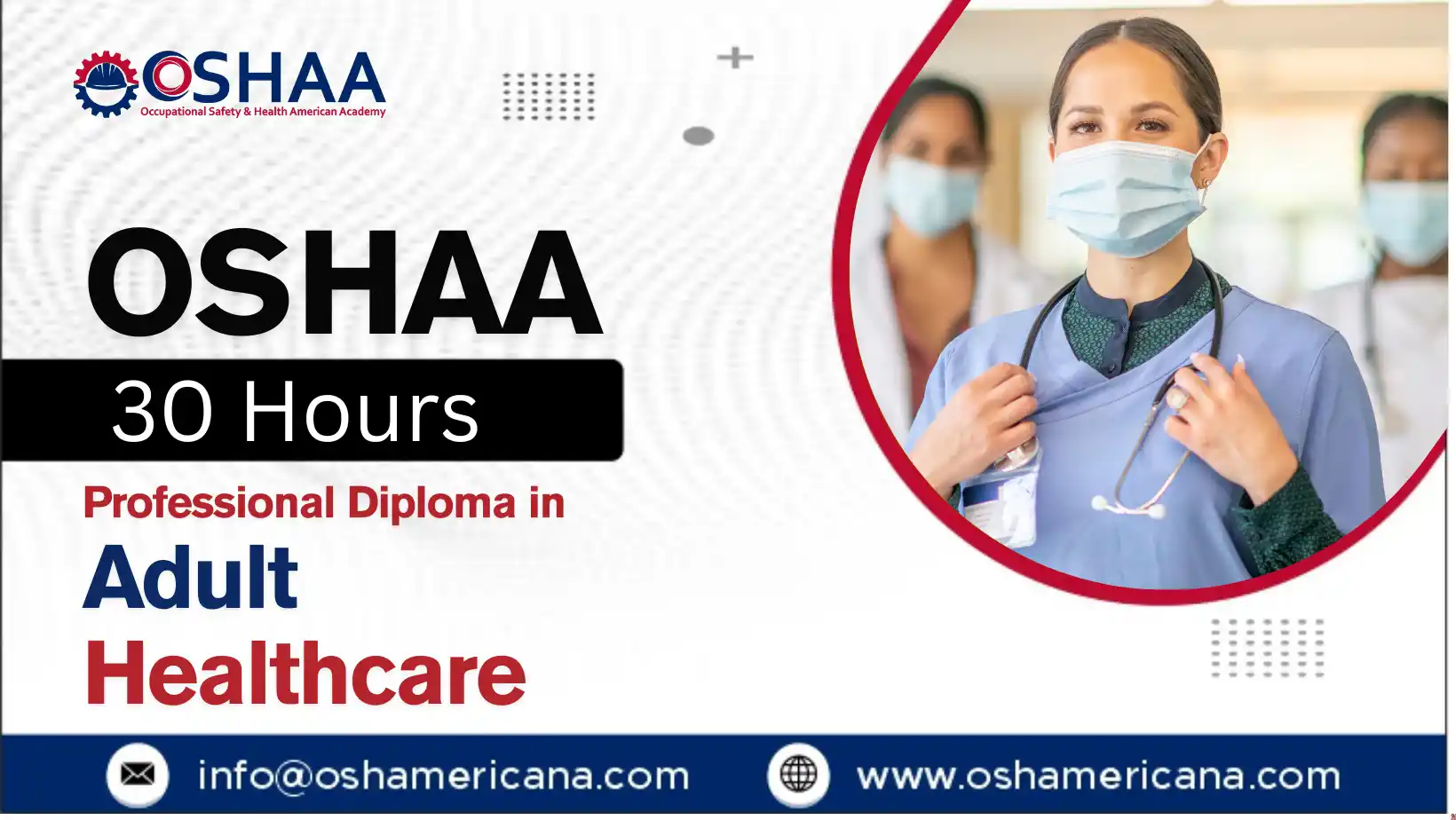
Boost Your Professional Impact in Adult Healthcare with Diploma
The OSHAA 30-Hours Professional Diploma in Adult Healthcare is a specialised training programme designed to provide participants with the essential knowledge, skills, and professional practices needed to deliver high-quality care to adults across diverse healthcare settings. Offered by OSHAA, a globally recognised awarding body, this diploma equips participants with the confidence and competence to meet modern healthcare standards effectively.
The course combines theoretical understanding with practical application, covering key topics such as patient care planning, communication techniques, infection control, safeguarding, and ethical considerations. Participants gain insight into the legal and regulatory frameworks governing adult healthcare, ensuring adherence to compliance requirements while promoting safety, dignity, and well-being.
Delivered in a structured 30-hour format, the programme emphasises effective communication, empathy, and professional boundaries. Participants also learn to manage health emergencies, support chronic conditions, and implement preventive care strategies. On completion, learners will be well-prepared to contribute meaningfully within healthcare environments, enhance their professional capability, and advance their career while providing compassionate, competent care to adults in need.
OSHAA 30-Hours Professional Diploma in Adult Healthcare
- Age: 18 years or older
- Education: High school diploma or equivalent
- Language: Basic English proficiency
- Work Experience: Not required but helpful.
Study Units
Learning Outcomes
1. Introduction to Adult Healthcare Principles and Professional Responsibilities (3 Hours)
Learning Outcomes
The learner will be able to:
- Explain the purpose and scope of adult healthcare services.
- Identify the roles and responsibilities of healthcare support workers and care professionals.
- Understand person-centred care principles in adult healthcare settings.
- Demonstrate professional conduct, accountability, and confidentiality in care practice.
2. Effective Communication and Interpersonal Skills in Care Settings (3 Hours)
Learning Outcomes
The learner will be able to:
- Apply effective verbal and non-verbal communication techniques in healthcare environments.
- Communicate appropriately with service users, families, and multidisciplinary teams.
- Recognise barriers to communication and implement strategies to overcome them.
- Demonstrate active listening and empathy when supporting individuals receiving care.
3. Health, Safety, and Infection Prevention Practices (3 Hours)
Learning Outcomes
The learner will be able to:
- Explain key health and safety requirements within adult healthcare settings.
- Identify workplace hazards and implement risk control measures.
- Apply infection prevention and control procedures effectively.
- Demonstrate safe handling of equipment, waste, and potentially infectious materials.
4. Safeguarding Adults and Promoting Dignity in Care (3 Hours)
Learning Outcomes
The learner will be able to:
- Explain the principles and importance of safeguarding vulnerable adults.
- Recognise signs and indicators of abuse, neglect, and exploitation.
- Follow safeguarding procedures and reporting requirements.
- Promote dignity, respect, privacy, and independence in care delivery.
5. Understanding Common Adult Health Conditions and Care Approaches (4 Hours)
Learning Outcomes
The learner will be able to:
- Identify common physical and mental health conditions affecting adults.
- Understand the impact of long-term conditions on individuals and families.
- Describe appropriate care approaches for individuals with diverse healthcare needs.
- Support individuals in managing their health and well-being.
6. Nutrition, Hydration, and Supporting Daily Living Activities (3 Hours)
Learning Outcomes
The learner will be able to:
- Explain the importance of nutrition and hydration in maintaining health.
- Identify signs of malnutrition, dehydration, and nutritional risk.
- Support individuals with eating, drinking, and daily living activities.
- Promote independence while assisting with personal care needs.
7. Legal, Ethical, and Regulatory Requirements in Adult Healthcare (3 Hours)
Learning Outcomes
The learner will be able to:
- Explain key legal and ethical principles relevant to adult healthcare practice.
- Understand consent, confidentiality, and data protection requirements.
- Identify professional standards and regulatory responsibilities.
- Apply ethical decision-making principles in care situations.
8. Recognising and Responding to Health Emergencies (3 Hours)
Learning Outcomes
The learner will be able to:
- Recognise common medical emergencies in adult healthcare settings.
- Follow emergency response procedures and reporting protocols.
- Demonstrate awareness of basic life support principles.
- Provide appropriate support until professional medical assistance arrives.
9. Care Planning, Documentation, and Record-Keeping (2 Hours)
Learning Outcomes
The learner will be able to:
- Understand the purpose and importance of person-centred care planning.
- Maintain accurate, clear, and confidential healthcare records.
- Document care activities in accordance with organisational procedures.
- Use record-keeping systems to support continuity and quality of care.
10. Promoting Well-being and Preventive Care Strategies (3 Hours)
Learning Outcomes
The learner will be able to:
- Encourage participation in activities that enhance overall well-being and health outcomes.
- Explain factors influencing physical, mental, and social well-being.
- Promote healthy lifestyle choices and preventive healthcare measures.
- Support individuals in maintaining independence and quality of life.
- Develop a strong foundation in essential adult healthcare principles, aligned with professional standards
- Gain practical skills for delivering safe, effective, and compassionate care in diverse settings
- Improve communication and interpersonal abilities for building trust and rapport with those receiving care
- Acquire knowledge of health, safety, infection control, and safeguarding practices to ensure protection and well-being
- Understand and apply legal, ethical, and regulatory requirements in professional healthcare practice
- Enhance ability to recognise and respond promptly to health emergencies
- Build competence in care planning, documentation, and accurate record-keeping for continuity of care
- Strengthen understanding of nutrition, hydration, and daily living support to improve quality of life for adults in care
- Increase employability and career progression opportunities in the healthcare sector
- Gain an internationally recognised qualification from OSHAA to support further training or specialisation in healthcare
- Participants seeking to start a career in adult healthcare with a solid foundation in essential principles and practices
- Participants currently working in healthcare or care-related roles who wish to enhance their professional skills and knowledge
- Participants aiming to meet industry standards and best practices in areas such as safeguarding, infection control, and care planning
- Participants interested in transitioning from other sectors into healthcare and requiring formal training and certification
- Participants working in hospitals, residential care homes, rehabilitation centres, or community health services looking to expand their competence
- Participants who want to strengthen their ability to provide safe, ethical, and person-centred care to adults with diverse needs
- Participants pursuing a recognised OSHAA qualification to improve employability and career progression opportunities
- Participants preparing for further specialised training or higher-level qualifications in healthcare and related disciplines
- Participants committed to developing both technical skills and compassionate care approaches for improved health outcomes
- Participants seeking to enhance their understanding of legal, ethical, and regulatory frameworks in adult healthcare practice