Develop Critical Skills in Ebola Virus Management – Diploma
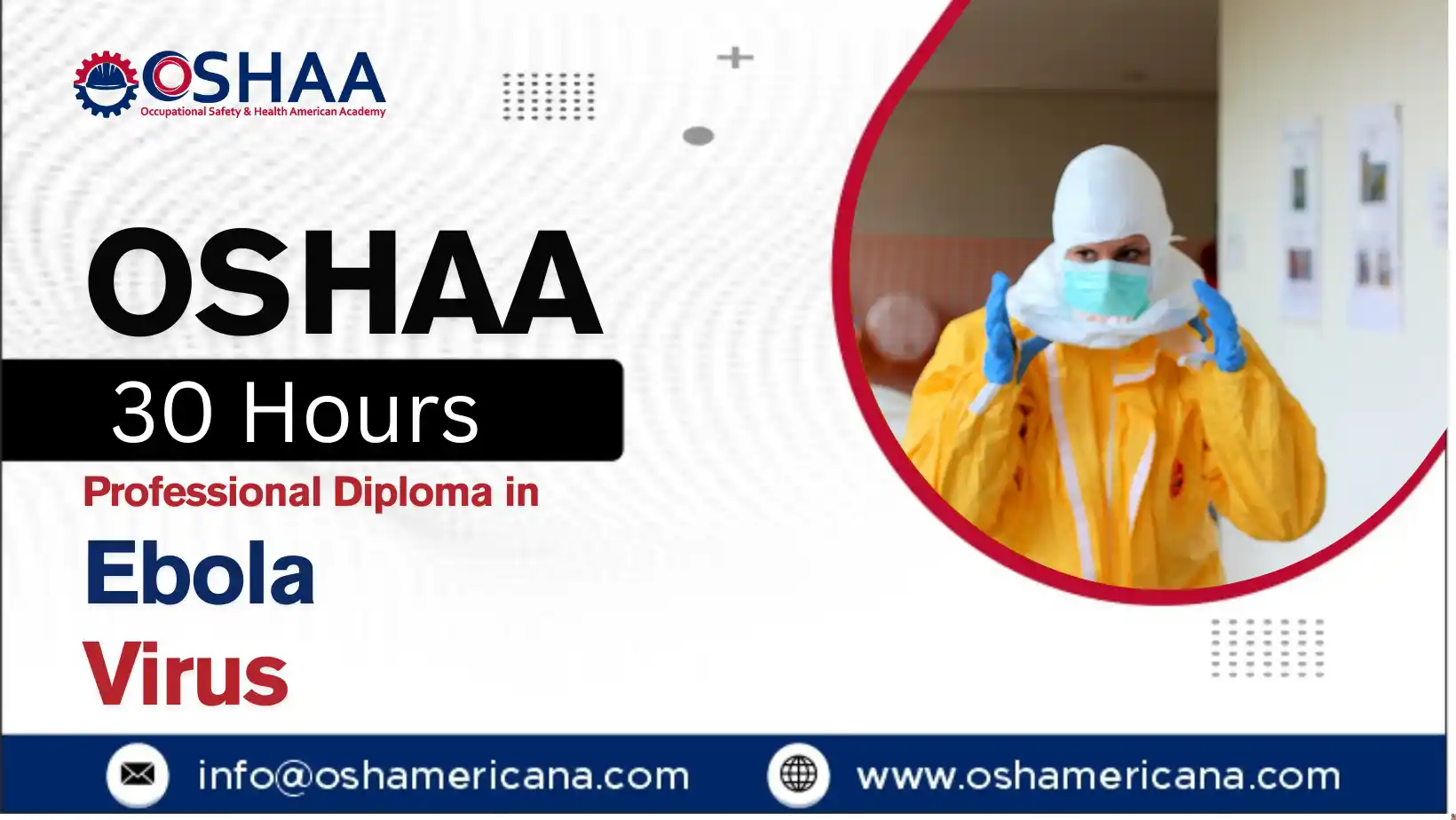
Ebola virus disease (EVD) remains one of the most serious and deadly infectious diseases affecting global health security. With its high fatality rate and potential to cause severe outbreaks, the importance of accurate knowledge, swift response, and evidence-based containment strategies is paramount. The OSHAA 30-Hours Professional Diploma in Ebola Virus is designed to provide participants with a comprehensive understanding of this high-risk pathogen, its transmission dynamics, clinical management, and preventive approaches.
The programme consists of 30 structured learning hours, divided into focused study units that explore every critical aspect of Ebola virus disease. From the origins and virology of the Ebola virus to the latest advancements in diagnostics, treatment protocols, and outbreak response, the course presents a scientific and globally informed view of EVD.
This diploma provides a solid foundation for understanding the complexities of Ebola virus disease and prepares participants for roles where accurate knowledge and swift decision-making are essential. It strengthens the capacity to contribute to outbreak response efforts, infection control protocols, and public health planning.
The OSHAA 30-Hours Professional Diploma in Ebola Virus is ideal for participants working or aspiring to work in healthcare, public health, epidemiology, humanitarian aid, or laboratory sciences. It is also well-suited to those involved in health education, emergency response, and global health policy.
The fight against Ebola virus disease requires informed and prepared professionals who understand the science, the risks, and the response measures required. The OSHAA 30-Hours Professional Diploma in Ebola Virus delivers this expertise through a professionally structured, accessible programme that empowers participants to make a difference in global health preparedness and infectious disease management.
OSHAA 30-Hours Professional Diploma in Ebola Virus
To enroll in the OSHAA 30-Hours Professional Diploma in Ebola Virus, learners should meet the following requirements:
- Age: 16 years or older
- Education: High school diploma or equivalent; related certificates in Healthcare, Public Health, Nursing, or Biology are helpful
- Language: Basic English reading and comprehension
- Experience: Not required
Study Units
Learning Outcomes
Introduction to Ebola Virus and Historical Outbreaks (3 Hours)
- Describe the discovery and evolution of the Ebola virus over time
- Identify major historical outbreaks and their global impact
- Recognise the geographical regions most affected by Ebola
- Analyse public health responses to previous epidemics
- Understand lessons learned to improve future outbreak management
Virology and Pathogenesis of Ebola Virus (3 Hours)
- Explain the biological structure and classification of the Ebola virus
- Understand the replication cycle and mechanisms of infection
- Describe the immune system’s response to Ebola infection
- Discuss factors contributing to disease severity and mortality
- Evaluate how viral pathogenesis informs treatment strategies
Transmission Dynamics and Risk Factors (6 Hours)
- Identify routes of Ebola virus transmission in different settings
- Evaluate individual and community-level risk factors
- Examine the role of healthcare environments in disease spread
- Assess the influence of cultural practices on transmission rates
- Develop strategies to minimise exposure and infection
Clinical Presentation and Diagnostic Methods (3 Hours)
- Recognise the signs and symptoms of Ebola virus disease
- Differentiate Ebola from other febrile illnesses using clinical features
- Understand laboratory techniques used in Ebola diagnosis
- Interpret diagnostic criteria and confirmatory testing protocols
- Promote early detection and accurate case identification
Case Management and Supportive Treatment Strategies (4 Hours)
- Outline principles of supportive care for Ebola patients
- Understand fluid management, symptom relief, and complication prevention
- Evaluate emerging therapeutic options and clinical trial findings
- Recognise the importance of patient isolation and monitoring protocols
- Enhance patient outcomes through evidence-based care
Infection Prevention and Control Measures (6 Hours)
- Identify key infection control strategies in clinical and community settings
- Apply WHO and international guidelines for outbreak preparedness
- Implement decontamination, waste disposal, and hygiene procedures
- Understand the role of contact tracing and quarantine measures
- Minimise transmission risk through structured infection control
Personal Protective Equipment (PPE): Use and Protocols (2 Hours)
- Demonstrate correct procedures for donning and doffing PPE
- Select appropriate PPE for different levels of exposure risk
- Understand limitations and challenges of PPE in outbreak settings
- Promote strict safety protocols to reduce occupational exposure
- Ensure compliance with PPE standards for healthcare safety
Public Health Response and Outbreak Containment (3 Hours)
- Explain steps involved in a coordinated outbreak response
- Understand roles of government and international health agencies
- Evaluate community engagement strategies for effective containment
- Discuss surveillance, reporting, and rapid response frameworks
- Strengthen outbreak preparedness and crisis management strategies
The OSHAA 30-Hours Professional Diploma in Ebola Virus equips learners with essential knowledge and practical skills to understand, prevent, and respond effectively to Ebola virus outbreaks. This course is ideal for healthcare professionals, emergency responders, public health workers, and anyone seeking to protect themselves and communities from infectious diseases.
- Understand Ebola Virus: Learn about transmission, symptoms, and the biology of the virus for effective prevention.
- Develop Prevention Strategies: Gain practical techniques for hygiene, isolation, and containment to reduce infection risk.
- Enhance Emergency Response Skills: Learn how to respond safely and efficiently during Ebola outbreaks or exposure incidents.
- Boost Professional Credibility: Strengthen qualifications for roles in healthcare, public health, and emergency response.
- Apply Infection Control Practices: Learn safe handling, protective equipment usage, and decontamination procedures.
- Promote Community Safety: Understand strategies to educate and protect communities from Ebola exposure.
- Improve Risk Assessment Skills: Learn to identify high-risk situations and implement precautionary measures.
- Develop Crisis Management Abilities: Gain skills to manage outbreaks and coordinate with health authorities.
- Stay Updated with Health Guidelines: Understand WHO and CDC protocols for Ebola prevention and control.
- Advance Career Opportunities: Open doors in infectious disease management, healthcare, emergency response, and public health roles.
The OSHAA 30-Hours Professional Diploma in Ebola Virus is designed for individuals who want to gain practical knowledge and skills to prevent and respond to Ebola virus outbreaks. It is ideal for healthcare workers, emergency responders, public health professionals, and anyone involved in infection control or community safety.
- Anyone Interested in Infection Control: Who wants to build skills in Ebola virus prevention, safety, and outbreak response.
- Healthcare Professionals and Medical Staff: Looking to enhance knowledge of Ebola virus prevention, detection, and response.
- Emergency Responders and Paramedics: Interested in handling infectious disease situations safely and effectively.
- Public Health Workers and Safety Officers: Seeking skills to educate communities and implement infection control strategies.
- Laboratory and Research Personnel: Who work with infectious pathogens and need safe handling and prevention techniques.
- NGO and Relief Workers: Involved in outbreak management, humanitarian missions, or healthcare projects in high-risk areas.
- Students of Medicine, Nursing, or Public Health: Wanting practical knowledge in infectious disease management and crisis response.