Learn Life-Saving Techniques – Emergency Services Diploma
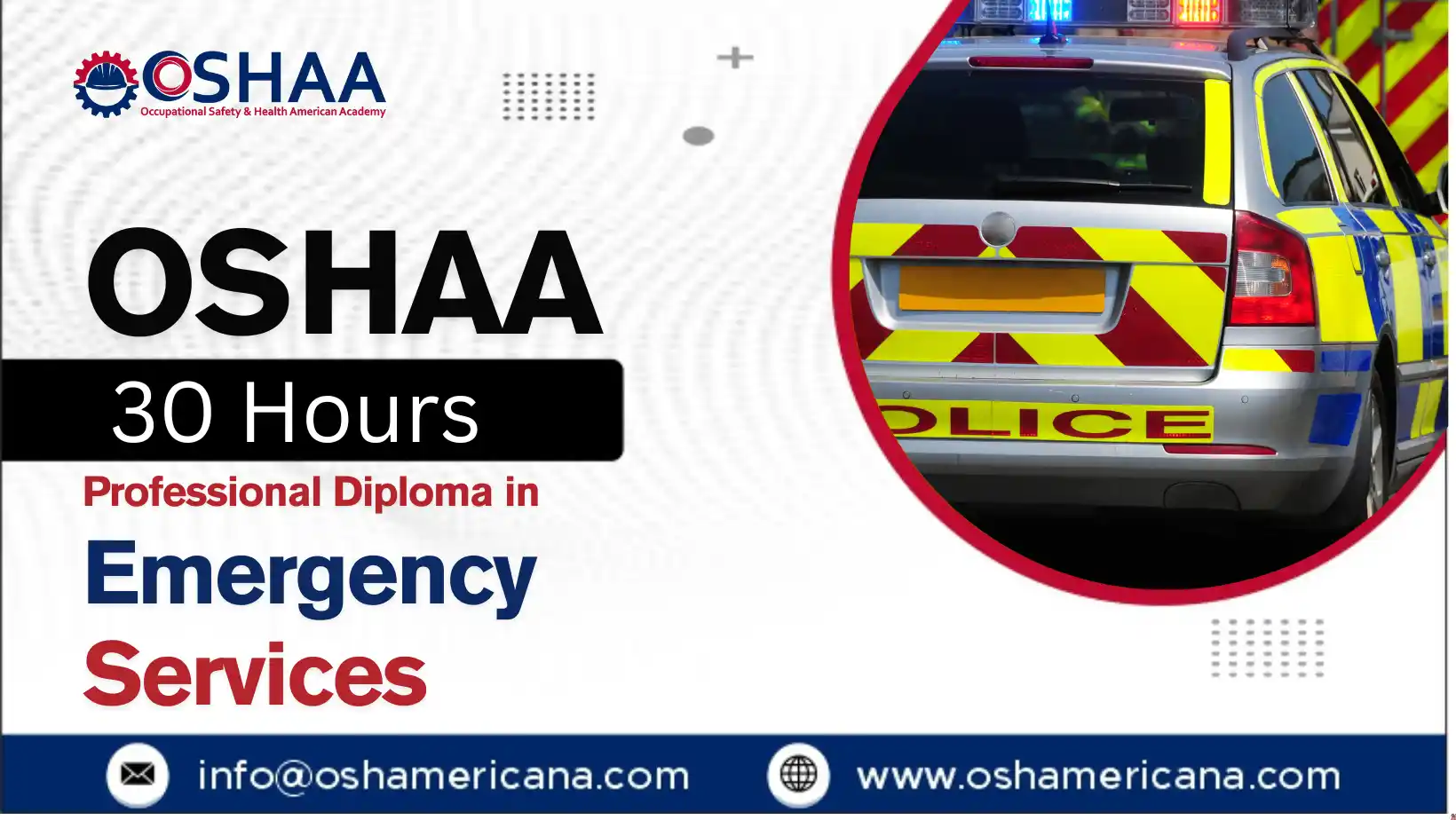
The OSHAA 30-Hours Professional Diploma in Emergency Services is a dynamic and comprehensive programme designed to equip participants with essential knowledge and practical skills required for effective response in emergency and crisis situations. Whether responding to medical incidents, natural disasters, fire hazards, or public safety threats, the course offers a solid foundation in emergency protocols and decision-making under pressure.
The diploma provides an in-depth exploration of the structure and responsibilities of emergency services, including fire and rescue, medical response, police operations, and disaster coordination. It places strong emphasis on communication, critical thinking, situational awareness, and teamwork – all essential competencies for managing high-risk scenarios.
This diploma is ideal for participants seeking to pursue roles in emergency services, public safety, or community response initiatives. It is particularly relevant for those aspiring to join fire and rescue teams, paramedic services, law enforcement, or civil defence. It also supports individuals in non-governmental and volunteer organisations who assist during emergencies or disasters.
After completing the diploma, participants can explore progression opportunities in emergency management, occupational health and safety, crisis leadership, or emergency medical care. The course also provides a strong foundation for future study in disaster science or risk planning.
The OSHAA 30-Hours Professional Diploma in Emergency Services empowers participants with critical knowledge and readiness to act effectively during emergencies. With a balance of theory and practical application, it prepares individuals to serve communities with competence, courage, and commitment in times of urgent need.
OSHAA 30-Hours Professional Diploma in Emergency Services
To enroll in the OSHAA 30-Hours Professional Diploma in Emergency Services, learners should meet the following requirements:
- Age: 16 years or older
- Education: High school diploma or equivalent; related certificates in Health & Safety, First Aid, or Security are helpful
- Language: Basic English reading and comprehension
- Experience: Not required
Study Units
Learning Outcomes
Introduction to Emergency Services and Their Roles (3 Hours)
- Understand the structure and functions of key emergency services
- Identify the roles and responsibilities of personnel across different sectors
- Recognise how multi-agency collaboration enhances incident response
- Develop awareness of emergency preparedness and community safety
- Appreciate the importance of coordination during crises
Principles of Incident Management and Risk Assessment (3 Hours)
- Understand the stages of incident management and response protocols
- Conduct basic risk assessments in emergency scenarios
- Apply principles of hazard identification, evaluation, and control
- Prioritise actions and allocate resources effectively under pressure
- Enhance decision-making skills for efficient emergency management
Emergency First Aid and Basic Life Support (4 Hours)
- Perform essential first aid techniques, including CPR and wound care
- Recognise and respond to life-threatening conditions like cardiac arrest and choking
- Apply safe handling, patient assessment, and casualty stabilisation practices
- Understand the role of first aid in bridging care until professional assistance arrives
- Promote confidence and competence in emergency medical response
Fire Safety Procedures and Evacuation Protocols (5 Hours)
- Identify common fire hazards and preventive strategies
- Understand fire classifications and suitable extinguishing methods
- Learn safe evacuation procedures and emergency planning
- Apply knowledge of fire safety equipment, alarms, and building regulations
- Support proactive risk reduction and community safety awareness
Communication and Coordination During Emergencies (6 Hours)
- Develop effective verbal and non-verbal communication under stress
- Maintain clarity and calmness in high-pressure situations
- Coordinate efficiently with emergency teams and the public
- Apply strategies to deliver accurate instructions and critical information
- Enhance teamwork and operational efficiency during incidents
Disaster Response and Recovery Planning (4 Hours)
- Understand the phases of disaster management: preparedness, response, and recovery
- Support communities during and after disasters
- Develop knowledge of resource mobilisation, logistics, and emergency support
- Apply recovery strategies that strengthen resilience and continuity
- Promote proactive planning for future emergencies
Personal Safety and Protective Equipment in Emergency Situations (2 Hours)
- Identify different types of personal protective equipment (PPE) and correct usage
- Understand safety protocols to minimise personal risk
- Apply hygiene, biohazard, and infection-control precautions
- Recognise the importance of self-care, fitness, and readiness in emergency roles
- Maintain personal safety while responding to critical incidents
Mental Health Awareness in Crisis Response (3 Hours)
- Recognise signs of stress, trauma, and burnout in emergency personnel
- Understand the psychological impact of critical incidents on responders and victims
- Apply strategies to manage mental health during and after emergencies
- Promote supportive environments and peer wellbeing within emergency services
- Encourage resilience and sustainable performance in high-stress roles
The OSHAA 30-Hours Professional Diploma in Emergency Services equips learners with the essential knowledge and practical skills to respond effectively in emergencies. This course is ideal for first responders, safety professionals, and anyone seeking to enhance their preparedness and crisis management abilities.
- Develop Emergency Response Skills: Learn how to act quickly and effectively in critical situations.
- Enhance Safety Awareness: Understand risk assessment, hazard prevention, and safety protocols.
- Improve Crisis Management: Gain techniques for managing emergencies, disasters, and unexpected events.
- Learn Life-Saving Techniques: Acquire first aid, rescue, and emergency medical response skills.
- Boost Professional Credibility: Strengthen qualifications for careers in emergency services, safety, and security.
- Apply Practical Strategies: Learn hands-on methods for real-world emergency scenarios.
- Enhance Team Coordination: Understand how to work effectively in high-pressure, multi-responder environments.
- Increase Confidence in Response: Build confidence to make informed decisions during critical situations.
- Stay Prepared for Any Emergency: Develop skills for natural disasters, accidents, and workplace emergencies.
- Advance Career Opportunities: Open doors in public safety, firefighting, healthcare, and emergency management fields.
The OSHAA 30-Hours Professional Diploma in Emergency Services is designed for individuals who want to gain practical skills and knowledge to respond effectively in emergencies. It is ideal for first responders, safety professionals, and anyone looking to enhance preparedness and crisis management abilities.
- Individuals Interested in Emergency Preparedness: Who want practical skills to handle crises safely and confidently.
- First Responders and Paramedics: Looking to strengthen emergency response and rescue skills.
- Safety and Security Professionals: Who want to improve risk assessment, hazard management, and crisis preparedness.
- Healthcare Workers: Interested in acquiring life-saving techniques for emergencies.
- Firefighters and Rescue Teams: Seeking additional training in emergency services and disaster management.
- Educators and Trainers: Who want to teach emergency preparedness and response strategies.
- Volunteers and Community Workers: Aiming to assist effectively during natural disasters or accidents.