Boost Your Emergency Response Skills: First Aid at Work Training
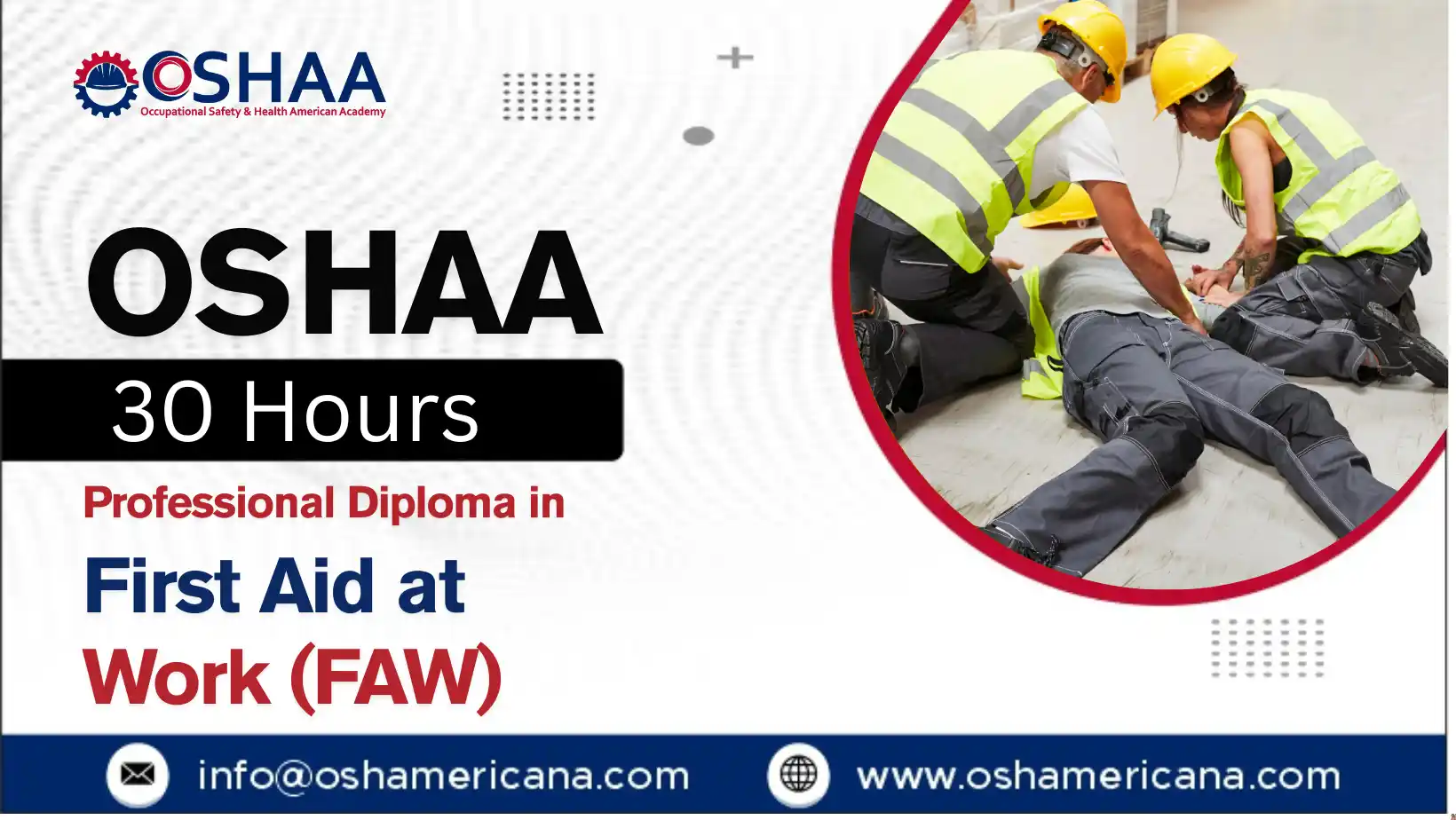
The OSHAA 30-Hours Professional Diploma in First Aid at Work (FAW) is a comprehensive training programme designed to equip participants with the essential knowledge and practical skills to handle workplace medical emergencies. Aligned with international health and safety standards, this diploma provides structured, hands-on training to develop life-saving capabilities across diverse industries and work environments.
Participants gain a thorough understanding of first aid principles, emergency response techniques, and workplace safety protocols. The course covers key areas including casualty assessment, CPR, AED use, wound management, burns and fracture treatment, and managing medical emergencies such as heart attacks, strokes, and seizures. Emphasis on both theory and practical exercises ensures learners can respond confidently in real-world situations.
A standout feature of this diploma is its focus on workplace-specific scenarios, enabling participants to apply skills effectively in offices, construction sites, factories, or public service settings. Training also includes risk assessment, incident management, and compliance with workplace safety regulations, ensuring participants understand their responsibilities in maintaining a safe and prepared environment.
Completing the OSHAA 30-Hours FAW Diploma enhances professional competence, increases workplace value, and contributes to safer conditions for colleagues and the public. This internationally recognised qualification is ideal for safety-critical roles, supervisors, and employees seeking to strengthen emergency response skills and meet global workplace safety standards.
OSHAA 30-Hours Professional Diploma in First Aid at Work (FAW)
- Age: 18+ years
- Education: High school or equivalent recommended
- Language: Basic English comprehension
- Experience: Not required
Study Units
Learning Outcomes
Introduction to First Aid at Work and Workplace Safety Regulations (2 Hours)
- Understand the role and responsibilities of a workplace first aider
- Recognise the importance of adhering to workplace safety regulations and guidelines
- Identify legal requirements for first aid provision in the workplace
Risk Assessment and Emergency Preparedness in the Workplace (3 Hours)
- Conduct basic workplace risk assessments to identify potential hazards
- Develop and implement effective emergency response plans
- Apply strategies to minimise workplace accidents and injuries
Primary Survey, Casualty Assessment, and Incident Management (3 Hours)
- Perform a primary survey to assess casualty condition
- Apply systematic casualty assessment techniques to prioritise treatment
- Manage incidents effectively to ensure safety and coordinated response
Cardiopulmonary Resuscitation (CPR) and Automated External Defibrillator (AED) Operation (5 Hours)
- Perform CPR for adults, children, and infants according to recognised guidelines
- Operate an AED safely and effectively in an emergency
- Integrate CPR and AED use to maximise survival chances during cardiac arrest
Management of Unconscious Casualties and Recovery Position Techniques (3 Hours)
- Assess and manage unconscious casualties to maintain airway safety
- Apply correct recovery position techniques to prevent complications
- Monitor and provide ongoing care until professional help arrives
Bleeding Control, Wound Care, and Shock Management (4 Hours)
- Apply appropriate techniques to control external and internal bleeding
- Administer basic wound care to prevent infection and complications
- Recognise and manage different types of shock effectively
First Aid for Burns, Scalds, and Chemical Injuries (4 Hours)
- Identify types and severity of burns and scalds
- Apply appropriate first aid for thermal, electrical, and chemical burns
- Prevent further injury and minimise long-term damage through correct care
Management of Fractures, Sprains, and Soft Tissue Injuries (3 Hours)
- Recognise signs and symptoms of fractures, sprains, and soft tissue injuries
- Apply appropriate immobilisation and support techniques
- Provide effective care to reduce pain and prevent further injury
Response to Medical Emergencies: Heart Attack, Stroke, and Seizures (3 Hours)
- Recognise early signs and symptoms of heart attack, stroke, and seizures
- Provide immediate and appropriate first aid response for each condition
- Support and monitor casualties until advanced medical help arrives
This professional diploma equips you with practical knowledge, hands-on training, and recognized certification to handle a wide range of workplace incidents confidently.
- Master Workplace First Aid Skills: Learn to respond effectively to injuries, medical emergencies, and life-threatening situations.
- Hands-On Practical Training: Gain confidence through real-life workplace emergency simulations.
- Boost Career Opportunities: Strengthen your profile for roles in healthcare, corporate safety, and industrial workplaces.
- Improve Workplace Safety Preparedness: Equip yourself and your team to act quickly and efficiently in emergencies.
- Build Confidence in Critical Situations: Respond calmly and competently to protect colleagues and minimize risks.
This course is ideal for anyone who wants to develop essential first aid skills for the workplace. It’s perfect for professionals responsible for health and safety, as well as employees who want to be prepared for emergencies.
- Workplace Safety Officers: HR personnel, first-aid coordinators, and safety managers.
- Healthcare Professionals: Nurses, paramedics, and first-aid responders in workplace settings.
- Industrial & Office Staff: Employees in factories, offices, or any work environment where first aid knowledge is required.
- Managers & Team Leaders: Individuals responsible for staff safety and emergency preparedness.
- Anyone Interested in Workplace Safety: Employees who want to enhance their emergency response skills.