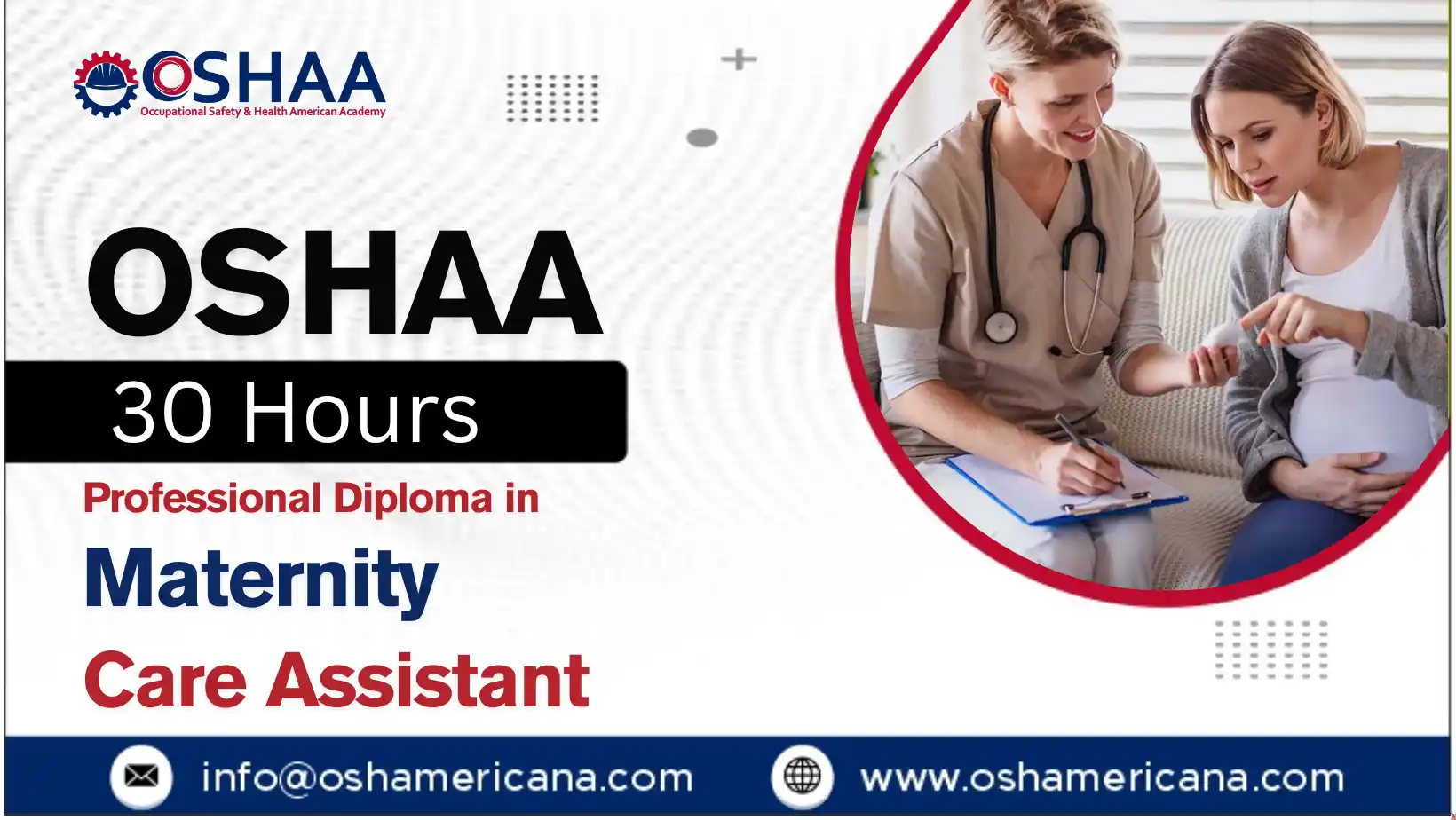
OSHAA Diploma in Maternity Care Assistant and Maternal Health Care
The OSHAA 30-Hours Professional Diploma in Maternity Care Assistant is a structured training program designed in alignment with occupational health and safety principles and modern maternal healthcare standards. The course focuses on equipping learners with essential knowledge and practical skills to support mothers during pregnancy, childbirth, and postnatal care in safe and professional healthcare environments.
This program introduces learners to the fundamentals of maternity care, including prenatal support, basic labor assistance, postnatal care, and maternal wellbeing. It emphasizes the importance of hygiene, patient safety, emotional support, and effective communication in ensuring a positive and safe experience for mothers and newborns.
In addition, the diploma provides practical understanding of assisting healthcare professionals in maternity wards, monitoring maternal health, and supporting daily care activities. It is suitable for healthcare assistants, nursing staff, midwifery trainees, and individuals interested in maternal and child health services. By completing this course, learners gain essential skills to work in maternity care settings in a safe, ethical, and professional manner in line with recognized occupational health and safety and healthcare standards.
OSHAA 30-Hours Professional Diploma in Maternity Care Assistant
- Minimum Age Requirement: Applicants must be at least 18 years old to enroll in this maternal healthcare program
- Educational Background: Minimum secondary education (Matric/SSC) is required; candidates with qualifications in Nursing, Midwifery, Healthcare, Biology, or related disciplines will be preferred
- Language Proficiency: Basic understanding of English is required to follow medical terminology, care instructions, and course materials effectively
- Work Experience: No prior experience is required; however, experience in healthcare, caregiving, or maternity support services is considered an advantage
Study Units
Learning Outcomes
Introduction to Maternity Care and the Role of the Assistant (3 hours)
- Understand the scope of maternity care and the stages of the maternity pathway
- Identify the responsibilities and limitations of a maternity care assistant
- Recognise the importance of teamwork within maternity healthcare settings
- Demonstrate awareness of professional conduct and ethical care delivery
Understanding Pregnancy Stages and Maternal Health (5 hours)
- Describe the physiological and emotional changes during each trimester
- Understand common health conditions and risks associated with pregnancy
- Recognise the importance of nutrition, exercise, and antenatal check-ups
- Support pregnant individuals with comfort, reassurance, and practical care
Antenatal Support and Care Practices (3 hours)
- Assist in routine antenatal procedures and observations under supervision
- Support emotional wellbeing and prepare mothers for childbirth
- Provide clear, supportive communication to expectant mothers
- Understand cultural sensitivity and respect in antenatal care
Labour and Birth Support Essentials (5 hours)
- Recognise signs of labour and assist in preparing the birthing environment
- Support mothers through non-clinical comfort measures during labour
- Assist midwives with safe handling and positioning of patients
- Understand the emotional and psychological needs during labour and delivery
Postnatal Care and Emotional Wellbeing (3 hours)
- Assist in monitoring postnatal recovery and maternal comfort
- Recognise signs of postnatal depression and emotional distress
- Support mothers with basic hygiene, mobility, and rest
- Encourage confidence and reassurance in early motherhood
Newborn Care, Feeding, and Bonding Techniques (4 hours)
- Assist with newborn hygiene, nappy changing, and swaddling
- Support safe feeding practices including breastfeeding and bottle feeding
- Understand the importance of skin-to-skin contact and parent-infant bonding
- Identify signs of newborn distress and report concerns appropriately
Monitoring Vital Signs and Recognising Health Concerns (4 hours)
- Accurately observe and record temperature, pulse, respiration, and blood pressure
- Recognise abnormal findings and report to appropriate clinical staff
- Understand how to respond to signs of maternal or neonatal deterioration
- Maintain clear and accurate care records
Infection Control and Hygiene in Maternity Settings (3 hours)
- Follow best practices for hand hygiene, PPE use, and environmental cleanliness
- Understand routes of infection transmission in maternity care
- Support the safe handling and disposal of clinical waste
- Maintain high hygiene standards when assisting with mother and baby care
Here are the key course benefits of the OSHAA 30-Hours Professional Diploma in Maternity Care Assistant:
- Maternal Care Knowledge: Gain understanding of pregnancy, childbirth, and postnatal care support
- Practical Assistance Skills: Learn how to assist healthcare professionals in maternity wards and clinics
- Patient Support Skills: Develop the ability to provide emotional and physical support to mothers
- Newborn Care Awareness: Understand basic care needs of newborn babies in postnatal settings
- Health & Safety Practices: Learn hygiene, infection control, and safety standards in maternity care
- Communication Skills: Improve interaction with patients, families, and healthcare teams
- Monitoring Skills: Gain knowledge of basic maternal health observation and reporting
- Professional Development: Enhance career opportunities in healthcare and maternity support roles
- Teamwork Ability: Learn to work effectively with nurses, midwives, and doctors
- Confidence Building: Develop confidence in handling maternity care responsibilities
- Ethical Care Practice: Follow respectful, safe, and patient-centered maternity care standards
The OSHAA 30-Hours Professional Diploma in Maternity Care Assistant is ideal for individuals who are passionate about supporting maternal and newborn health. This course is designed for:
- Healthcare Assistants: Individuals supporting nurses and midwives in maternity wards and clinics
- Nursing Staff: Nurses working in maternal and newborn care departments
- Midwifery Trainees: Students and assistants preparing for careers in midwifery and maternal health
- Caregivers: Individuals providing support to pregnant women and new mothers at home or in healthcare settings
- Medical Students: Learners pursuing careers in nursing, midwifery, or healthcare assistance
- Community Health Workers: Professionals involved in maternal and child health programs
- Hospital Support Staff: Individuals assisting in patient care and maternity unit operations
- Social Workers: Professionals supporting maternal wellbeing and family care services
- NGO Workers: Staff involved in maternal health awareness and support programs
- Anyone Interested in Maternal Care: Individuals looking to build skills in maternity and newborn support services
Whether starting your career or enhancing your current role, this course provides the practical skills and knowledge needed to make a real difference in maternity care.