Advanced Diploma in Medical Office Administration Training
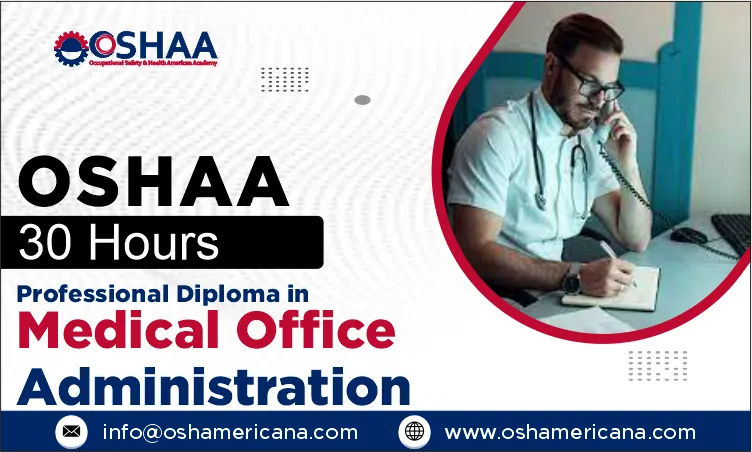
The OSHAA 30-Hours Professional Diploma in Medical Office Administration is a comprehensive training program designed to develop the essential administrative, organizational, and communication skills required in modern healthcare settings. This course prepares learners to efficiently manage medical office operations, including patient record handling, appointment scheduling, medical documentation, and front-desk coordination. It focuses on building professionalism, accuracy, and efficiency in healthcare administration environments.
The program is aligned with internationally recognized workplace efficiency and safety principles inspired by the Occupational Safety and Health Administration standards, ensuring learners understand compliance, confidentiality, and ethical handling of medical information. Participants will also gain knowledge of healthcare systems, office procedures, medical terminology, data protection, and effective communication with patients and healthcare professionals.
This diploma is ideal for individuals seeking to start or advance their career in healthcare administration, including medical office assistants, receptionists, administrative staff, and students entering the healthcare field. Upon completion, learners will be equipped with the skills and confidence to support smooth medical office operations and contribute to efficient, patient-centered healthcare services.
OSHAA 30-Hours Professional Diploma in Medical Office Administration
To enroll in the OSHAA 30-Hours Professional Diploma in Medical Office Administration, learners are expected to meet a few basic requirements to ensure they can successfully understand and apply administrative and healthcare office procedures.
- Work Experience (Optional): No prior experience is mandatory, although experience in office work, healthcare support, or administrative roles can be beneficial.
- Age Requirement: Applicants should be at least 16 years old at the time of enrollment.
- Educational Background: A secondary school qualification (high school or equivalent) is recommended. Learners with related certificates in Business Administration, Office Management, Healthcare Administration, Medical Reception, or Computer Studies will have an added advantage.
- Language Proficiency: Basic English reading, writing, and communication skills are required to understand medical terminology and office documentation.
Study Units
Learning Outcomes
Introduction to Medical Office Administration (3 Hours)
- Understand the role and responsibilities of a medical office administrator.
- Learn the structure and functions of a medical office environment.
- Gain knowledge of the essential administrative tasks involved in managing a medical office.
- Identify key skills required for effective medical office administration.
Healthcare Terminology and Documentation (4 Hours)
- Learn common medical terminology and abbreviations used in healthcare settings.
- Understand how to accurately document patient information and medical records.
- Become proficient in handling patient charts, electronic health records (EHR), and other documentation.
- Gain the ability to communicate medical information clearly and accurately.
Medical Office Procedures and Protocols (4 Hours)
- Develop an understanding of standard medical office procedures and workflow.
- Learn how to manage patient appointments, scheduling, and patient flow effectively.
- Understand patient intake procedures, including gathering personal and medical information.
- Familiarise with the protocols for patient communication, handling inquiries, and addressing concerns.
Billing and Coding for Healthcare (5 Hours)
- Gain proficiency in medical billing and coding systems, including ICD-10, CPT, and HCPCS codes.
- Understand the process of insurance claim submission and reimbursement.
- Learn how to accurately assign codes to diagnoses, procedures, and services.
- Understand the financial processes and ensure compliance with health insurance providers.
Healthcare Laws and Ethics (3 Hours)
- Understand the legal and ethical responsibilities of a medical office administrator.
- Gain knowledge of patient confidentiality, including HIPAA regulations and data protection.
- Learn about healthcare regulations, compliance, and the role of the administrator in ensuring legal adherence.
- Explore ethical considerations in patient care and office operations.
Medical Office Technology (4 Hours)
- Become proficient in using medical office software and systems, such as electronic health records (EHR) and practice management software.
- Understand the role of technology in improving office efficiency and patient care.
- Learn how to maintain and manage digital patient records, appointment systems, and billing processes.
- Familiarise with telemedicine technologies and their integration into medical office practices.
Customer Service in Healthcare (3 Hours)
- Develop effective communication skills for interacting with patients, healthcare providers, and colleagues.
- Learn how to provide excellent customer service in a medical setting, ensuring patient satisfaction.
- Understand the importance of professionalism, empathy, and patience in healthcare environments.
- Address patient concerns, inquiries, and complaints efficiently and professionally.
Health Insurance and Claims Management (4 Hours)
- Gain a comprehensive understanding of health insurance policies, coverage types, and providers.
- Learn how to process and manage health insurance claims, including verification and submission.
- Understand the process of dealing with denials, rejections, and appeals in health insurance claims.
- Learn the role of the medical office administrator in managing insurance-related documentation and correspondence.
The OSHAA 30-Hours Professional Diploma in Medical Office Administration equips learners with essential administrative, organizational, and communication skills required to manage modern healthcare office environments efficiently. This course enhances professional competence, improves workflow management, and prepares learners to support healthcare teams with accuracy and confidence.
- Industry Recognition – Earn a valuable qualification for healthcare administration roles.
- Office Management – Develop strong skills in handling daily medical office operations efficiently.
- Patient Coordination – Learn to manage appointments, scheduling, and patient flow effectively.
- Medical Documentation – Gain expertise in accurate record keeping and healthcare data handling.
- Communication Skills – Improve professional interaction with patients, doctors, and staff.
- Healthcare Knowledge – Understand basic medical terminology and administrative procedures.
- Data Protection – Learn confidentiality and secure handling of patient information.
- Career Growth – Increase job opportunities in hospitals, clinics, and healthcare facilities.
- Professional Efficiency – Enhance accuracy, productivity, and organizational skills.
- Technology Skills – Build competence in medical office software and systems.
The OSHAA 30-Hours Professional Diploma in Medical Office Administration is designed for individuals who want to build or enhance their careers in healthcare administration and office management within medical environments. It is suitable for beginners as well as professionals seeking to strengthen their administrative and organizational skills in the healthcare sector.
- Freelancers & Remote Admin Workers – Individuals interested in medical virtual assistant or remote healthcare administration roles.
- Aspiring Medical Office Staff – Individuals aiming to start a career as medical receptionists, administrative assistants, or office coordinators in healthcare settings.
- Healthcare Administrators – Existing hospital or clinic staff who want to improve their office management and patient coordination skills.
- Office & Admin Professionals – People from general administration backgrounds looking to transition into the healthcare industry.
- Students & Fresh Graduates – Learners studying business, healthcare, or management who want practical medical office knowledge.
- Healthcare Support Workers – Caregivers and assistants who wish to expand into administrative healthcare roles.
- Career Changers – Individuals seeking new opportunities in hospitals, clinics, and medical organizations.
- Clinic & Hospital Staff – Front-desk and support staff aiming to improve efficiency and professional performance.