OSHAA 30-Hours Professional Diploma in Phlebotomist Training
The OSHAA 30-Hours Professional Diploma in Phlebotomist Training is an introductory healthcare course designed to develop Learners’ understanding of blood collection principles, phlebotomy procedures, circulatory system anatomy, infection prevention, patient communication, specimen handling, and professional responsibilities.
The curriculum is delivered and assessed through a multiple-choice question (MCQ)-based format. It provides theoretical knowledge and does not represent supervised clinical practice or a practical competency assessment. Course completion does not grant state certification, professional licensure, or independent authorization to perform blood collection procedures. Requirements vary by state and employer.
About the Phlebotomist Training Course
Phlebotomy is the process of collecting blood samples for laboratory testing, diagnosis, monitoring, and other healthcare purposes. Safe blood collection depends on understanding patient identification, collection methods, infection prevention, specimen integrity, communication, and professional conduct.
This 30-hour course introduces Learners to the knowledge areas associated with phlebotomy. It covers the circulatory system, blood collection techniques, PPE, hygiene, patient care, venipuncture and capillary puncture concepts, and legal and ethical responsibilities. The course is MCQ-based and focuses on theoretical learning rather than supervised clinical skill verification.
Who Should Take This Course?
Entry Requirements
- Age
- Applicants must be at least 16 years old, according to the published course entry information.
- Education
- A basic secondary school qualification is recommended. Biology, chemistry, healthcare, nursing, or medical science backgrounds may be beneficial.
- Language
- Basic English reading, writing, and comprehension skills are required to follow course materials and assessment questions.
- Experience
- Previous healthcare, clinical, or laboratory experience may be helpful but is not mandatory.
- Additional requirements
- State, employer, or clinical placement requirements may apply separately and are not replaced by these course entry recommendations.
Course Study Units
The curriculum consists of eight study units with a combined duration of 30 hours.
| # | Study Unit | Duration |
|---|---|---|
| 1 | Introduction to Phlebotomy | 3 hours |
| 2 | Blood Collection Techniques | 4 hours |
| 3 | Anatomy and Physiology of the Circulatory System | 3 hours |
| 4 | Infection Control and Safety Protocols | 3 hours |
| 5 | Personal Protective Equipment (PPE) and Hygiene Practices | 2 hours |
| 6 | Patient Care and Communication Skills | 5 hours |
| 7 | Venipuncture and Capillary Puncture Techniques | 5 hours |
| 8 | Legal and Ethical Considerations in Phlebotomy | 5 hours |
| Total course duration | 30 hours | |
Learning Outcomes
After studying the course units, Learners should be able to explain key phlebotomy concepts, recognize safety considerations, and describe patient care and professional responsibilities relevant to blood collection environments.
1Introduction to Phlebotomy
- Understand the role and importance of phlebotomy in healthcare settings.
- Recognize the different types of blood collection procedures.
- Identify the key responsibilities and knowledge areas associated with phlebotomy support.
- Understand ethical and professional standards relevant to phlebotomy.
2Blood Collection Techniques
- Describe common blood collection methods, including venipuncture and capillary puncture.
- Understand factors considered when selecting an appropriate collection site.
- Explain patient preparation and measures that support comfort during collection.
- Identify potential complications associated with blood collection and the importance of reporting them.
3Anatomy and Physiology of the Circulatory System
- Understand the structure and function of the circulatory system.
- Describe the anatomy of veins and arteries and its relevance to blood collection.
- Identify major blood vessels and their general locations.
- Understand the role of the circulatory system in overall human health.
4Infection Control and Safety Protocols
- Explain infection control principles used in healthcare settings.
- Understand aseptic practices and contamination prevention during blood collection.
- Describe standard precautions and safety measures used to reduce exposure risks.
- Recognize the importance of hand hygiene and appropriate environmental cleaning.
5Personal Protective Equipment (PPE) and Hygiene Practices
- Identify common types of personal protective equipment used in blood collection settings.
- Understand correct principles for selecting, putting on, and removing PPE.
- Explain hygiene practices that help protect patients and healthcare personnel.
- Recognize the importance of maintaining a clean and safe work environment.
6Patient Care and Communication Skills
- Describe effective communication approaches for interacting with patients.
- Understand the importance of explaining procedures and obtaining appropriate consent.
- Identify ways to reassure and support anxious or nervous patients.
- Recognize the role of empathy, dignity, privacy, and professionalism in patient care.
7Venipuncture and Capillary Puncture Techniques
- Understand the general principles and sequence of venipuncture.
- Describe the capillary puncture method and settings in which it may be used, including pediatric care where appropriate.
- Identify safety considerations related to equipment, patient comfort, and potential complications.
- Understand appropriate specimen handling, labeling, storage, and transport principles.
8Legal and Ethical Considerations in Phlebotomy
- Understand legal and professional responsibilities relevant to blood collection activities.
- Explain patient confidentiality, consent, and patient rights in the phlebotomy process.
- Recognize ethical considerations involving blood collection and sensitive patient information.
- Understand the importance of following applicable U.S. federal requirements, state rules, and employer policies.
Assessment and Certification
MCQ-Based Assessment
The published assessment consists of 100 multiple-choice questions (MCQs) designed to assess Learners’ understanding of the course content. A minimum score of 70% is required to pass. Assessment arrangements are administered through the relevant OSHAA Approved Training Partner.
Course Certificate
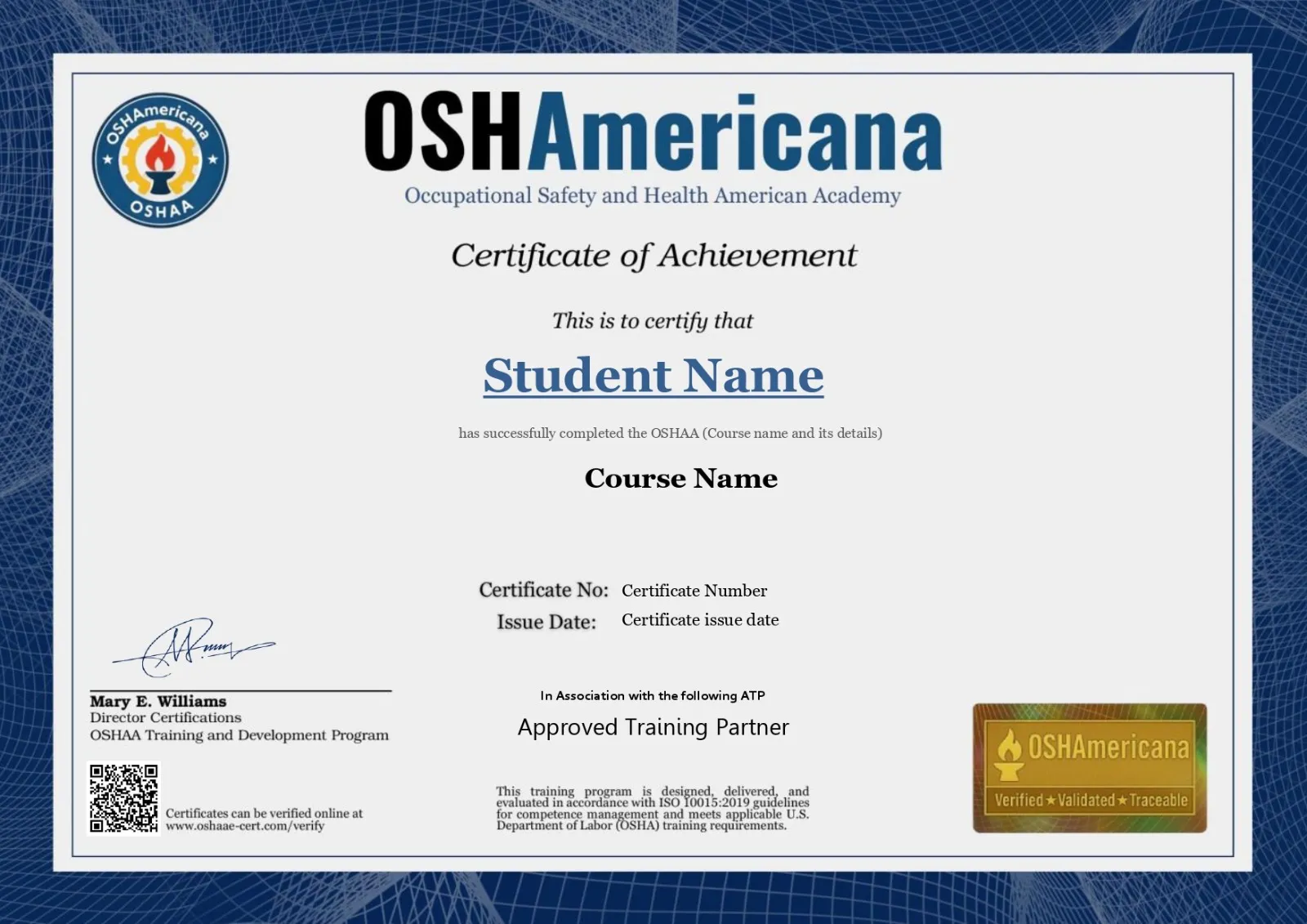
Learners who complete the course requirements and achieve the required assessment result receive the OSHAA course certificate in accordance with the applicable award procedures.
This certificate confirms completion of the course. It is not a state phlebotomy license, state or national phlebotomy certification, or proof of supervised clinical competency. Additional education, clinical practice, examination, employer assessment, or state-specific requirements may apply before a person can perform phlebotomy duties.
Benefits of the Phlebotomist Training Course
This course develops foundational knowledge and awareness relevant to phlebotomy, patient care, and healthcare safety.
Foundational Phlebotomy Knowledge
Understand the purpose of phlebotomy and the main concepts involved in blood collection.
Blood Collection Awareness
Build theoretical understanding of venipuncture, capillary puncture, and patient preparation.
Infection Prevention Knowledge
Learn about standard precautions, hand hygiene, PPE, and prevention of cross-contamination.
Patient Communication Skills
Understand how clear communication, consent, dignity, and reassurance contribute to patient care.
Specimen Handling Awareness
Explore specimen identification, labeling, storage, and transportation principles.
Professional and Ethical Awareness
Understand confidentiality, patient rights, workplace responsibilities, and the importance of following applicable rules.
Career Pathways and Further Learning
The course may help Learners explore phlebotomy and related healthcare support pathways. It does not independently qualify a Learner for a regulated or certified role. Employment eligibility depends on applicable state requirements, employer criteria, relevant credentials, and any required supervised clinical practice or competency assessment.
Phlebotomy Career Exploration
Develop introductory knowledge of blood collection roles and the additional requirements that may apply.
Clinical Support
Understand patient communication, infection prevention, and specimen handling concepts relevant to clinical support environments.
Laboratory Support
Build awareness of specimen identification, labeling, handling, and laboratory workflow principles.
Healthcare Assistant Roles
Strengthen foundational understanding of patient safety and healthcare procedures, subject to role requirements.
Further Phlebotomy Education
Use the course as a starting point when researching state-approved training and certification pathways.
Continuing Healthcare Education
Explore additional training in patient care, medical assisting, laboratory processes, and infection prevention.
Frequently Asked Questions about OSHAA 30-Hours Professional Diploma in Phlebotomist Training
What does the course cover?
The course covers introductory phlebotomy, blood collection methods, circulatory system anatomy, infection control, PPE, patient communication, venipuncture and capillary puncture concepts, and legal and ethical considerations.
Do phlebotomy requirements vary by state?
Yes. Requirements differ across the United States. Learners should check the relevant state health department or licensing authority and the requirements of the employer or healthcare facility where they intend to work.
What OSHA requirements are relevant to phlebotomy?
OSHA’s Bloodborne Pathogens Standard, 29 CFR 1910.1030, may apply to employees with occupational exposure to blood or other potentially infectious materials. It addresses workplace exposure controls, training, PPE, and sharps safety. It does not certify phlebotomists or grant clinical practice authority.
What are the entry requirements?
The published course information states that applicants must be at least 16 years old. A basic secondary school qualification is recommended, and basic English reading, writing, and comprehension skills are required. Prior healthcare or laboratory experience may be helpful but is not mandatory.
How long does the course take?
The course is designed as a 30-hour program consisting of eight study units.
How is the course assessed?
The published assessment consists of 100 multiple-choice questions (MCQs). Learners must achieve a minimum score of 70% to pass.
Can I study online?
Delivery may be online, in person, or blended, depending on the arrangements offered by the relevant OSHAA Approved Training Partner. Confirm the available format directly with the ATP.
What career opportunities can this course support?
The course can provide introductory knowledge relevant to exploring phlebotomy and healthcare support pathways. Employment eligibility depends on state requirements, employer criteria, relevant credentials, and any required supervised clinical competency.
How can I find an OSHAA Approved Training Partner?
Visit the OSHAA Approved Training Partner page to find an ATP and ask about enrollment, delivery options, schedules, and course arrangements.
How to Study the OSHAA Phlebotomist Training Course
Enrollment and delivery arrangements are managed through OSHAA Approved Training Partners.
- 1
Contact an Approved Training Partner
Ask about course availability, enrollment, fees, and delivery format.
- 2
Confirm Course Arrangements
Review the 30-hour course structure and confirm how learning materials and MCQ assessments are provided.
- 3
Study the Eight Units
Complete the course learning materials covering phlebotomy knowledge, safety, patient care, and professional responsibilities.
- 4
Complete the MCQ Assessment
Attempt the 100-question assessment and achieve at least 70% to pass.
- 5
Receive Your Course Certificate
Successful Learners receive the OSHAA course certificate in accordance with the applicable award procedures.