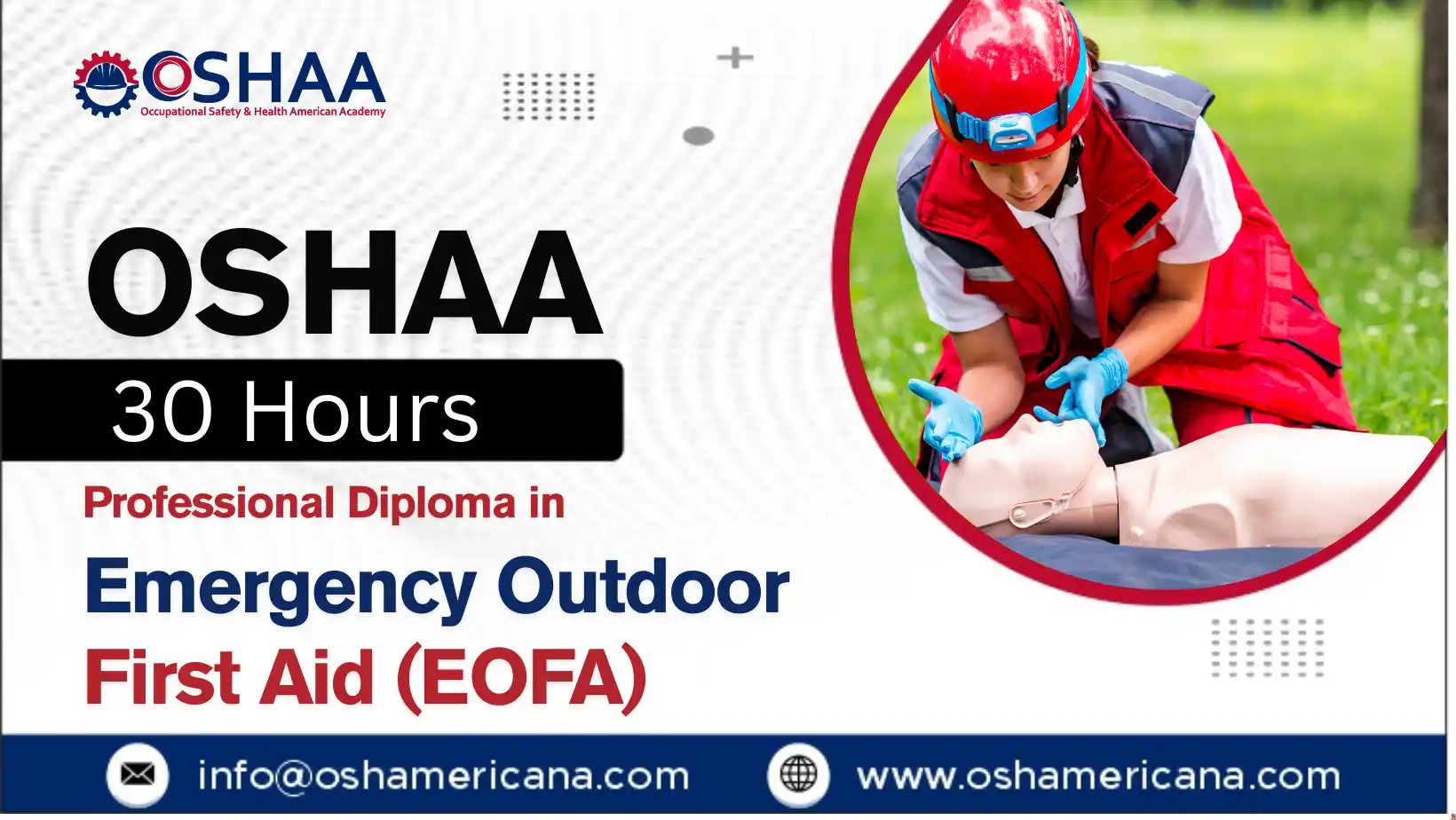
Become a Certified Outdoor First Aid Expert with EOFA
The OSHAA 30-Hours Professional Diploma in Emergency Outdoor First Aid (EOFA) is a specialised course designed to equip participants with the essential skills to provide effective first aid in outdoor and remote environments. Emergencies in such settings often demand quick decision-making, resourcefulness, and the ability to act when professional medical help is not immediately accessible.
Offered by OSHAA, a globally recognised authority in health and safety training, this diploma meets international standards and is ideal for outdoor professionals, adventure guides, wilderness educators, conservation workers, and anyone involved in remote or outdoor activities. Participants gain practical expertise in managing common outdoor emergencies, including fractures, dehydration, hypothermia, insect bites, animal attacks, and other injuries.
The programme combines theory with hands-on, scenario-based training to ensure participants are confident and competent in challenging conditions. Key skills include casualty assessment, CPR, AED use, wound management, handling fractures and soft tissue injuries, managing environmental hazards, and coordinating emergency evacuations. Training also covers improvising with limited resources and providing prolonged care when required.
Completing this diploma enhances personal safety, boosts professional credibility, and equips participants to respond decisively in life-threatening outdoor situations. The OSHAA 30-Hours Diploma in Emergency Outdoor First Aid is an invaluable qualification for anyone committed to safeguarding lives in wilderness and remote locations.
OSHAA 30-Hours Professional Diploma in Emergency Outdoor First Aid (EOFA)
- Age: 18+ years
- Education: High school or equivalent recommended
- Language: Basic English comprehension
- Experience: Not required
Study Units
Learning Outcomes
Introduction to Emergency Outdoor First Aid and Legal Responsibilities (2 Hours)
- Understand the principles and scope of outdoor first aid
- Recognise legal and ethical responsibilities related to outdoor emergency care
- Identify key regulations governing first aid in remote settings
Outdoor Risk Assessment and Scene Management (3 Hours)
- Conduct effective risk assessments specific to outdoor environments
- Manage emergency scenes safely and efficiently
- Prioritise actions to protect casualties and responders in remote locations
Casualty Assessment and Primary Survey in Remote Environments (4 Hours)
- Perform thorough casualty assessments in challenging outdoor conditions
- Conduct primary surveys to identify life-threatening issues
- Adapt assessment techniques to limited resources and environmental constraints
Cardiopulmonary Resuscitation (CPR) and Automated External Defibrillator (AED) Use (4 Hours)
- Demonstrate CPR techniques in line with international standards
- Operate AED devices confidently in emergency situations
- Integrate CPR and AED use effectively in outdoor rescue scenarios
Management of Bleeding, Wounds, and Shock in Outdoor Settings (4 Hours)
- Identify and control various types of bleeding in remote conditions
- Apply appropriate wound care and dressing methods
- Recognise and manage shock with consideration to environmental factors
Treatment of Fractures, Sprains, and Soft Tissue Injuries in the Outdoors (4 Hours)
- Identify common musculoskeletal injuries encountered outdoors
- Apply immobilisation and support techniques using improvised materials
- Provide pain relief and care tailored to remote settings
Environmental Emergencies: Hypothermia, Heatstroke, Dehydration, and Bites (4 Hours)
- Recognise signs and symptoms of environmental emergencies
- Administer correct first aid treatments for hypothermia, heatstroke, dehydration, and bites
- Implement prevention strategies to minimise environmental risks
Prolonged Care and Monitoring in Remote Locations (3 Hours)
- Manage casualties when evacuation is delayed or prolonged
- Monitor vital signs and changes in casualty condition over time
- Provide comfort and maintain safety until advanced medical help arrives
Emergency Evacuation Procedures and Communication Techniques (2 Hours)
- Plan and execute safe evacuation strategies in outdoor settings
- Utilise effective communication methods for coordinating rescue efforts
- Understand the importance of teamwork and clear information exchange during emergencies
Develop essential life-saving skills and be fully prepared to handle emergencies in outdoor and remote environments. This professional diploma provides practical knowledge, hands-on training, and recognized certification to respond effectively in critical situations.
- Master Emergency Outdoor First Aid: Learn to assess and manage injuries and medical emergencies in outdoor settings.
- Hands-On Practical Skills: Gain confidence through real-life scenarios and simulations of outdoor emergencies.
- Enhance Career Opportunities: Boost your credentials for roles in adventure tourism, outdoor education, sports, and workplace safety.
- Improve Safety Preparedness: Equip yourself and your team to prevent and respond to accidents in remote environments.
- Build Confidence in Critical Situations: Respond calmly and efficiently to emergencies, ensuring the best possible outcomes.
This course is ideal for anyone who wants to develop essential life-saving skills for emergencies in outdoor and remote environments. It’s designed for professionals and enthusiasts who face outdoor risks or want to enhance their emergency response knowledge.
- Outdoor Educators & Adventure Guides: Teachers, instructors, and guides leading outdoor activities.
- Sports & Recreation Staff: Coaches, trainers, and camp leaders responsible for participants’ safety.
- Healthcare & Safety Professionals: Nurses, first-aid officers, and workplace safety staff.
- Travel & Tourism Professionals: Staff working in adventure tourism, trekking, and expedition services.
- Outdoor Enthusiasts & Caregivers: Hikers, climbers, campers, and anyone keen on emergency preparedness in outdoor settings.