OSHAA 30-Hours Professional Diploma in Hot Work Safety
The OSHAA 30-Hours Professional Diploma in Hot Work Safety provides Learners with structured knowledge of the hazards, safety procedures, and preventive measures associated with hot work activities such as welding, cutting, brazing, and grinding. The course explores fire prevention, hazard assessment, personal protective equipment, hot work permits, emergency response, and fire watch responsibilities.
Across eight study units, Learners become familiar with relevant US workplace safety requirements, including OSHA 29 CFR 1910.252 for general-industry welding and cutting and OSHA 29 CFR 1926 Subpart J for construction. This is a knowledge-based professional development course and does not replace employer authorization, task-specific practical training, or workplace permit procedures.
About the Hot Work Safety Course
The OSHAA 30-Hours Professional Diploma in Hot Work Safety is designed to develop understanding of the safety considerations associated with activities that generate heat, sparks, or ignition sources. Hot work operations are common in construction, manufacturing, fabrication, maintenance, and industrial facilities, but can create serious fire, explosion, burn, and exposure hazards if not properly planned and controlled.
The course covers hazard identification, fire prevention, PPE, permit-to-work systems, emergency response, fire watch, and relevant regulatory references. Learners explore the purpose of workplace controls and the responsibilities of workers, supervisors, and safety personnel. Course assessment is knowledge-based and does not verify practical welding ability or independently authorize hot work.
Who Should Take This Course?
Entry Requirements
- Age
- Applicants should be at least 18 years old at the time of enrollment.
- Education
- A basic secondary education or high school-level equivalent is recommended. Prior knowledge of occupational safety, construction, welding, engineering, manufacturing, or related fields may be beneficial but is not mandatory.
- Language
- Basic English proficiency is recommended to understand safety instructions, warning signs, course materials, and emergency procedures.
- Experience
- No formal work experience is required. Experience in welding, fabrication, construction, maintenance, or industrial work may be helpful.
- Workplace fitness
- Any physical or medical fitness requirements relate to the actual job and employer’s workplace arrangements, not a general academic entry requirement for this course.
Course Study Units
The 30-hour diploma is organized into eight study units covering hot work hazards, fire prevention, protective equipment, permits, emergency response, fire watch, and regulatory standards.
| # | Study Unit | Duration |
|---|---|---|
| 1 | Introduction to Hot Work | 2 hours |
| 2 | Identifying and Assessing Hot Work Hazards | 3 hours |
| 3 | Fire Prevention and Protection Measures | 4 hours |
| 4 | Personal Protective Equipment (PPE) for Hot Work | 3 hours |
| 5 | Hot Work Permits and Procedures | 5 hours |
| 6 | Handling Emergency Situations and First Aid | 4 hours |
| 7 | Fire Watch and Post-Work Safety | 5 hours |
| 8 | Regulatory Standards and Compliance | 4 hours |
| Total course duration | 30 hours | |
Learning Outcomes
By completing the eight study units, Learners should develop knowledge of hot work hazards, preventive controls, permit procedures, emergency response, fire watch responsibilities, and relevant US safety requirements. The outcomes are knowledge-based and aligned with the published multiple-choice assessment.
1Introduction to Hot Work
Duration: 2 hours
- Understand the definition, scope, and purpose of hot work activities.
- Identify different types of hot work operations, including welding, cutting, brazing, and grinding.
- Recognize common risks and hazards associated with hot work tasks.
- Explain the importance of hot work safety in preventing fires, injuries, and workplace incidents.
- Identify relevant safety frameworks and references, including applicable OSHA requirements and industry standards.
2Identifying and Assessing Hot Work Hazards
Duration: 3 hours
- Recognize hazards associated with hot work operations, including ignition sources, combustible materials, and hazardous fumes.
- Explain the purpose and main steps of a pre-job hazard assessment for hot work.
- Identify environmental hazards, including flammable materials, poor ventilation, and potentially hazardous atmospheres.
- Describe how hazard identification techniques and checklists can support safe work planning.
- Explain the importance of reviewing work conditions before hot work begins.
3Fire Prevention and Protection Measures
Duration: 4 hours
- Describe fire prevention measures relevant to welding, cutting, brazing, and other hot work activities.
- Explain the role of fire-resistant materials, screens, and barriers in reducing fire risks.
- Describe fire watch responsibilities and circumstances in which a fire watch may be required.
- Identify common fire protection equipment, including extinguishers, fire blankets, and fixed suppression systems.
- Explain the importance of post-work fire checks and continued fire protection.
4Personal Protective Equipment (PPE) for Hot Work
Duration: 3 hours
- Identify PPE commonly used for hot work, including eye, face, hand, body, and foot protection.
- Explain how PPE helps reduce exposure to sparks, heat, radiation, and other identified hazards.
- Describe appropriate use, inspection, maintenance, and care of hot work PPE.
- Explain how PPE requirements may vary for welding, cutting, and grinding tasks.
- Describe the importance of proper PPE selection and fit in accordance with workplace hazard assessments and applicable requirements.
5Hot Work Permits and Procedures
Duration: 5 hours
- Explain the purpose of hot work permit systems and the circumstances in which permits may be required by workplace procedures.
- Describe typical steps involved in requesting, reviewing, authorizing, and closing a hot work permit.
- Identify key information commonly included in a hot work permit, such as work location, hazards, precautions, and authorization.
- Explain the controls that should be considered before, during, and after hot work operations.
- Describe the roles and responsibilities of workers, supervisors, fire watch personnel, and safety staff in permit procedures.
6Handling Emergency Situations and First Aid
Duration: 4 hours
- Explain how to recognize and report hot work-related emergencies.
- Identify appropriate initial responses to burns, injuries, smoke exposure, and other incidents while awaiting qualified assistance.
- Describe actions to take in the event of fire, explosion, or another workplace emergency, in accordance with the site emergency plan.
- Explain workplace evacuation procedures and emergency communication arrangements.
- Describe the importance of prompt reporting, clear communication, and following established emergency response procedures.
7Fire Watch and Post-Work Safety
Duration: 5 hours
- Explain the role and responsibilities of a fire watch during and after hot work.
- Describe how fire watch personnel monitor work areas for sparks, smoke, heat, and signs of fire.
- Identify applicable fire watch and post-work monitoring requirements, including the relevant OSHA provisions for the work setting.
- Explain safe housekeeping and disposal considerations for hot work waste and materials.
- Describe post-work inspection and area handover procedures intended to identify remaining fire hazards.
8Regulatory Standards and Compliance
Duration: 4 hours
- Become familiar with OSHA hot work requirements, including 29 CFR 1910.252 for general industry welding, cutting, and brazing.
- Identify relevant construction requirements under 29 CFR 1926 Subpart J, including provisions for welding, cutting, and fire prevention.
- Explain the role of industry standards such as NFPA 51B and ANSI Z49.1 as supporting safety references.
- Describe the importance of safety audits, hazard management, and workplace procedures in hot work safety.
- Explain the value of accurate documentation and recordkeeping in supporting workplace safety and regulatory compliance.
Assessment and Certification
How You Are Assessed
The published assessment consists of 100 multiple-choice questions (MCQs), administered through an OSHAA Approved Training Partner. Learners must achieve a minimum score of 70% to pass.
Your Certificate
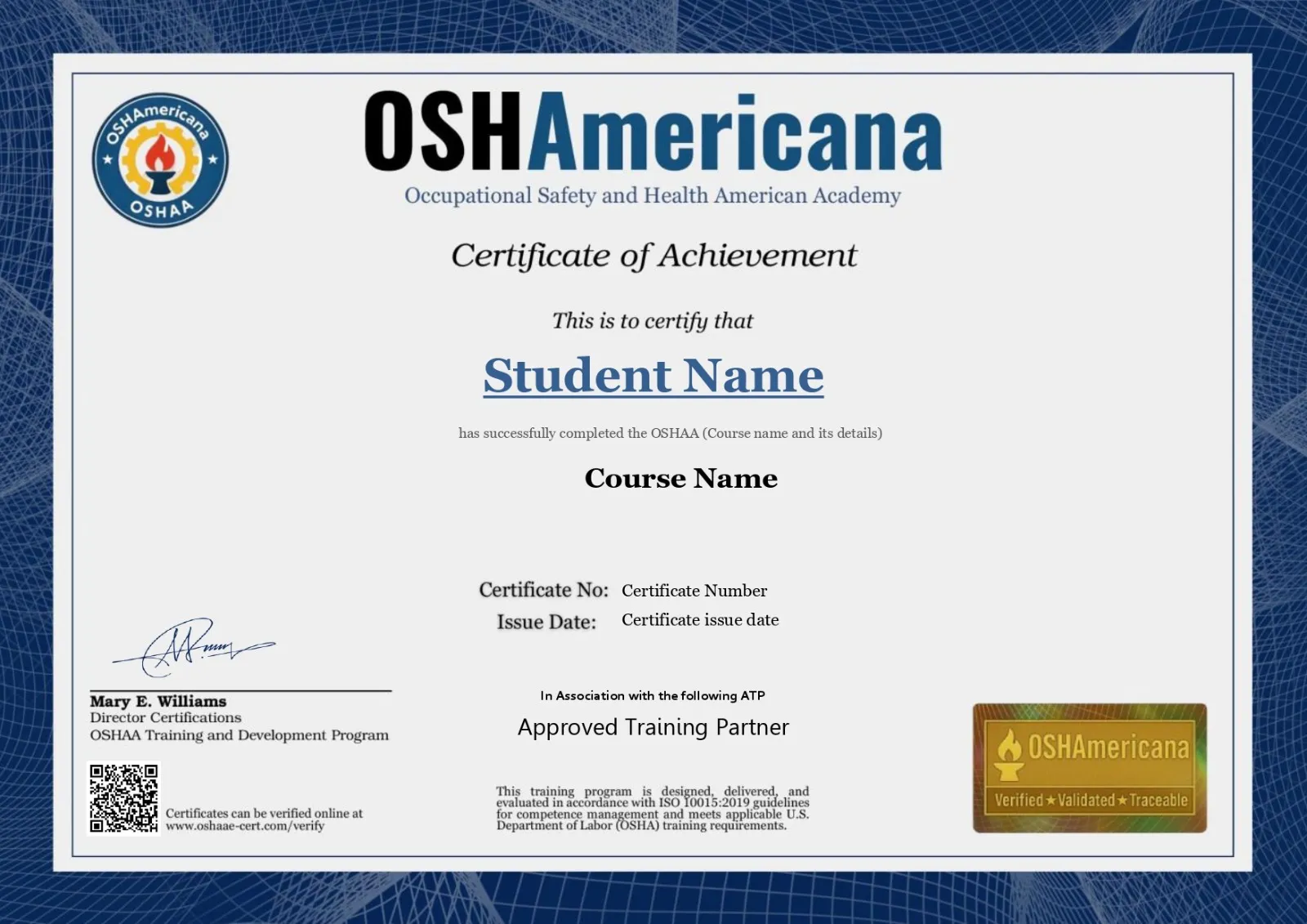
Learners who complete the course requirements and achieve the required assessment result receive the OSHAA 30-Hours Professional Diploma in Hot Work Safety certificate.
Benefits of the Hot Work Safety Course
Understand Hot Work Hazards
Develop knowledge of fire, explosion, burn, fume, and other hazards associated with welding, cutting, brazing, and grinding.
Build Hazard Assessment Awareness
Understand how pre-job hazard assessments and workplace checklists contribute to safer hot work planning.
Learn Fire Prevention Principles
Explore combustible material controls, fire-resistant barriers, fire protection equipment, and fire watch responsibilities.
Understand PPE Requirements
Learn about task-related PPE selection, use, inspection, fit, and limitations.
Understand Hot Work Permits
Explore permit-to-work processes, authorization roles, and the controls considered before, during, and after hot work.
Develop Emergency Response Awareness
Understand emergency reporting, evacuation, and initial response considerations for hot work incidents.
Understand Regulatory References
Become familiar with relevant OSHA requirements and supporting industry standards for hot work safety.
Support Professional Development
Add structured hot work safety knowledge to relevant construction, manufacturing, maintenance, welding, and safety experience.
Related Career and Professional Development Opportunities
The course may support professional development for people working in construction, welding, fabrication, maintenance, manufacturing, and occupational safety. It does not independently qualify a Learner to perform a regulated or employer-controlled task, guarantee employment, or replace trade qualifications, practical competency assessment, or workplace authorization.
Welder or Fabricator
The course may support safety knowledge relevant to welding, cutting, brazing, and fabrication work. Job-specific qualifications and employer authorization remain necessary.
Construction Worker or Supervisor
The subject matter may support understanding of hot work hazards and site safety controls in construction environments.
Maintenance Technician
The course may complement knowledge of safety considerations for repair, installation, and maintenance tasks involving hot work.
Industrial or Manufacturing Worker
Learners may use the course knowledge to better understand fire prevention and safe work procedures in industrial settings.
Safety Officer or Coordinator
The course may provide supplementary knowledge relevant to monitoring hot work procedures and workplace safety arrangements.
Fire Watch Personnel
The course introduces fire watch roles and post-work monitoring concepts. Employer-specific instruction and authorization may also be required.
Frequently Asked Questions About Hot Work Safety
What is the OSHAA 30-Hours Professional Diploma in Hot Work Safety?
It is a 30-hour professional development course covering hot work hazards, hazard assessment, fire prevention, PPE, hot work permits, emergency response, fire watch, and relevant safety standards.
What activities are considered hot work?
Hot work commonly includes welding, cutting, brazing, soldering, grinding, and other activities that produce heat, sparks, or ignition sources capable of starting a fire or explosion.
Who should take a hot work safety course?
The course may be relevant to welders, fabricators, construction and maintenance personnel, industrial workers, supervisors, safety officers, fire watch personnel, and technical Learners.
What are the entry requirements?
Applicants should be at least 18 years old. A basic secondary education or equivalent is recommended, and basic English proficiency is needed to understand course materials and safety terminology. Prior work experience is not mandatory, although relevant industrial or construction experience may be helpful.
What hazards are associated with hot work?
Potential hazards include fire, explosion, burns, sparks, hot surfaces, welding fumes, hazardous gases, electrical hazards, and ignition of combustible materials or flammable atmospheres.
What is a hot work permit?
A hot work permit is a workplace authorization document used by many employers and facilities to review hazards and specify precautions before certain hot work activities begin. Its requirements depend on applicable regulations, site procedures, and the work environment.
When is a fire watch required during hot work?
OSHA 29 CFR 1910.252 specifies circumstances in which a fire watch is required for general-industry welding and cutting, including certain situations involving combustible materials or sparks that may ignite materials outside the immediate work area. Construction requirements are addressed separately under 29 CFR 1926.352.
How long must a fire watch remain after welding or cutting?
Under 29 CFR 1910.252, a fire watch must be maintained for at least 30 minutes after welding or cutting in the circumstances covered by that provision. Construction rules under 29 CFR 1926.352 require a sufficient period after the work to ensure there is no possibility of fire; the applicable work setting and rule should be checked.
Which OSHA standards cover hot work in the United States?
Relevant references include 29 CFR 1910.252 for general-industry welding, cutting, and brazing, and 29 CFR 1926 Subpart J for construction welding and cutting. Other standards may apply depending on the hazards and work setting, including PPE, respiratory protection, and confined-space requirements.
Does this course cover PPE and respiratory protection?
Yes. The course covers PPE for hot work and introduces relevant safety considerations. Respiratory protection requirements depend on exposure assessment and the applicable OSHA respiratory protection standard. Course completion does not replace employer-provided hazard assessment, respirator program requirements, fit testing, or task-specific training.
How is the course assessed?
The published assessment consists of 100 multiple-choice questions (MCQs) administered through an OSHAA Approved Training Partner. Learners must achieve at least 70% to pass.
Does completing this diploma authorize me to perform welding or hot work?
No. The diploma provides educational knowledge of hot work hazards and safety procedures. It does not replace employer authorization, task-specific training, equipment competency, required permits, or other workplace procedures.
Is this course available online or in person?
The published page describes online, in-person, or blended delivery options. The available format, schedule, and enrollment arrangements are confirmed by the selected Approved Training Partner.
How can I find an OSHAA Approved Training Partner?
Visit the OSHAA Approved Training Partner page to find a training partner and ask about enrollment, delivery options, schedules, and course arrangements.
How to Study the OSHAA Hot Work Safety Course
Learners enroll and study through an OSHAA Approved Training Partner, which provides course delivery and learner support. Available study formats, schedules, and fees are confirmed by the selected partner.
- 1
Find a Training Partner
Choose an OSHAA Approved Training Partner or contact OSHAA for assistance.
- 2
Confirm Enrollment
Check the entry requirements, course fees, study format, and schedule with the partner.
- 3
Complete the Eight Units
Study the 30-hour course covering hot work hazards, fire prevention, PPE, permits, emergency response, and fire watch.
- 4
Complete the Assessment
Attempt the 100-question MCQ assessment and achieve at least 70% to pass.
- 5
Receive Your OSHAA Certificate
Successful Learners receive an OSHAA course certificate that can be checked through the verification service.