Diploma in Orthodontic Biomechanics Excellence
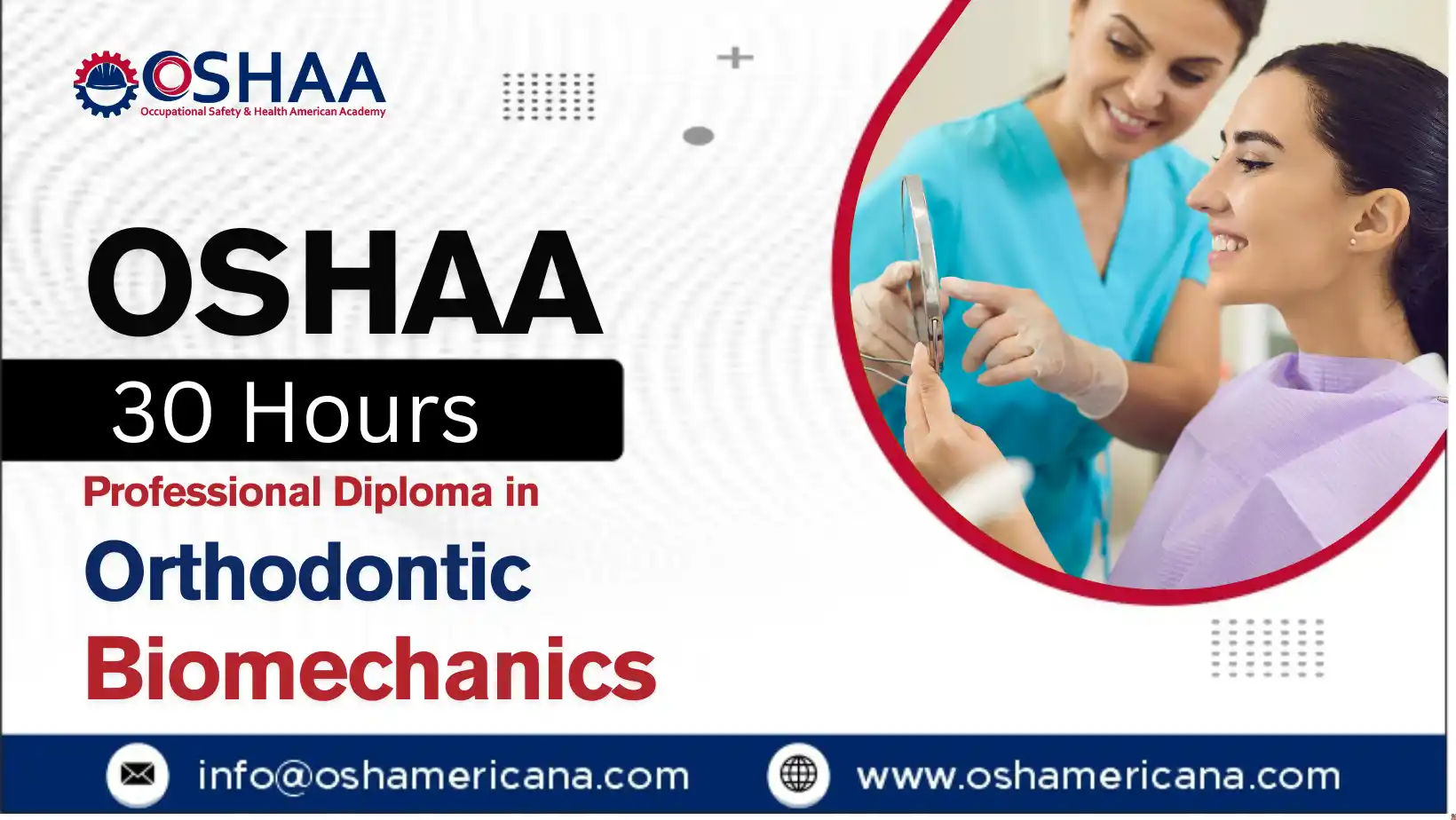
Orthodontic biomechanics is a cornerstone of contemporary dental practice, centred on the controlled movement of teeth through the precise application of mechanical forces. The OSHAA 30-Hours Professional Diploma in Orthodontic Biomechanics is designed to provide participants with a thorough and structured understanding of the biomechanical principles that underpin effective orthodontic treatment. Developed in line with UK professional standards, this programme is ideal for dental professionals seeking to enhance clinical precision and improve patient outcomes through evidence-based approaches.
Modern orthodontic care extends well beyond the placement of appliances. Each clinical adjustment involves a complex interaction between applied forces and biological tissue response. This diploma bridges theoretical knowledge and clinical application by introducing the fundamental and advanced principles that govern predictable tooth movement. Emphasis is placed on treatment efficiency, accuracy, and patient safety throughout the learning journey.
Delivered over 30 guided learning hours, the course covers key topics including force systems, appliance design, anchorage control, and tissue biomechanics. Learners engage with case-based discussions and practical scenarios to strengthen problem-solving skills and clinical decision-making.
OSHAA 30-Hours Professional Diploma in Orthodontic Biomechanics
- Minimum Age: 18 years or older
- Education: Basic knowledge of orthodontics or dental background recommended
- Language: Basic English literacy
- Clinical Experience (Optional): Prior dental or orthodontic practice is helpful but not mandatory
Study Units
Learning Outcomes
Introduction to Orthodontic Biomechanics and Force Systems (3 Hours)
- Understand the fundamental principles of orthodontic biomechanics
- Identify the different types of force systems used in clinical orthodontics
- Analyse how forces and moments influence controlled tooth movement
- Apply basic mechanical principles to common orthodontic treatment scenarios
Biological Basis of Tooth Movement (3 Hours)
- Explain cellular and tissue-level responses to applied orthodontic forces
- Understand the phases of tooth movement and tissue remodelling
- Recognise factors affecting the rate and efficiency of tooth movement
- Correlate biological responses with clinical timing and force selection
Anchorage Concepts: Types, Strategies, and Control (4 Hours)
- Define various anchorage types and their clinical applications
- Evaluate the mechanics of direct, indirect, and skeletal anchorage
- Plan effective anchorage strategies for different orthodontic cases
- Minimise unwanted tooth movement through appropriate anchorage control
Fixed Appliances: Brackets, Wires, and Force Application (6 Hours)
- Identify different types of orthodontic brackets and their biomechanical roles
- Select archwires based on material properties and treatment stages
- Apply appropriate force magnitudes using fixed appliance systems
- Understand how bracket positioning influences tooth movement and outcomes
Mechanics of Sliding, Friction, and Loop Systems (5 Hours)
- Differentiate between sliding mechanics and frictionless systems
- Evaluate the impact of friction on treatment efficiency
- Design and apply loop systems for controlled space closure
- Optimise biomechanics to reduce treatment time and minimise side effects
Space Closure Techniques and Midline Management (3 Hours)
- Understand biomechanical principles involved in space closure
- Select appropriate mechanics for anterior and posterior space management
- Manage midline discrepancies using symmetrical and asymmetrical force systems
- Prevent anchorage loss and unwanted tipping during space closure
Vertical Control: Managing Open Bites and Deep Bites (3 Hours)
- Identify biomechanical challenges associated with vertical discrepancies
- Apply techniques to control vertical dimension during orthodontic treatment
- Use intruding and extruding mechanics appropriately
- Address both skeletal and dental components of open and deep bites
Transverse and Rotational Tooth Movement Mechanics (3 Hours)
- Understand the biomechanics of transverse arch development
- Apply principles for correcting crossbites and coordinating arch width
- Recognise factors influencing tooth rotation and derotation
- Select biomechanical strategies to achieve stable rotational corrections
Course Benefits – OSHAA 30-Hours Professional Diploma in Orthodontic Biomechanics
- Master Biomechanical Principles: Learn how to apply forces and mechanics effectively in orthodontic treatments.
- Improve Treatment Outcomes: Enhance precision and predictability in patient care and orthodontic results.
- Advanced Clinical Skills: Gain knowledge of complex tooth movement, anchorage control, and appliance management.
- Professional Growth: Strengthen your credentials as a dental or orthodontic practitioner.
- Evidence-Based Knowledge: Understand current research and best practices in orthodontic biomechanics.
- Hands-On Application: Apply theoretical concepts to real clinical scenarios for practical experience.
The OSHAA 30-Hours Professional Diploma in Orthodontic Biomechanics is designed for participants who have a foundational understanding of orthodontics and wish to advance their clinical and theoretical knowledge in the field of biomechanics. This course is ideally suited for:
- Orthodontists: Professionals seeking advanced knowledge in biomechanics for precise treatment planning.
- General Dentists: Dentists interested in expanding their orthodontic skills and understanding tooth movement.
- Dental Students: Students aiming to enhance their clinical knowledge in orthodontic biomechanics.
- Dental Technicians & Assistants: Individuals supporting orthodontic procedures who want a better grasp of mechanics.
- Healthcare Professionals in Dentistry: Anyone involved in orthodontic care or planning looking to improve accuracy and efficiency.
The course supports professional growth for participants dedicated to delivering precise, effective, and ethical orthodontic care.