Learn Expert Piping QA/QC Techniques – Professional Diploma
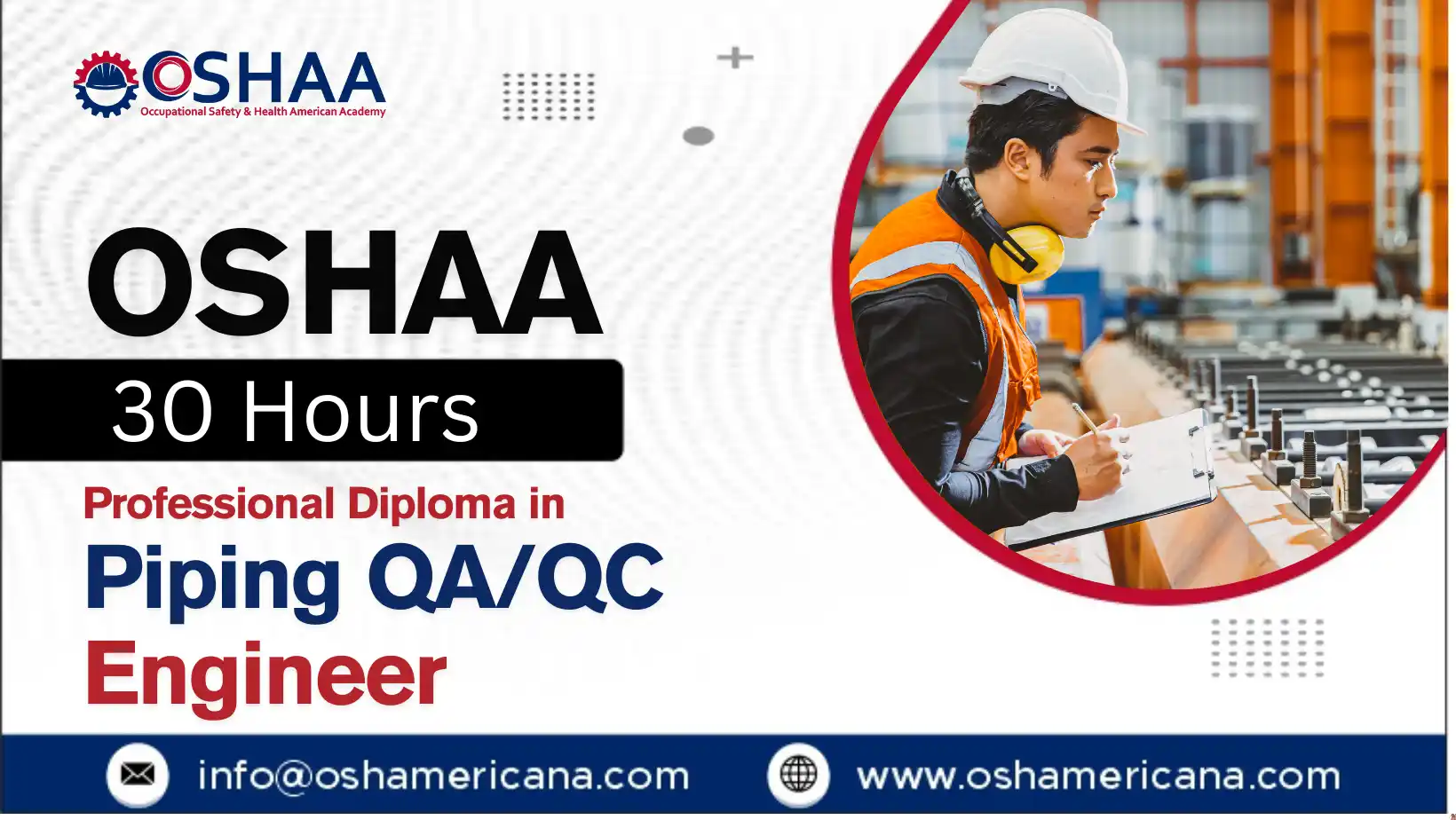
The OSHAA 30-Hours Professional Diploma in Piping QA/QC Engineer is a focused and industry-aligned programme developed and awarded by OSHAA, a recognised awarding body known for maintaining high standards in technical and vocational education. This diploma is designed to equip participants with a solid foundation in quality assurance and quality control practices specifically related to industrial piping systems.
Piping systems play a vital role in sectors such as oil and gas, construction, power generation, and manufacturing, making quality control essential for operational safety and project success. This programme provides comprehensive coverage of inspection methodologies, quality documentation, applicable codes and standards, welding fundamentals, and compliance requirements. Participants gain practical insight into ensuring piping systems meet project specifications and regulatory expectations.
The diploma is well suited for individuals currently working in, or planning to pursue, QA/QC roles within piping-intensive projects. It is particularly beneficial for mechanical engineers, QA/QC inspectors, site supervisors, fabrication personnel, and professionals seeking to strengthen their technical expertise in quality management.
The OSHAA 30-Hours Professional Diploma in Piping QA/QC Engineer prepares participants to confidently support quality-driven project environments by combining theoretical knowledge with practical application. This course enhances professional capability and supports career progression within industrial quality assurance and control roles..
OSHAA 30-Hours Professional Diploma in Piping QA/QC Engineer
- Age: 18+ years
- Education: High school or equivalent; diplomas or certificates in Mechanical Engineering, Welding, Piping, Fabrication, or Industrial Safety are advantageous
- Language: Basic English comprehension
- Experience: No prior experience required, though technical or industrial background is helpful
Study Units
Learning Outcomes
Introduction to Piping QA/QC Engineering (2 Hours)
- Understand the role and responsibilities of a QA/QC engineer in piping projects
- Recognise the importance of quality assurance and quality control in industrial environments
- Identify the stages of quality management throughout the piping lifecycle
- Gain familiarity with essential QA/QC terminology and workflow
Piping Materials, Components, and Fabrication Methods (3 Hours)
- Identify commonly used piping materials and their characteristics
- Understand the function of piping components such as flanges, elbows, valves, and gaskets
- Explain fabrication processes including cutting, welding, bending, and assembly
- Assess how material selection influences performance, durability, and overall quality
International Codes and Standards: ASME, API, ISO (4 Hours)
- Interpret the structure and application of international piping standards
- Apply ASME, API, and ISO codes within quality control and inspection activities
- Understand compliance requirements across different industrial sectors
- Evaluate materials and fabrication work against recognised global quality benchmarks
Welding Processes and Procedure Qualification (4 Hours)
- Understand welding techniques commonly used in piping fabrication
- Interpret Welding Procedure Specifications (WPS) and Procedure Qualification Records (PQR)
- Identify common weld defects and understand their causes and effects
- Ensure welding activities comply with applicable codes and project requirements
Non-Destructive Testing (NDT) Techniques and Applications (4 Hours)
- Explain the principles and objectives of non-destructive testing in piping systems
- Identify common NDT methods including radiographic, ultrasonic, magnetic particle, and penetrant testing
- Select appropriate NDT techniques based on material type, weld configuration, and defect likelihood
- Interpret NDT results to support quality decisions and compliance reporting
Piping Isometrics and Technical Drawing Interpretation (3 Hours)
- Read and interpret piping isometric drawings and general arrangement layouts
- Identify key elements such as line numbers, elevations, weld joints, and material codes
- Correlate technical drawings with physical installations and inspection requirements
- Use drawings to plan, execute, and verify QA/QC activities
Inspection and Test Plans (ITPs) in Piping Projects (5 Hours)
- Understand the purpose and structure of inspection and test plans in quality management
- Develop ITPs aligned with project scope, codes, and client specifications
- Define hold points, witness points, and quality control stages within inspection cycles
- Coordinate with contractors, inspectors, and clients to implement ITPs effectively
Identification of Fabrication Defects and Site Quality Issues (2 Hours)
- Recognise common fabrication and site-related quality defects
- Apply inspection techniques to detect issues such as misalignment, corrosion, and unacceptable welds
- Assess defect severity and recommend appropriate corrective actions
- Support root cause analysis and continuous quality improvement initiatives
QA/QC Documentation: WPS, PQR, NDT Reports, and Records (3 Hours)
- Understand the role of quality documentation in piping QA/QC processes
- Review and verify WPS, PQR, NDT reports, and material certification records
- Maintain accurate, traceable, and audit-ready inspection documentation
- Support project handover and compliance audits through effective record management
The OSHAA 30-Hours Professional Diploma in Piping QA/QC Engineer is designed to equip learners with essential skills and knowledge to perform quality assurance and quality control in piping projects. This course provides practical techniques to ensure safety, compliance, and efficiency in industrial and construction settings.
- Receive Recognized Certification – Obtain a professional diploma validating your skills and expertise as a Piping QA/QC Engineer.
- Master QA/QC Engineering Skills – Learn quality assurance standards, inspection procedures, and defect detection for piping projects.
- Enhance Safety and Compliance Knowledge – Understand industry codes, safety protocols, and regulatory requirements.
- Boost Career Opportunities – Ideal for piping engineers, QA/QC inspectors, supervisors, and industrial professionals.
- Develop Practical Inspection Skills – Apply hands-on techniques to evaluate piping systems and ensure project reliability.
- Improve Project Quality – Learn how to prevent defects and maintain high standards in industrial projects.
- Increase Professional Competence – Strengthen technical expertise in QA/QC and piping engineering.
The OSHAA 30-Hours Professional Diploma in Piping QA/QC Engineer is ideal for professionals and learners seeking to enhance their expertise in quality assurance, piping inspection, and industrial compliance. It is suitable for those working in construction, oil & gas, and manufacturing sectors.
- Piping engineers and QA/QC inspectors aiming to strengthen technical inspection and quality control skills
- Welding and piping supervisors responsible for project safety and compliance
- Industrial professionals in construction, petrochemical, oil & gas, or manufacturing industries
- Project managers and site engineers seeking knowledge of QA/QC standards and piping inspection procedures
- Maintenance and safety officers monitoring structural integrity and adherence to industrial codes
- Students and trainees pursuing careers in piping, welding, or QA/QC engineering
- Anyone seeking professional certification in Piping QA/QC engineering to boost career opportunities